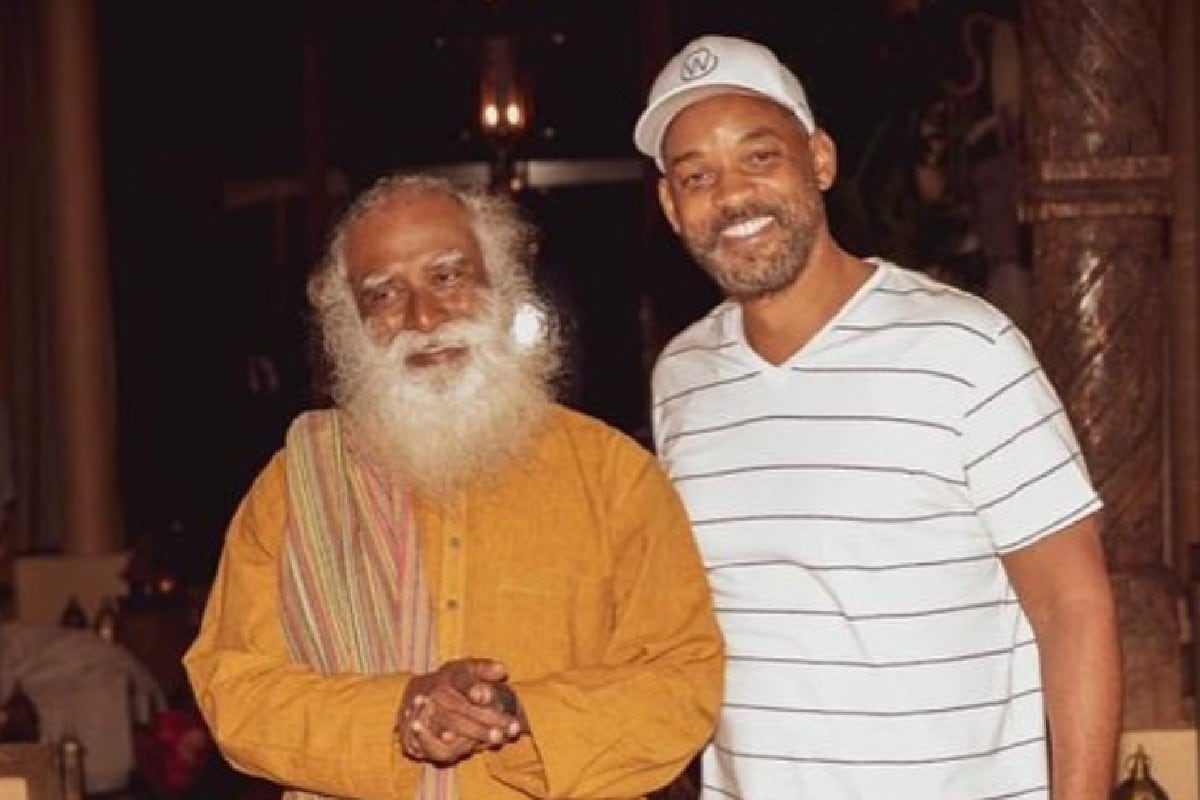
 Actor and rapper Will Smith invited spiritual leader and author Sadhguru in his residence for an evening of discussions and life lessons.
from Top Lifestyle News- News18.com https://ift.tt/3kR7DHi
Actor and rapper Will Smith invited spiritual leader and author Sadhguru in his residence for an evening of discussions and life lessons.Two days before the US election and several months of constantly hearing ‘Covid, Covid, Covid’, Donald Trump has announced a nationwide mask mandate. His top advisers see this as a victory for both science and politics.
“The idea came to the President as he watched Halloween trick or treating between campaign stops in Pennsylvania. He gave specific orders almost immediately”, said a White House spokesperson.
Trump’s advisory recommends the use of Halloween pumpkins for women, and fuller PPP gear for men, like those originally designed by the KKK. An indicative video has been helpfully attached with the release.
The Trump campaign is invigorated and inspired by the development. “Not only does this stop all the democratic whining about masks, it also gives our supporters a uniform. That’s the kind of brilliant mind this President possesses.”
The uniforms will come in especially handy on election day, says the Trump camp, whose preparations for civil unrest are all in place. “Our supporters will easily identify each other on the battlefield, reducing friendly fire casualties to zero — like no battle has ever seen before.”
The reference appeared to be to the Battle of the Border in Texas shortly after Trump was elected. Two hunters reached the border in their armoured recreational vehicles that night, on the hunt for Mexicans. But in the heat and chaos of battle, they shot each other because no Mexican was to be found.
This is a work of satire
The writer is a journalist and author of Aarushi, an account of the murder investigation and ensuing trial
UK Prime Minister Boris Johnson has announced a second stay-at-home lockdown across England, starting from next Thursday and to run for four weeks until at least the start of December, in order to deal with the rapidly increasing coronavirus infections.
Non-essential shops and leisure and hospitality venues, such as restaurants, bars and pubs, will be required to close down. Johnson said that all leisure and entertainment venues will be shut.
Production of film and TV shows will continue, but under strict health and sanitation guidelines, the UK Producers Alliance for Cinema and Television (Pact) told Variety.
Following Johnson's briefing on the new lockdown, Culture Secretary Oliver Dowden, in a series of tweets, said, "The changes mean people should WFH (work from home) where possible. But where this is not possible, travel to a place of work will be permitted – eg this includes (but not exhaustive) elite sport played behind closed doors, film & tv production, telecoms workers."
Read the tweets here
2/3
The changes mean people should WFH where possible
But where this is not possible, travel to a place of work will be permitted - e.g. this includes (but not exhaustive) elite sport played behind closed doors, film & tv production, telecoms workers
— Oliver Dowden (@OliverDowden) October 31, 2020
3/3
We understand people will have a lot of questions and @DCMS officials & ministers will be working through these and detailed implications with sectors over the coming days@HuddlestonNigel@cj_dinenage@dianabarran@JWhittingdale@mattwarman
— Oliver Dowden (@OliverDowden) October 31, 2020
The new England-wide measures will lapse by 2 December and, unless a further intervention happens in the meantime, England will revert to the current three-tier localised lockdown system.
Takeaways will be allowed to stay open and people can only meet one person from outside their household outdoors. Unlike the first complete lockdown in March, schools, colleges and universities will be allowed to stay open.
Johnson also indicated that he “sincerely” hopes that the restrictions can be lifted enough for families to come together in time for Christmas but set no further details around that.
(With inputs from Press Trust of India)
Paris: President Emmanuel Macron sought to calm flaring tensions with Muslims around the world on Saturday, telling an Arab TV channel he understood that caricatures of the Prophet Mohammed could be shocking while lashing out at "lies" that the French state was behind them.
France is on edge after the republication in early September of cartoons of the prophet by the Charlie Hebdo weekly, which was followed by an attack outside its former offices, the beheading of a teacher and an attack on a church in Nice Thursday that left three dead.
The country was further shaken by a new incident on Saturday, when an attacker armed with a sawn-off shotgun shot an Orthodox priest as he closed his church in the French city of Lyon before fleeing, a police source said.
The 52-year-old priest, who has Greek nationality, was shot in the liver at point-blank range and taken to hospital in a serious condition, sources said.
A suspect was arrested later Saturday, Lyon's public prosecutor said, with the motive of the attack remaining unclear.
Softer tone
Macron sparked protests across the Muslim world after the murder earlier this month of teacher Samuel Paty — who had shown his class a cartoon of Mohammed — by saying France would never renounce its laws permitting blasphemous caricatures.
But in an apparent bid to reach out to Muslims, Macron gave a long interview setting out his vision to Qatar-based TV channel Al-Jazeera, seeking to strike a softer tone.
"I can understand that people could be shocked by the caricatures, but I will never accept that violence can be justified," he said.
"I understand the feelings that this arouses, I respect them. But I want you to understand the role that I have. My role is to calm things down, as I am doing here, but at the same time it is to protect these rights."
He added: "I will always defend in my country the freedom to speak, to write, to think, to draw."
'Relied on lies'
Macron lashed out at "distortions" from political leaders over the cartoons of the Prophet, saying too often people were led to believe that they were a creation of the French state.
He slammed "a confusion that has been fed by many media -- and sometimes political and religious leaders -- which is to say that these caricatures are in a way the project or the creation of the French government or the president".
He also denounced calls for a boycott of French goods, backed in particular by Turkish President Recep Tayyip Erdogan and taken up by some retailers in Muslim countries, as "unworthy" and "unacceptable".
He said the campaign was created by some private groups "who relied on lies... sometimes from other leaders" about the caricatures.
Even before the attack on Paty, Macron had promised a tough new campaign against Islamist radicalism in France, which has claimed the lives of hundreds of people since 2015.
Protests erupted Friday in Afghanistan, Pakistan, Bangladesh, Mali, Mauritania and Lebanon, the latest in a string of mass rallies denouncing France.
'Too early to say'
France is still reeling from the latest attack in Nice, which Macron has already described as "Islamist" terror.
French authorities were on Saturday seeking to ascertain if a young Tunisian suspected of killing three people in a knife rampage inside a Nice church had outside help.
Brahim Issaoui, 21, only arrived in Europe from Tunisia last month and, according to prosecutors, killed a church employee, a Brazilian woman and a French woman in the attack in the Notre-Dame Basilica on Thursday morning.
The attacker cut the throat of Nadine Devillers, 60, and the sexton Vincent Loques, 55. A Brazilian mother, Simone Barreto Silva, who was stabbed several times, took refuge in a nearby restaurant but died of her wounds there.
Issaoui was shot by police multiple times and is currently in a grave condition in hospital. Investigators have been unable to question him and his precise motivations remain unclear.
"It is still too early to say if there were others complicit, what his motivations were in coming to France and when this idea took root in him," said a source close to the inquiry who asked not to be named.
Investigators believe Issaoui travelled illegally to Europe via Italy's Mediterranean island of Lampedusa on September 20.
He arrived at the mainland Italian port of Bari on October 9 before coming to Nice just one or two days before the attack.
French police on Saturday arrested another Tunisian man, bringing to four the number of people being held in connection with the deadly attack in Nice.
New York: About 18 election rallies by President Donald Trump are estimated to have lead to more than 30,000 confirmed cases of coronavirus and likely led to more than 700 deaths, a new study by Stanford University researchers said, stressing that the communities where the Trump rallies took place paid a high price in terms of disease and death.
In the study titled The Effects of Large Group Meetings on the Spread of COVID-19: The Case of Trump Rallies', researchers concluded 18 rallies by Trump held between June 20 and September 22 "ultimately resulted in more than 30,000 incremental confirmed cases of COVID-19 and likely led to more than 700 deaths, which may not necessarily have been among attendees.
"Our analysis strongly supports the warnings and recommendations of public health officials concerning the risk of COVID-19 transmission at large group gatherings, particularly when the degree of compliance with guidelines concerning the use of masks and social distancing is low. The communities in which Trump rallies took place paid a high price in terms of disease and death," the researchers said in the study.
Reacting to a Twitter post on the study, Democratic Presidential nominee Joe Biden said "President Trump doesn't care about you. He doesn't even care about his own supporters."
The study, released Friday, noted that more than 8.7 million Americans have contracted COVID-19, resulting in more than 225,000 deaths.
The Centers for Disease Control and Prevention (CDC) has advised that large in-person events, particularly in settings where participants do not wear masks or practice social distancing, pose a substantial risk of further contagion.
There is reason to fear that such gatherings can serve as superspreader events', severely undermining efforts to control the pandemic, it said.
Researchers said the purpose of the study is to shed light on these issues by studying the impact of election rallies held by Trump's campaign between 20 June and 30 September.
The researchers said Trump rallies have several distinguishing features" that lend themselves to this inquiry, adding that attendees at Trump rallies numbered in the thousands and sometimes in the tens of thousands.
They noted that the rallies were not geographically ubiquitous and the degree of compliance with guidelines concerning the use of masks and social distancing was low in part because the Trump campaign downplayed the risk of infection.
This feature heightens the risk that a rally could become a superspreader event.
The researchers said that to capture the effects of subsequent contagion within the pertinent communities, their analysis encompasses up to 10 post-rally weeks for each event.
"Our method is based on a collection of regression models, one for each event, that captures the relationships between post-event outcomes and pre-event characteristics, including demographics and the trajectory of COVID-19 cases, in similar counties," it said.
Manila: A super typhoon slammed into the eastern Philippines with ferocious winds early Sunday and about a million people have been evacuated in its projected path, including in the capital where the main international airport was ordered closed.
“There are so many people who are really in vulnerable areas,” said Ricardo Jalad, who heads the government’s disaster-response agency. “We’re expecting major damage.”
Typhoon Goni hit the island province of Catanduanes at dawn with sustained winds of 225 kilometers (140 miles) per hour and gusts of 280 kph (174 mph) — equivalent to a Category 5 hurricane. It was blowing west toward densely populated regions, including Manila, and rain-soaked provinces still recovering from a typhoon that hit a week ago and left at least 22 dead.
“Within the next 12 hours, catastrophic violent winds and intense to torrential rainfall associated with the region of the eyewall and inner rain bands of the typhoon will be experienced,” the Philippine weather agency said in an urgent advisory.
It said Catanduanes and four other provinces will be the first hit, including Albay, where tens of thousands of villagers have been moved to safety, especially near the active Mayon volcano, where mudflows have caused deaths during past storms. Residents have been warned of likely landslides, massive flooding, storm surges of more than 5 meters (16 feet), and ferocious wind that can blow away shanties.
One of the most powerful typhoons in the world this year, Goni has evoked memories of Typhoon Haiyan in November 2013, which left more than 7,300 people dead and missing, flattened entire villages, swept ships inland, and displaced more than 5 million in the central Philippines.
Jalad said nearly a million people have been preemptively moved into emergency shelters, mostly schools and government buildings. He warned of storm surges that could inundate coastal villages, including in Manila Bay.
Forecasters said the typhoon’s eye may hit or graze metropolitan Manila, the densely populated capital region of more than 13 million, late Sunday to early Monday and asked the public to brace for the worst. The typhoon may considerably weaken after it hits the Sierra Madre mountain range, then cross the main northern Luzon island toward the South China Sea.
Manila’s main airport was ordered shut down for 24 hours from Sunday to Monday and airlines canceled dozens of international and domestic flights. The military and national police, along with the coast guard and firefighters, have been put on full alert.
About 1,000 COVID-19 patients were moved to hospitals and hotels from tent quarantine and treatment centers in the capital and the northern province of Bulacan, Jalad said. More emergency shelters would be opened than usual to avoid the congestion that can rapidly spark infections.
The war-like typhoon preparations will further strain government resources, which have been drained with months of coronavirus outbreaks that prompted the government to set up isolation and treatment centers when hospitals were overwhelmed and provide aid to more than 20 million poor Filipinos.
The Philippines has reported more than 380,000 confirmed COVID-19 cases, the second-highest in Southeast Asia, with 7,221 deaths.
Displaced villagers may have to stay longer in evacuation centers even after Goni exits Tuesday due to another storm brewing in the Pacific that may affect the Philippines in a few days, Jalad said.
The Philippines is lashed by about 20 typhoons and storms a year. It’s also located in the so-called Pacific “Ring of Fire,” a seismically active region around the Pacific where earthquakes and volcanic eruptions are common and make the impoverished Southeast Asian nation of more than 100 million people one of the world’s most disaster-prone.
London: UK Prime Minister Boris Johnson has announced a second stay-at-home lockdown across England, starting from next Thursday and to run for four weeks until at least the start of December, in order to deal with the rapidly increasing coronavirus infections.
Addressing a briefing from 10 Downing Street on Saturday, Johnson said there was no choice but to be “humble in the face of nature" and unless tough action is taken now the peak of mortality in the country could be even greater than the first wave triggering a “medical and moral disaster”.
The new England-wide measures will lapse by 2 December and, unless a further intervention happens in the meantime, England will revert to the current three-tier localised lockdown system.
“Now is the time to take action because there is no alternative," said Johnson.
"You must stay at home, you must only leave home for education, work if you cannot work from home, recreational exercise with one person from another household or your household, and to escape injury or harm, to shop for food and essentials or provide care for vulnerable people as a volunteer," he said, adding that this lockdown would be less "restrictive" than the first lockdown of earlier this year.
He also confirmed an extension to the furlough scheme until December, the wage support scheme for businesses which was set to end from 1 November.
Non-essential shops and leisure and hospitality venues, such as restaurants, bars and pubs, will be required to close down.
Takeaways will be allowed to stay open and people can only meet one person from outside their household outdoors.
Unlike the first complete lockdown in March, schools, colleges and universities will be allowed to stay open.
Johnson also indicated that he “sincerely” hopes that the restrictions can be lifted enough for families to come together in time for Christmas but set no further details around that.
“I am very optimistic that this will feel better by next spring,” he said, indicating no significant changes are to be expected until early 2021.
The latest lockdown plans will be tabled in Parliament next week for a debate and vote by Wednesday, for them to come in effect from Thursday.
At the Downing Street briefing, Johnson was joined by England's Chief Medical Officer, Chris Whitty, and the government's Chief Scientific Adviser, Sir Patrick Vallance.
“Across virtually the entire country, the rate of increase is on rapid increase,” said Whitty, as he presented maps of the latest coronavirus spread across England.
“Perhaps half a million people or more are with infections, based on different models… in terms of death rates, there is potential for things to be twice as bad as the first wave,” noted Vallance, as he described the situation as a “very grim picture”.
The devolved administrations of the United Kingdom will continue to follow their own already strict lockdown policies, calling on residents to refrain from non-essential travels to and from England.
Wales is currently in a “firebreak” lockdown which is due to be in place until 9 November and Scotland’s stringent four-tier system, with Tier 4 akin to a complete shutdown, is set to come into force from Monday.
Northern Ireland, meanwhile, has been in complete lockdown since the middle of October, scheduled for a month.
Earlier on Saturday, several media reports had indicated plans for the month-long lockdown were afoot after Johnson met his most senior Cabinet colleagues on Friday to discuss the possible toughening of restrictions in light of worsening coronavirus infection rate and hospital cases.
Downing Street moved to bring forward the prime minister's announcement, initially planned for Monday, in the wake of the leaked media reports.
Meanwhile, the UK recorded another 21,915 confirmed coronavirus cases on Saturday, bringing the total since the pandemic began to 1,011,660.
Another 326 people were reported to have died within 28 days of a positive test this weekend, taking its death toll past 46,500.
Documents from the government's Scientific Pandemic Influenza Group on Modelling (SPI-M-O) revealed this week that England has breached its "reasonable worst-case" scenario for COVID-19 infections and hospital admissions for the winter months.
The scientists warned that the number of daily coronavirus deaths in England is in line with that scenario, but "is almost certain to exceed this within the next two weeks".
Infection rates are currently soaring across much of Europe, prompting new forms of lockdown across Germany, France and Belgium.
The Opposition Labour Party accused the UK government of “dithering” over the issue of what has previously been described as a short “circuit-breaker” complete lockdown.
“We could have saved more of the economy and reduced the impact of [lockdown] with a shorter, earlier circuit-breaker that coincided with half term,” said Labour’s shadow business minister Lucy Powell.
Scientific advisers at the top of government believe it is now too late for a two-week national circuit-breaker to have enough of an effect and a longer national lockdown is needed to drive the reproduction number, or R value, of the virus below one.
Back in the early 2000s, an academic named Robert Sampson did one of the better-known studies in urban sociology of the past 20 years, discreetly dropping thousands of stamped and addressed letters all over the streets of Chicago. What he was looking for, essentially, was to see which neighborhoods would be most diligent about dropping those letters in mailboxes rather than allowing them to collect footprints on the sidewalk and turn to pulp.
What he discovered was intriguing. One of the best predictors of a letter’s fate had to do with how high a neighborhood measured in what Sampson called “moral cynicism,” or the notion that laws and informal rules weren’t really and truly binding. How he measured moral cynicism was straightforward: He asked thousands of Chicagoans to agree or disagree with a shortlist of statements.
Laws were made to be broken.
It’s OK to do anything you want as long as you don’t hurt anyone.
To make money, there are no right and wrong ways anymore, only easy ways and hard ways.
In hindsight, Sampson recently told me, one of the weirdest and most chilling things about staring at that list is to see how easily it could double as a declaration of President Donald Trump’s worldview. “You know, the idea that it’s all dog-eat-dog,” he said, “or that you’re a chump to care about others.”
Our president has basically spent four years telling an entire nation not to bother dropping lost letters in the mail.
It is cliché at this point to note that Trump has laid waste to our norms and customs, and in so doing, eroded our trust in institutions whose reputations were already in sharp decline (the media and federal government instantly come to mind), as well as our trust in our fellow Americans.
But what Sampson was describing was somehow different, and I think more profound. He was articulating the price of that lost trust: generosity. As a nation, we’ve lost our sense of altruistic and moral purpose, a collective will to do what is decent and right and, as sociologists like to say, “other-regarding.” Instead, we’ve been living in a state benumbed and a benumbed state, in which nihilism prevails and corruption oozes from the very top.
Another way to think about this might be to say that we’ve been living in a noir film. Or that we’re enacting the zero-sum values of reality television. What is it that contestants are so fond of saying? I’m not here to make friends; I’m here to win.
But the point is: Trump has normalised selfishness.
This moral cynicism has not been healthy, and I don’t just mean this in the psychological or spiritual sense. Our lost generosity has cost American lives. A once-in-a-century pandemic strikes, our public health experts eventually tell us all to wear masks for the commonweal, but the president tells us that mask-wearing is one of those rules not to be followed (like paying taxes, like the emoluments clause, like campaign finance laws, like obstructing justice). And so we, an extravagantly wealthy nation, suffer from an extravagant number of deaths.
An altruistic culture, in other words, could have been “its own form of nonpharmacological intervention” in the fight against COVID-19, says Nicholas Christakis, a doctor, and sociologist and the author of Apollo’s Arrow, a delightfully readable new book about the culture and the coronavirus.
What makes this crisis of generosity all the stranger is that moral cynicism — also sometimes referred to as “legal cynicism” — is generally associated with high levels of poverty and racial isolation, according to Sampson’s work. Yet Trump’s life has been marked by neither. It has in fact been marked by the very opposite: overabundance.
Then again, you could argue, as Kurt Andersen recently did in Evil Geniuses, that a certain breed of wealthy American now also thinks that the rules do not apply to it, and that this gang has been enshrining greed-is-good into custom and statute for the past 50 years.
How this particular horseshoe got forged — where the poorest people of colour and the most affluent white Americans both came to believe the same thing — could fill its own book. For now, though, it suffices to say that there’s a significant difference between what underlies their moral cynicism. The residents of Sampson’s cynical neighborhoods had understandable reasons to be mistrustful of certain laws and institutions. (Police brutality, lopsided prison sentencing and eviction disparities instantly spring to mind.) The Trumps of the world do not. They are loosening the yoke around their own necks while tightening it around others’.
There is, actually, an argument to be made that the rich were profiting shamelessly from deregulation and small-government reforms at around the same time the epidemic of mass incarceration began.
I came of age under presidents who spoke of our differences as bridgeable, resolvable things. Bill Clinton told us that “there is nothing wrong with America that cannot be cured by what is right with America". George W Bush defined himself as a “compassionate conservative” and “a uniter, not a divider". Barack Obama made his national debut with a keynote address that declared, “We worship an awesome God in the blue states” and “we’ve got some gay friends in the red states".
These lines may always have been fiction or at least a partial fiction. During their presidencies, jails filled, factories shut, and the nation spun off a breakaway republic of the 1 percent. Maybe it was only a matter of time before a president like Trump came along who took such a Hobbesian view of humanity. Moral cynicism “taps the darker side of human nature,” as Sampson wrote in Great American City, his book about the importance of community culture in defining neighborhoods.
But the tension between preserving individual prerogatives and the common good is as old as America itself. Our sense of moral purpose, while fragile, has generally proved recoverable enough for us to make progress.
What’s so agonising now is that we’re all waiting to see whether it is again. Joe Biden has staked his entire campaign on his decency, his moral vision, his old-fashioned belief that one should love thy neighbor as thyself. A Trump campaign adviser may have sneeringly compared the former vice president to Mister Rogers during the candidates’ dueling town halls a couple of weeks ago. But it is Fred Rogers’ words that are repeatedly — at this point tiresomely, almost embarrassingly — invoked during times of national crisis. “Look for the helpers,” he urged children to do when they’re frightened. “You will always find people who are helping.”
If Trump and his allies disdain the idea of a man who believes in the human capacity to help, it says all you need to know about them. And if we, as a nation, choose a man who’s reminiscent of a beloved minister to be our next president, it’ll say something desperately needed — and at long last reassuring — about us.
Jennifer Senior c.2020 The New York Times Company
 If you have not had time to buy that perfect Halloween costume, these DIY tricks will help you make one quickly.
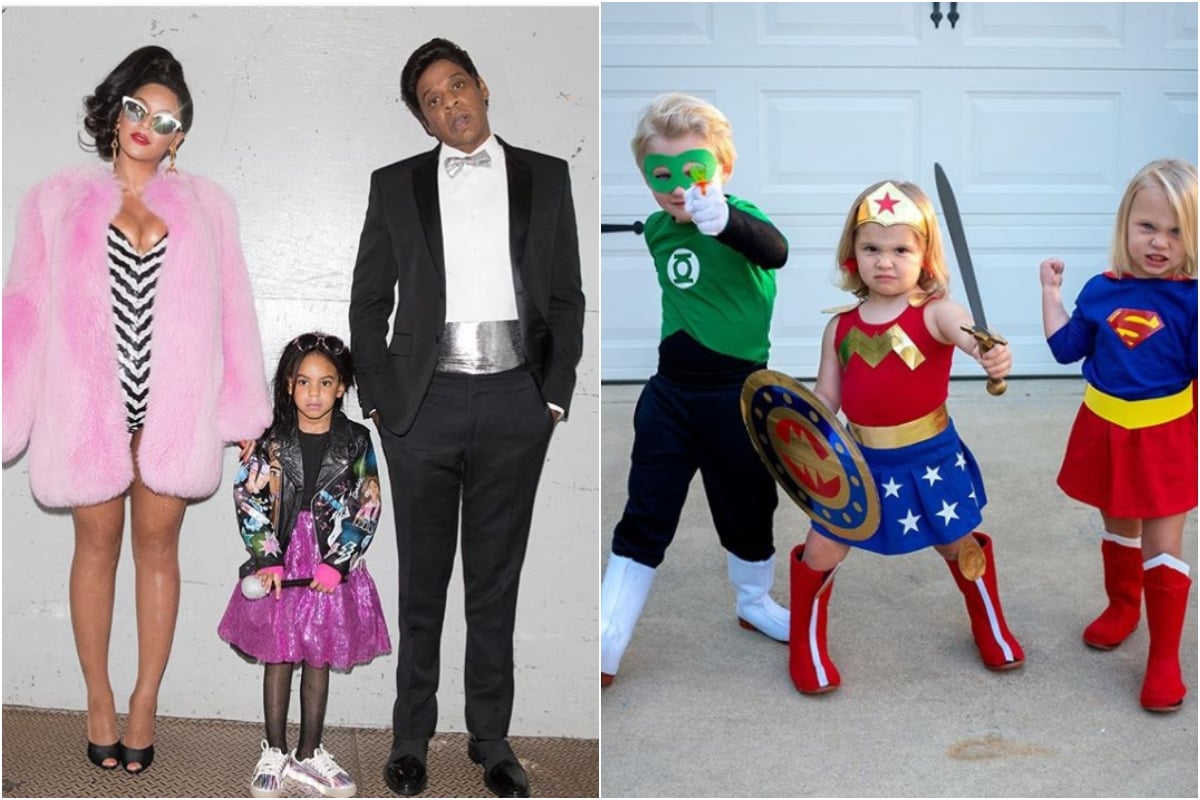 Halloween costumes are all about creativity and relevance. Here are some Halloween looks you can try with your kids this year.
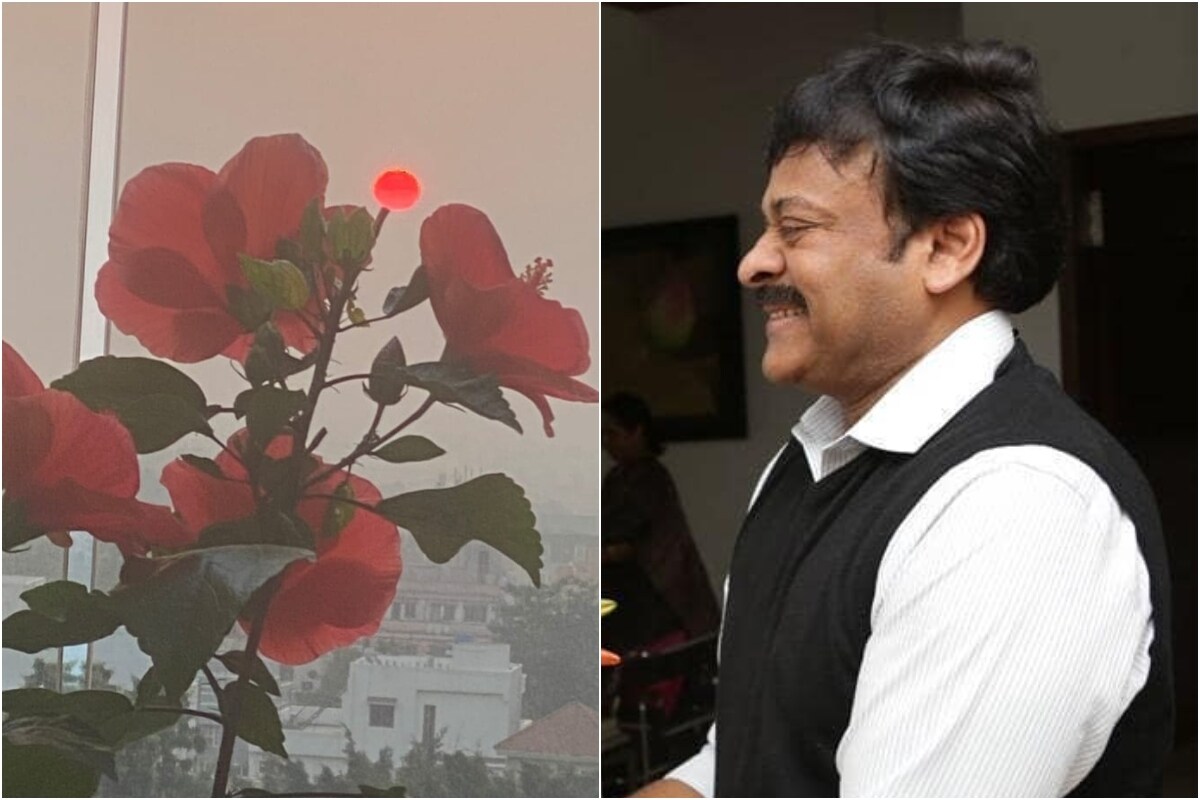 Superstar Chiranjeevi has shared a lovely picture of flowers and sunrise on his Instagram handle.
A woman who moved into a new home was left horrified after discovering a hidden room, along with some pretty creepy contents inside it.
According to a report in Unilad, the woman, who is known as Rooney on Tiktok, shared the video of her discovery on the video platform, which chronicled her entry into the secret room that had belongings of the former tenant, including an array of dolls quite reminiscent of the scary Annabelle.
The report which cited the Tiktok video, inaccessible in India, saw the woman reveal that they had bought the house a few months back and have been slowly cleaning out different cabinets and closets. While working on one of the cabinets she came upon everything that the old lady who lived there before them had saved.
The woman, however, revealed that she noticed the cabinet to be moving and while looking into it, noticed that there was a space behind it. Her children instructed her to tape it while moving it and see what is behind the structure.
Once they were able to edge the small cupboard, they saw the hidden room, and a super-creepy looking doll.
A few days later she posted another video where she elaborated upon the contents of the room for everyone to see. The woman found an array of things in the secret room, from china to old clothes and even more dolls.
More recently, on 12 October, she entered the room a third time saying she is going to 'lock this room back up' and leaving what is in it for 'who it belongs to.' She captioned the video, ‘I think the secret room should have stayed hidden’.
A report by Metro cited the various comments that the woman received on her videos. While in one, a person wrote, "I get really bad vibes about this idk why," another person wrote, ""The doll in red is alive!!!!'" A third person pointed out that the video is so creepy that they are literally shaking with fear.
One viewer even advised the woman to “Throw the whole house away.”
 The negative impacts of using social media have hazardously affects the mental health of the users. See some of its commonly found side-effects here.
 The study implies that middle-aged and older women who have less social involvement are more prone to suffer from hypertension, which also increases the risk of heart disease and stroke.
 This year, the coronavirus pandemic has impacted Halloween as going out to party is not a wise option. Here's one thing you can do sitting at home.
Orlando: Walt Disney World says it plans to lay off more than 11,000 unionized workers because of the new coronavirus, bringing the total number of pandemic-related job casualties at the Florida resort to almost 18,000 positions.
Disney World said in a letter to state and local leaders on Thursday that the 11,350 union workers — mostly part-timers — will be laid off at the end of the year.
Company officials previously had said that another 6,400 non-union Disney employees in Florida would lose their jobs.
Earlier this week, 720 Disney World actors and singers were laid off since many of the live entertainment shows at the Florida resort have gone dark, according Actors' Equity Association, the labour union representing the performers.
The layoffs are part of a decision by The Walt Disney Co. last month to eliminate 28,000 positions in its parks division in California and Florida because of the pandemic.
Disney's parks closed last spring as the coronavirus began spreading in the US. The Florida parks reopened this summer with restrictions on how many people could be in the parks at any given time and new requirements for social distancing and mask-wearing.
The California parks have yet to reopen because of restrictions by the state of California.
Istanbul: A strong earthquake struck Friday in the Aegean Sea between the Turkish coast and the Greek island of Samos, killing at least 19 people and injuring over 700 amid collapsed buildings and flooding, officials said.
A small tsunami struck the Seferihisar district south of Izmir, the city in western Turkey that was the worst affected by the quake, said Haluk Ozener, director of the Istanbul-based Kandilli Observatory and Earthquake Research Institute.
At least 17 people were killed in Izmir, Turkey's third-largest city, including one who drowned, and 709 were injured, according to Turkey’s Disaster and Emergency Management Presidency, or AFAD.
Among the dead were the wife and two children of the secretary-general of the Turkish Medical Association’s Izmir branch, the group said.
On Samos, two teenagers died after being struck by a wall that collapsed. Greek Prime Minister Kyriakos Mitsotakis tweeted condolences, saying "Words are too poor to describe what one feels before the loss of children."
At least 19 people were injured on the island, with two, including a 14-year-old, being airlifted to Athens and seven hospitalized on the island, health authorities said.
The small tsunami that hit the Turkish coast also affected Samos, with seawater flooding streets in the main harbor town of Vathi. Authorities warned people to stay away from the coast and from potentially damaged buildings.
Izmir Gov. Yavuz Selim Kosger said at least 70 people were rescued from wrecked buildings, with four destroyed and more than 10 collapsed. Others suffered less severe damage, he said, but did not give an exact number.
Search-and-rescue efforts were underway in at least 17 buildings, AFAD said. Turkish media showed rescuers pulling people from the rubble, including one survivor who was found about six hours after the quake. Emergency teams continued digging after nightfall and cranes lifted concrete slabs from the wreckage.
The earthquake, which the Kandilli Institute said had a magnitude of 6.9, struck at 2.51 pm local time (11.51 GMT) in Turkey and was centered in the Aegean northeast of Samos. AFAD said it measured the magnitude at 6.6.
It was felt across the eastern Greek islands and as far as the Greek capital, Athens, and in Bulgaria. In Turkey, it shook the regions of Aegean and Marmara, including Istanbul. Istanbul’s governor said there were no reports of damage in the city, Turkey’s largest.
Video on Twitter showed flooding in the Seferihisar district, and Turkish officials and broadcasters called on people to stay off the streets after reports of traffic congestion. Izmir Mayor Tunc Soyer urged residents to not enter damaged buildings and to be mindful of social distancing and mask mandates amid the COVID-19 pandemic.
Clouds of dust or smoke rose from several spots as buildings collapsed in the quake.
Greek seismologist Akis Tselentis told Greek state broadcaster ERT that due to the shallow depth of its epicenter — roughly 10 kilometers — potentially powerful aftershocks could be expected for several weeks and warned that buildings could collapse in a strong aftershock.
The government and cities like Istanbul sent more than 3,000 rescue personnel to Izmir, as well as relief supplies. The Turkish Red Crescent set up kitchens.
France offered assistance to both countries. The secretary of state for European affairs tweeted France's "full solidarity with Greece and Turkey" and said "we are ready to offer the necessary aid."
The Greek minister responsible for civil protection and crisis management, Nikos Hardalias, headed to Samos along with a search-and-rescue team, paramedics and engineers. Some islanders planned to spend the night in emergency tents for fear of aftershocks.
In a show of solidarity rare in recent months of tense bilateral relations, Greek and Turkish government officials issued mutual messages of solidarity.
"We pray that there is no further loss of live in Turkey or Greece and we send our best wishes to all those affected on both sides of the earthquake," Turkey’s Communications Director Fahrettin Altun tweeted. "This tragedy reminds us once again how close we are despite our differences over policy. We're ready to help if Greece needs it."
Mitsotakis, the Greek prime minister, tweeted that he had phoned Turkey's President Recep Tayyip Erdogan "to offer my condolences for the tragic loss of life from the earthquake that struck both our countries. Whatever our differences, these are times when our people need to stand together."
Erdogan responded to the tweet with his thanks and offered his condolences. "Turkey, too, is always ready to help Greece heal its wounds. That two neighbors show solidarity in difficult times is more valuable than many things in life," he wrote.
Relations between Turkey and Greece have been particularly tense, with warships from both facing off in the eastern Mediterranean in a dispute over maritime boundaries and energy exploration rights. The ongoing tension has led to fears of open conflict between the two neighbors and NATO allies.
 Ashwagandha is one of the most well-known ayurvedic herbs and is traditionally known for its stress-relieving properties.
 Given how many of your actions require your hips, it’s natural for them to become strained or stiff sometimes. You may not even realise this is happening until your lower back or thighs start aching.
 Bronchitis is a respiratory condition where the tiny air carrying tubes of the lungs get inflamed and start producing too much mucus.
 While the new season of Saath Nibhaana Saathiya has been launched last week, the old season is also being re-aired. Both the seasons are among the most-watched shows on TV this week.
 Halloween has its ancient roots in the Celtic festival of Samhain when people would light bonfires and wear costumes to ward off ghosts.
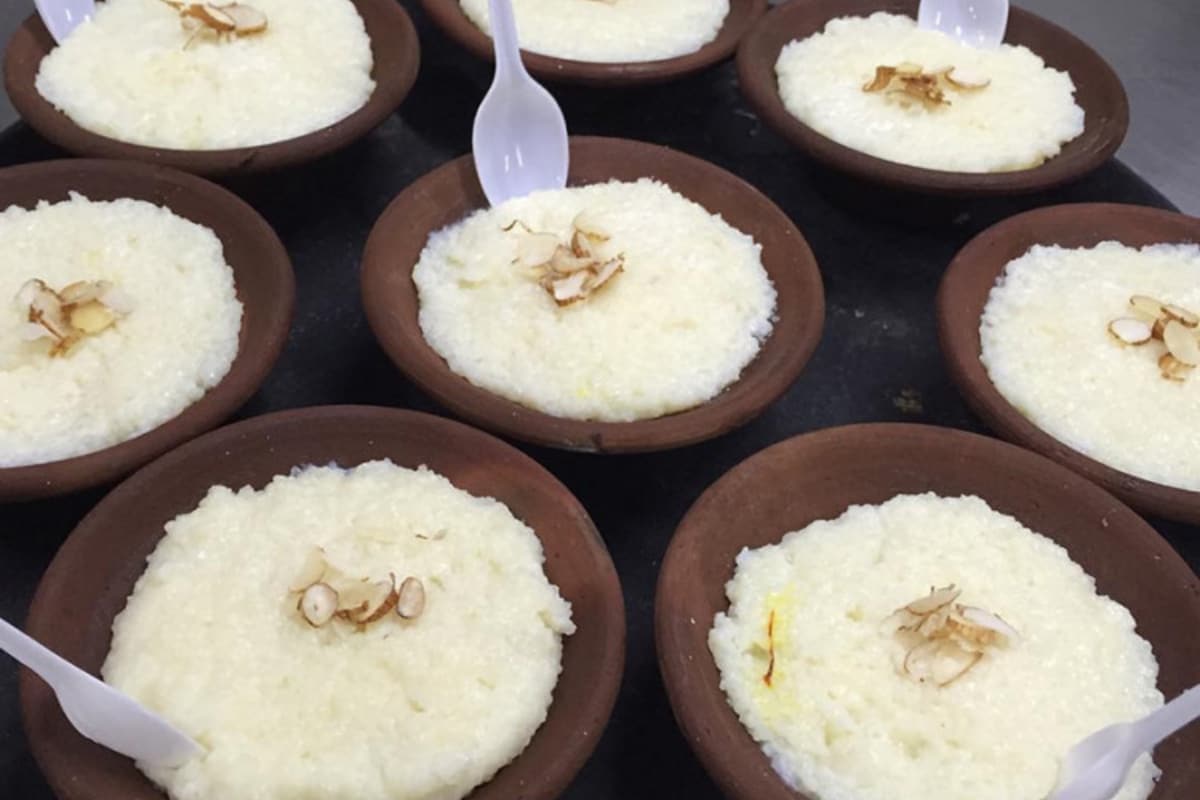 Sharad Purnima is one of the most significant Purnimas or Full Moon nights in the Hindu Calendar. It will be celebrated by the Hindu devotees on October 30 this year.
 On the occasion, one can celebrate the day by cooking the following mouth-watering dishes.
In 2016, Donald Trump kept the subject of immigration central to his successful presidential campaign, leading with the promise of an ”impenetrable, physical, tall, powerful, beautiful” border wall with Mexico.
On becoming president, he made sure immigration never took a back seat in his agenda, with his administration undertaking over 400 executive actions on a range of issues from visa processes and immigration courts to refugee settlements and the Deferred Action for Childhood Arrivals (DACA). These sweeping immigration reforms under Trump have been some of the most dramatic in a single presidency.
The COVID-19 pandemic, which has hit the United States the hardest, has allowed the Trump administration to further push extensive immigration restrictions. “In light of the attack from the invisible enemy, as well as the need to protect the jobs of our great American citizens, I will be signing an executive order to temporarily suspend immigration into the United States,” Trump announced in a tweet in April.
The weeks leading to the 2020 presidential elections have seen Trump and Democratic candidate Joe Biden disagree radically on issues of immigration, with Trump seeking to continue with harsher immigration regulations and Biden planning to undo most of Trump’s work in the last four years.
Where Trump stands
In his second term, Trump plans to build on the agenda of immigration he pushed in the first term, with focus on preventing undocumented immigrants from becoming eligible for state-sponsored welfare measures, including in healthcare and education. He also wishes to continue constructing the southern border wall with Mexico and oppose the Democratic-led ‘sanctuary’ cities.
Trump’s plan on immigration also includes the “mandatory deportation” of non-citizen gang-members and a clampdown on human trafficking networks. This is in addition to requiring “new immigrants to be able to support themselves financially”. The president’s campaign did not release any details on how these measures might be enacted into law.
Following the outbreak of the coronavirus pandemic, Trump implemented a public health emergency policy that allows officials to bypass prevalent legal processes and rapidly deport migrants, including children and asylum seekers who are caught at the Mexico border.
Earlier in 2018, the president’s “zero tolerance” policy on immigration to prosecute illegal border crossings saw thousands of children being forcibly separated from their parents who were detained on the Mexico border. This move came under severe criticism then, and has featured in presidential debates this year.
The United States supreme court in 2017 ruled against the Trump administration’s “arbitrary and capricious” decision to end the DACA programme, which protects immigrant (and undocumented) children in the country, popularly called Dreamers, from being deported. In his campaign for re-election, Trump has denied being against Dreamers but has also stayed away from promises to strengthen the DACA programme.
Where Biden stands
Biden and the Democrats have built their election plank on immigration largely around reversing most of the immigration policies enacted under Trump. For starters, Biden said he would halt the construction of the border wall with Mexico, although he will not tear down the section of the wall build so far.
In contrast to the rapid deportations under Trump amid the coronavirus pandemic, Biden has promised to pause all deportations for 100 days after taking office but has not clarified if he will reverse other pandemic-related restrictions imposed by Trump.
Immigration has always made us stronger—it’s essential to who we are. But Donald Trump has waged an assault on our values as a nation of immigrants.
As president, I'll undo Trump’s damage and put our values back at the heart of our immigration system: https://t.co/29QNatX4Wg
— Joe Biden (@JoeBiden) December 11, 2019
Biden has also pledged to increase the number of refugees that come into the United States annually. He has set the cap on the annual global refugee admissions at 1.25 lakh. The former vice-president seeks to “immediately reverse the Trump administration’s cruel and senseless policies” that separate children from their parents at borders and end the prosecution of parents for minor immigration violations.
He also wants to end Trump’s “detrimental” asylum policies and bring in reforms in the management of asylum systems to avoid violence and chaos at the border. On DACA, Biden promises to reverse Trump’s “counterproductive” decision to terminate the programme. He said he will ensure Dreamers are protected from separation from their families and are eligible for federal student aid.
Biden also plans to ease the process of naturalisation of green card holders, claiming it was “wrong” for the Trump administration to have made the road to citizenship difficult for qualified green card holders residing in the country.
Follow all the latest news from US Election 2020 here
Browse other key issues that could decide the US Election here
Brush up on how the US elects its president and vice-president here
Read profiles of US states here
 Producer Jackky Bhagnani posted a sweet note for sister Deepshikha Deshmukh on social media on her birthday to acknowledge the intrinsic role she also plays in his life.
In the days after the horrific beheading of 47-year-old Parisian schoolteacher Samuel Paty by 18-year-old Abdoullakh Anzorov as fallout of free speech debates in France around the Charlie Hebdo cartoons issue, Turkey’s president Recep Erdogan took the opportunity to once again place himself as the premier protector of Islam in the world. A strategy some have cheekily labelled as ‘neo-Ottoman’ or ‘Ottoman 2.0’. Erdogan criticised French president Emmanuel Macron for making ‘anti-Islam’ statements and aired a clarion call for the Muslim world to boycott France, French products and economy (all this even as older photos surfaced online of his wife, First Lady Emine Erdogan, carrying a handbag made by French luxury giant Hermes).
Erdogan’s positioning as the first responder to protect the global ethos, image and power of Islam and by association the wider Muslim world is first and foremost about geo-politics and the Turkish state’s interests, with theology as always providing the springboard to garner support for the same. As Erdogan took to national TV to announce the boycott, the divide between not just Ankara and Paris expanded further but Turkey’s fractures with European states itself visibly expanded within hours, as other capitals, which now includes India, called out Erdogan’s tone and words against Macron.
The Turkey-France spat over Charlie Hebdo cartoons is a continuation of Ankara’s general confrontational tactics both regionally and internationally. For Erdogan, this terror attack in Paris offered an opportunity to bog down Macron using ‘sectarian’ tactics, that is to try and sow discord within French society, where conversations over success and failures of societal and cultural integration have been rife for a long period of time. Ultimately, the underlying crisis beyond Charlie Hebdo are, as in most cases, largely geopolitical in nature.
Turkey has managed to rake up strains around most of its geographic borders. In August, as tensions over oil and gas exploration with Ankara in the eastern Mediterranean reached a critical point with Greece, France deployed assets from its air force and navy to back up Athens, as both European Union members successfully worked in unison to ward off Ankara’s exploration ships, painted from start to finish in the colours of the Turkish flag, away from contested waters. To double down on Turkish threats, Paris has now sought to sell Greece new Dassault Rafale fighter jets as well.
The Mediterranean is of course only one of the few fronts at play here. While taking on European states, Turkey is also simultaneously, and arguably much more vociferously, involved in creating space for itself in the Middle East by undermining the power of the Saudi-UAE block. There is no better illustration of this development than the ongoing civil war in Libya, where the government structure in Tripoli is backed by Erdogan while the challenge to it, via General Khalifa Haftar, is backed by the UAE (along with Russia and till a certain point France) that has led to a cyclical civil war with no end in sight.
Here, Paris has developed close ties with the UAE. During the spat in the Mediterranean, Abu Dhabi sent a contingent of F-16s to the Greek island of Crete for exercises with the Hellenic forces. Both UAE and France had also held their 12th strategic dialogue in June, where defence cooperation has become be a driving component.
Within the Middle East, Erdogan took full advantage of the fractures within the Gulf Cooperation Council (GCC) with regard to Qatar. When Saudi Arabia and the UAE orchestrated (a still ongoing) economic blockade against Doha for ‘punching above its weight’ in the region, Turkey swiftly moved in and along with Iran helped the small Arab state by sending troops to the country, less than 80 kilometres from the UAE border. Beyond the immediate Gulf, Turkey has also expanded its military reach, with operations in Syria where it supported rebels (including factions priorly aligned with Al Qaeda), operations against the PKK in northern Iraq, military base in Somalia, troops in Afghanistan as part of its commitments to the NATO-led mission in the country and most recently sending private militias hired from the Syrian war along with air force assets to Azerbaijan, backing Baku in the its latest skirmish in the Nagorno-Karabkh crisis with Armenia.
Cumulatively, all of Turkey’s current military operations is the state’s largest global armed presence since the days of the Ottoman Empire which ended in 1923.
In this ‘neo-Ottoman’esque’ expansionism of hard power by Ankara, it has limited number of allies. In its quest to name and shame Macron, the only overt support Erdogan has received is from its long-term ally Pakistan, and Iran. The Turkey – Iran praxis is perhaps the finest ideation of Ankara’s interest and power led foreign policy, where Islam is used as a force multiplier, and Erdogan props his own image as the one going the distance to protect the faith, and the Muslim community, aiming to showcase the traditional religious power centres in Saudi Arabia as ones that are failing both the religion and its people.
Erdogan’s support of and from Iran stands at the very fissures of sectarian divides of the region. Iran, being the seat of power of Shia Islam, and Erdogan, looking to become a ‘Sunni Ayatollah’, have interests and geo-political aims in common but not much else. Uncharacteristically rallying behind Erdogan, Iran’s Ayatollah Khamanei, addressing “young French people” on Twitter (which is banned in Iran for all young Iranian people) asked them if “freedom of expression means insulting, especially a sacred personage?”. Iran also summoned the French ambassador in Tehran to formally lodge a complaint. Meanwhile, Pakistan’s prime minister Imran Khan wrote a letter to leaders of Muslim states to highlight growing Islamophobia in the West and the urgent need to address the same.
The one searing commonality in this influence block of Turkey, Iran and Pakistan is that not one of them directly take on China, which has placed Uighur Muslims in internment camps in Xinjiang for cultural cleansing. There is doubt that the Uighurs are facing the most destitute of scenarios today, as China not only targets them at home, but abroad as well.
Meanwhile, China and its placement of hundreds of thousands of Uighurs in such camps is completely missing in Imran Khan’s letter to Muslim leaders. Erdogan has in fact sent Uighurs sought by Beijing back to China via third countries. Tehran meanwhile is preparing to sign a $400 billion, 25 year long strategic, economic and military agreement with Beijing. All these eventualities by Pakistan, Turkey and Iran are led by strategic considerations built upon strategic and tactical interests, and not theological and religious preconditions.
The hedging taking place here is, once again, interest led. While both Turkey and Iran are working to undermine the larger Saudi-UAE led Gulf power block, Islamabad is looking to join this grouping as it fails to rally the Gulf, and organisations such as the Organisation of Islamic Cooperation (OIC) behind its narratives on Kashmir. Meanwhile, both Ayatollah Khamenei and Erdogan have criticised India over its moves in Kashmir, a much more palatable narrative for an India obsessed civilian and military leadership in Pakistan.
Roman philosopher from the stoicism school of thought, Lucius Annaeus Seneca (also known as Seneca The Younger), had pontificated; “Religion is regarded by the common people as true, the wise as false, and by the rulers as useful”. Erdogan’s overtures as placing himself as the “real” harbinger of Sunni Islam, and beyond that as representation for all Muslims and their faith in the world, is largely a translation in practice of Seneca’s philosophy.
Erdogan’s actual intentions are visible in Turkey’s hard power development and use of the same to expand its political and military role in West Asia and North Africa while undermining the Saudi – UAE block, and Western interests as whole. All other posturing visible today is a means to an end for Ankara’s aims of geo-political upmanship.
Views expressed are personal.
The article was originally published on ORF Online and has been reproduced here
Wellington: New Zealanders voted to legalize euthanasia in a binding referendum, but preliminary results released Friday showed they likely would not legalize recreational marijuana use.
With about 83 percent of votes counted, New Zealanders emphatically endorsed the euthanasia measure with 65 percent voting in favor and 34 percent voting against.
The "No" vote on marijuana was much closer, with 53 percent voting against legalizing the drug for recreational use and 46 percent voting in favor. That left open a slight chance the measure could still pass once all special votes were counted next week, although it would require a huge swing.
The two referendums represented significant potential changes to New Zealand's social fabric, although the campaigns for each ended up getting overshadowed somewhat by the coronavirus pandemic and a parallel political race, in which Prime Minister Jacinda Ardern and her liberal Labour Party won a second term in a landslide.
In past elections, special votes — which include those cast by overseas voters — have tended to track more liberal than general votes, giving proponents of marijuana legalization some hope the measure could still pass.
Proponents of legalizing the drug were frustrated that Ardern wouldn't reveal how she intended to vote ahead the New 17 October ballot. Many believed an endorsement by Ardern could have boosted support for the measure, but she said she wanted to leave the decision to New Zealanders. Ardern said Friday after the results were released that she had voted in favor of both referendums.
Conservative lawmaker Nick Smith, from the opposition National Party, welcomed the preliminary marijuana result.
"This is a victory for common sense. Research shows cannabis causes mental health problems, reduced motivation and educational achievement, and increased road and workplace deaths," he said. "New Zealanders have rightly concluded that legalizing recreational cannabis would normalize it, make it more available, increase its use and cause more harm."
But liberal lawmaker Chlöe Swarbrick, from the Green Party, said they had long assumed the vote would be close and they needed to wait until the special votes were counted.
"We have said from the outset that this would always come down to voter turnout. We’ve had record numbers of special votes, so I remain optimistic," she said. "New Zealand has had a really mature and ever-evolving conversation about drug laws in this country and we've come really far in the last three years."
Proponents had argued the measure would reduce profits for gangs and improve social and legal outcomes for indigenous Maori.
The euthanasia measure, which would also allow assisted suicide and takes effect in November 2021, would apply to adults who have terminal illnesses, are likely to die within six months, and are enduring "unbearable" suffering. Other countries that allow some form of euthanasia include The Netherlands, Luxembourg, Canada, Belgium and Colombia.
"It is a victory for all New Zealand as we become a more compassionate and humane society," said lawmaker David Seymour, of the libertarian ACT Party. "Thousands of New Zealanders who might have suffered excruciating deaths will have choice, dignity, control, and autonomy over their own bodies, protected by the rule of law."
But Dr John Kleinsman, an ethicist for the New Zealand Catholic Bishops, said the vote put vulnerable people on a dangerous path. He said the mere option of euthanasia would be a burden and pressure for many ailing people and their families, as well as for healthcare and religious workers.
The marijuana measure would allow people to buy up to 14 grams (0.5 ounce) a day and grow two plants. It was a non-binding vote, so if voters approved it, legislation would have to be passed to implement it. Ardern had promised to respect the outcome and bring forward the legislation, if it was necessary.
Other countries that have legalized or decriminalized recreational marijuana include Canada, South Africa, Uruguay, Georgia plus a number of US states.
 Creating awareness about psoriasis and its causes and symptoms can play a pivotal role in decreasing the psychological burden associated with this condition.
 A study conducted in India also found that more cases of COVID-19 are seen in areas at a relatively higher altitude and colder temperatures.
 Colitis is an inflammation of the inner lining of the colon which causes many symptoms like diarrhea, abdominal pain, bloating and blood in the stool.
 Abhijeet Bhattacharya has lent his melodious voice to many romantic tracks featuring A-list Bollywood stars. Here we look at five of them.
Kuala Lumpur: Former Malaysian premier Mahathir Mohamad tweeted Thursday that Muslims had a right "to kill millions of French people" after a deadly attack in Nice, sparking widespread anger and prompting Twitter to delete his post.
Three people were killed at a church in the southern French city, with the attacker slitting the throat of at least one, in what authorities were treating as the latest jihadist assault to rock the country.
Shortly afterwards, Mahathir - the prime minister of Muslim-majority Malaysia until his government collapsed in February - launched an extraordinary outburst in a series of tweets.
Twitter initially declined to remove the comments, but finally did so following a furious reaction from the French government.
Cedric O, the French junior minister for digital affairs, said in a tweet in French and English, "I just spoke with the MD (managing director) of @TwitterFrance. "The account of @chedetofficial must be immediately suspended. If not, @twitter would be an accomplice to a formal call for murder."
Twitter initially flagged Mahathir's tweet about killing "millions of French people" as "glorifying violence" but did not remove it.
However, shortly afterwards, the tweet was deleted entirely, and Twitter told AFP it was because the comments "violated policy regarding glorification of violence."
Mahathir never made a direct reference to the attack in Nice however.
Referring to the beheading of a French teacher who had shown pupils cartoons of the Prophet Mohammed, Mahathir said he did not approve of his murder but that freedom of expression does not include "insulting other people".
"Irrespective of the religion professed, angry people kill," said the outspoken 95-year-old, who has in the past drawn controversy for remarks attacking Jews and the LGBT community.
"The French in the course of their history has killed millions of people. Many were Muslims. Muslims have a right to be angry and to kill millions of French people for the massacres of the past."
But he added that "by and large the Muslims have not applied the 'eye for an eye' law. Muslims don't. The French shouldn't."
Mahathir, who served as Malaysian premier twice for a total of 24 years, also said French President Emmanuel Macron was "not showing that he is civilised", and added that he was "very primitive".
"The French should teach their people to respect other people's feelings. Since you have blamed all Muslims and the Muslims' religion for what was done by one angry person, the Muslims have a right to punish the French.
Later on Thursday, he went on to claim in a series of tweets that Malaysia has avoided a series of conflicts "because we are conscious of the need to be sensitive to the sensitivities of others". Asserting that some values are a part of human rights, he criticised Macron for "blaming the religion of Islam and Muslims for the killing of the insulting school teacher". In a concluding tweet, he said, "Irrespective of the religion professed, angry people kill. The French in the course of their history has killed millions of people. Many were Muslims."
2. The killing is not an act that as a Muslim I would approve. But while I believe in the freedom of expression, I do not think it includes insulting other people. You cannot go up to a man and curse him simply because you believe in freedom of speech.
— Dr Mahathir Mohamad (@chedetofficial) October 29, 2020
4. We often copy the ways of the West. We dress like them, we adopt their political systems, even some of their strange practices. But we have our own values, different as between races and religions, which we need to sustain.
— Dr Mahathir Mohamad (@chedetofficial) October 29, 2020
6. Physically we are different. This limits our capacity to be equal. We have to accept these differences and the limitations that are placed on us. Our value systems is also a part of human rights.
— Dr Mahathir Mohamad (@chedetofficial) October 29, 2020
8. The dress code of European women at one time was severely restrictive. Apart from the face no part of the body was exposed. But over the years, more and more parts of the body are exposed.
— Dr Mahathir Mohamad (@chedetofficial) October 29, 2020
9. The West accepts this as normal. But the West should not try to forcibly impose this on others. To do so is to deprive the freedom of these people.
— Dr Mahathir Mohamad (@chedetofficial) October 29, 2020
11. Macron is not showing that he is civilised. He is very primitive in blaming the religion of Islam and Muslims for the killing of the insulting school teacher. It is not in keeping with the teachings of Islam.
— Dr Mahathir Mohamad (@chedetofficial) October 29, 2020
His comments sparked widespread condemnation, with some social media users labelling them "outrageous" and "disgraceful".
The beheading of French teacher Samuel Paty reinforced Macron's intention to take on Islamic extremism.
But comments by the French president since then, in particular a vow to protect freedom of speech, including cartoons deemed insulting by Muslims, have inflamed tensions.
Protests and calls for boycotts against France have erupted in several Muslim countries.
Kyiv (Ukraine): Belarus' authorities on Thursday shut the borders with several neighbors for most travelers amid the government's efforts to end two and a half month of protests demanding the resignation of the country's authoritarian leader.
Belarus' Border Control Committee said the closure of borders with Latvia, Lithuania, Poland and Ukraine is intended to stem the coronavirus infection. The move, however, follows Belarusian officials' claims that its neighbors have tried to destabilize the situation in the country.
The movement of cargo across the border has continued unhindered, and the international airport in the Belarusian capital, Minsk, has maintained its usual operations. The border with Belarus' giant eastern neighbor, Russia, has remained open.
Belarus has been swept by massive protests against President Alexander Lukashenko's 26-year rule since the 9 August election, in which he was declared the winner by a landslide. The opposition has rejected the official results as rigged and demanded that Lukashenko step down.
Police detained thousands and brutally beat hundreds of peaceful demonstrators during the first few days of post-election protests, drawing global outrage and prompting the US and the European Union to introduce sanctions against Belarusian officials accused of vote fraud and the clampdown on demonstrations.
Lukashenko's main election challenger, Sviatlana Tsikhanouskaya, who left for Lithuania under pressure from authorities after the vote, had declared a nationwide strike starting Monday after her ultimatum for Lukashenko to resign expired Sunday.
Sunday’s rally in Minsk was one of the largest since the start of the protests, drawing nearly 200,000 people, but Tsikhanouskaya's call for a strike has failed to halt production at major state-run plants and factories making up the core of the Belarus economy. While thousands of students and retirees marched in Minsk, and some small business owners closed their doors, most state enterprises have continued to operate as usual.
On Thursday, Lukashenko reshuffled his top officials, appointing Interior Minister Yuri Karayev and Security Council Secretary Valery Vakulchik his envoys to the westernmost Grodno and Brest regions.
"I wouldn't say publicly what action we are taking and will take on the border, but I need military people in charge there," Lukashenko said during a meeting with officials. He first announced the closure of the borders last month, but they remained open until Thursday.
Tsikhanouskaya charged that the Belarusian government's decision to shut the border and a reshuffle of top officials reflected Lukashenko's nervousness.
"The closure of the borders and the latest appointments signal the weakening of his authority," Tsikhanouskaya said, commenting on Lukashenko's latest moves. "He makes inconsequent decisions because he's in panic."
 Ananya Panday has made a name for herself through films like 'Student of the Year 2' and 'Pati, Patni Aur Woh'. She has turned a year older on Friday.
At the beginning of October 2020, a staggering 23.2 million people were on unemployment benefits in the United States. Although the number of Americans filing new claims for unemployment benefits is beginning to fall in many parts of the country, unemployment rates still remain alarmingly high amid a relentless COVID-19 pandemic and receding federal fiscal stimulus.
With the labour market recovery showing signs of strain, and a continuing drop in factory output and consumer spending, the coronavirus pandemic has hit the United States’ economy hard. The current unemployment numbers represent the worst job loss that any American president has faced going into an election since the Second World War. It is no surprise, then, that voters place high value on the presidential candidates’ plans to rebuild the economy after the pandemic.
While President Donald Trump touts the country’s pre-pandemic economy, claiming he is the candidate to pull it out of the slump and make it “great again”, Democratic candidate Joe Biden is focussing on building back better, promising to “create millions of good-paying jobs”.
Where Trump stands
Jobs appears as the first subject in Trump’s agenda, followed by COVID-19 and China. In this agenda, Trump’s campaign claimed the president’s priorities include creating 10 million jobs in 10 months and a million new small businesses.
“We will continue to reduce taxes and regulations at levels not seen before. We will create 10 million jobs in the next 10 months. And it will be higher than that,” Trump said at the Republican National Convention in August.
Even if Trump wins the election and manages to keep his promise of creating 10 million additional jobs, the United States economy would still have 3 million fewer positions than it did in February 2020.
Our Economy and Jobs are doing really well. Next Year will be a Record Setter. Stay Tuned!
— Donald J. Trump (@realDonaldTrump) September 6, 2020
Trump also plans to further ease tax regulations and said he supports enacting additional tax cuts. “Just as I did in my first term, I will cut taxes even further for hardworking moms and dads. I will not raise taxes; I will cut them, and very substantially. And we will also provide tax credits to bring jobs out of China back to America, and we will impose tariffs on any company that leaves America to produce jobs overseas,” he said.
Earlier this year, the Trump administration enacted regulations that bar the federal government from buying goods and services from any company that uses products from five big Chinese corporations.
Trump also signed an executive order in August incentivising federal agencies to source their jobs domestically instead of outsourcing them. This was in line with several other executive orders that Trump signed to boost domestic production.
Where Biden stands
Biden and the Democratic camp propose reviving the economy on the strength of their Build Back Better campaign where they wish to increase government spending to cut unemployment in essential sectors, focus on domestic manufacturing and invest in renewable energy.
Biden plans to provide state and local governments federal aid to prevent “educators, firefighters and other essential workers” from being laid off, and extend unemployment insurance to others who have been forced out of work due to the COVID-19 pandemic. He also proposes providing a “comeback package for Main Street businesses and entrepreneurs” to get back on their feet after the economic blow in the last few months.
The former vice-president supports a $15 per hour minimum wage, universal paid sick leave and 12 weeks of paid medical and family leave.
Like Trump, Biden also promises to shift focus to American manufacturing and production. He promises to sign executive orders in his first week as president to ensure the federal government uses taxpayer money to buy domestic products and supports local chains.
Biden said his ‘America-first’ policy will make a $400 billion procurement investment and a $300 billion research-and-development investment in the sectors of clean energy, telecommunication, biotechnology, transportation and artificial intelligence.
The Democratic nominee also said he’ll change the national tax code so that it encourages domestic production, “establishing a Biden Offshoring Tax Penalty and a Biden ‘Made in America’ Tax Credit”. He said tax regulations under him will help the poor and make big corporations “pay their fair share”, by abolishing tax for personal income under $4,00,000 and raising the corporate tax rate to 28 percent.
Follow all the latest news from US Election 2020 here
Browse other key issues that could decide the US Election here
Brush up on how the US elects its president and vice-president here
Read profiles of US states here
Apart from the extensive damage brought about by the coronavirus pandemic, election year 2020 also laid bare political conflicts along deep social cleavages in the United States, made apparent by the eruption of protests across the country demanding racial justice.
For instance, the killing of an unarmed Black man, George Floyd, by a White policeman, Derek Chauvin in May sparked off protests and civil unrest in Minneapolis, before spreading nationwide and eventually all around the world in the form of Black Lives Matters protests. While the majority of these protests demanding racial justice remained peaceful, demonstrations in some American cities escalated to violence and rioting. Following this, the subject of race predictably made it into campaign speeches and poll promises in the presidential race.
The two main candidates in the 2020 election, President Donald Trump and former vice-president Joe Biden, reacted differently to these events. Trump urged crackdown on violent protests and asked governors to “dominate” in order to avoid looking “like a bunch of jerks”, drawing criticism for stoking racial tension at a time the president should be uniting the nation. Biden, on the other hand, echoed Floyd’s last words and sympathised with the protestors, releasing several video messages calling for action on racial inequality.
This has translated into the two presidential candidates adopting distinct approaches on countering racism.
Where Trump stands
The president has stayed away from outlining a policy plan to tackle and lower racial inequality. He has dismissed the idea that systemic racism exists in the United States.
Trump insists that his administration’s policies have helped Black Americans, citing record low Black unemployment figures. “Unemployment for Black Americans is the lowest ever recorded. Trump approval ratings with Black Americans has doubled. Thank you, and it will get even (much) better,” he tweeted in 2018, and has repeated similar claims this election year. He went on to suggest that these lower unemployment rates will help bring racial justice.
These claims by Trump have been subsequently shown to be exaggerated. Much of the progress on Black unemployment rate in the United States was made during the Obama administration.
In June, the president outlined a four-point plan to address aspects of racial inequality and to “build safety, opportunity and dignity.” This new plan seeks to increase federal support for small business owners from minority communities and confront racial disparities in healthcare, among other goals.
"Americans are good and virtuous people. We have to work together to confront bigotry and prejudice wherever they appear. But we'll make no progress and heal no wounds by falsely labelling tens of millions of decent Americans as racist or bigots," Trump said.
Where Biden stands
In contrast, Biden’s promises towards racial justice are far more comprehensive, at least on paper. In August, the former vice-president said he is running for president this year to ease the racial divisions in the country, and to restore “the soul of America”.
Biden plans to invest over $50 billion in venture capital to Black and Brown entrepreneurs, and “expand access” to $100 billion in business loans by funding state, local, tribal and non-profit lending programmes in Black and Brown communities. Overall, he promises to leverage more than $150 billion for small businesses that have been “structurally excluded for generations”.
He also wishes to encourage private equity investment in Black and Brown-owned businesses by expanding the New Markets Tax Credit to $5 billion annually and making it permanent.
On police reforms and the criminal justice system, Biden’s website says that of all the people incarcerated in the United States, “too many are black and brown”. He plans to make the criminal justice system rid itself of “racial, gender, and income-based disparities”, but stops short of outlining how he would go about it.
On education reforms, Biden promises to support minority-serving institutions and historically Black colleges and universities that play a “unique and vital role in their communities”. He plans to invest $10 billion to improve enrolment, retention, completion and employment rates at these institutions. Biden also plans to expand efforts towards student loan forgiveness, a move that is expected to especially benefit Black students.
Follow all the latest news from US Election 2020 here
Browse other key issues that could decide the US Election here
Brush up on how the US elects its president and vice-president here
Read profiles of US states here
United States presidential nominees for 2020 Donald Trump and Joe Biden couldn’t be further apart on their commitment towards and plans for the environment. The two candidates sharply oppose each other on a number of environmental issues, including climate policy, fossil fuel regulations, renewable energy, emission standards and wildlife conservation, as this piece will show.
However, the subject does not hold the same value for the two: While “climate and energy” appears at the top of Biden’s plans on his official website, there is no explicit mention of the environment or allied issues in Trump’s agenda. This has not stopped the two candidates from bringing up the subject of environment and climate policy in rallies and debates.
Where Trump stands
The president, instead of addressing an environmental crisis or the need for stricter regulations on industries, weds the subject of environment with jobs. He insists that clean water and air are his priorities, but also promises to boost the country’s production of oil and natural gas and promote employment there — objectives that might come in each other’s way.
His words at a recent speech in Florida paints a clearer picture. “My administration is proving every day that we can improve our environment while creating millions of high-paying jobs... Instead of focusing on radical ideology, my administration is focused on delivering real results, and that’s what we have. And we right now have the cleanest air we’ve ever had in this country, let’s say over the last 40 years because I assume 200 years ago is probably better,” Trump said.
The concept of global warming was created by and for the Chinese in order to make U.S. manufacturing non-competitive.
— Donald J. Trump (@realDonaldTrump) November 6, 2012
In terms of environment policy, the president has significantly weakened regulations on methane, mercury and uranium. This is expected to have a direct, swift and negative impact on the country’s air and water quality. Trump supports an unobstructed growth of the fossil fuel industry and pushes for unrestricted fracking.
In August last year, Trump diluted the Endangered Species Act, one of United States’ most effective environmental laws brought in by former president Richard Nixon in 1973. It is credited with saving several iconic species including the bald eagle, the national bird of the United States. Trump also rolled back regulations on fishing and hunting.
Most significantly, Trump pulled the United States out of the Paris Agreement on climate change, an international deal signed by almost every country. He also rolled back several Obama-era rules on emissions and has refused to factor climate change in his administration’s policy decisions.
Where Biden stands
Unlike Trump, Biden repeatedly stresses how climate change is one of the greatest challenges facing the planet today. “Climate change is the existential challenge that will define our future as a country,” he tweeted. Biden promises to recommit the United States to the Paris Agreement on climate change, in addition to leading “an effort to get every major country to ramp up the ambition of their domestic climate targets”.
Climate change is already here, and ignoring science won't make it go away. If we give the Trump Administration another four years, we'll lose irreplaceable time to combat it. https://t.co/cexxSVQLOQ
— Joe Biden (@JoeBiden) October 6, 2020
Biden says his administration will ensure the United States achieves a 100 percent clean energy economy and reaches net-zero emissions by 2050. This, he says, will be achieved by ensuring that polluting industries “bear the full cost of the carbon pollution they are emitting”.
If elected, Biden proposed to invest $1.7 trillion over the next ten years into clean energy and environmental justice, in addition to leveraging an addition $5 trillion from the private sector and local investments.
Biden also promises to create a million new jobs in the auto industry to accelerate production of electric vehicles, achieve a carbon pollution-free power sector by 2035, and construct 1.5 million sustainable homes and housing units.
The former vice-president has plans to create 2,50,000 jobs in plugging abandoned oil and natural gas wells and reclaiming abandoned coal, hardrock, and uranium mines, in sharp contrast to Trump’s policies on coal and uranium. Biden has also promised to focus on environmental justice, by establishing an Environmental and Climate Justice Division within the United States Department of Justice.
In all of this, Biden does not want to be seen as forgetting about the workers involved in the fossil fuel industry. Calling them critical to “decades of economic growth”, Biden says his administration will “secure the benefits coal miners and their families have earned”.
Follow all the latest news from US Election 2020 here
Browse other key issues that could decide the US Election here
Brush up on how the US elects its president and vice-president here
Read profiles of US states here
