Tuesday, January 31, 2023

iCET: India-US initiative to break down barriers to closer technology and defence cooperation

Washington: With the launch of the India-US initiative on Critical and Emerging Technology (iCET) by National Security Advisor Ajit Doval and his American counterpart Jake Sullivan, experts believe the step will certainly break down barriers and foster ties in technology and bolster defence cooperation.

National Security Advisor Ajit Doval and his US counterpart Jake Sullivan formally launched the US-India initiative on Critical and Emerging Technology (iCET) in Washington. The United States and India concluded the US-India iCET meeting and also decided to launch a new Innovation Bridge.

The Indian Embassy in the US said in a tweet that the iCET announced by Prime Minister Narendra Modi and President Biden. It reflects India US convention of strategic, commercial & scientific approaches in field of technology.

The White House said in a statement that Innovation Bridge will connect both countries’ defence startups. It said both countries affirm that the ways in which technology is designed, developed, governed, and used should be shaped by our shared democratic values and respect for universal human rights.

According to the statement, the two sides discussed opportunities for greater cooperation in critical and emerging technologies, co-development and coproduction, and ways to deepen connectivity across our innovation ecosystems.

Sullivan and Doval met at the White House on Tuesday along with their respective high-powered delegations for the inaugural iCET dialogue. Announced during US President Joe Biden and Prime Minister Narendra Modi’s bilateral talks in Tokyo in May last year, the iCET is spearheaded by the National Security Councils of both countries. It focused on strengthening the US-India partnership on the technologies that will drive global growth, bolster both countries economic competitiveness, and protect shared national security interests.

The holding of the inaugural iCET meeting between the Indian and US National Security Advisors is a major milestone for the relationship and signals that the two sides are ready to break down barriers to closer technology and defence cooperation, Lisa Curtis, Senior Fellow and Director of the Indo-Pacific Security Programme at Centre for New American Security told PTI. Curtis, a former CIA official, was deputy assistant to the president and NSC senior director for South and Central Asia from 2017 to 2021, during which she played a key role in shaping India-US ties.

Both sides stand to gain from the emerging technology partnership: India will gain access to defence technologies that will bolster its capabilities at a time when China-India border friction is increasing and clashes like the one at Galwan Valley in June 2020 and near Tawang in December 2022 are becoming more frequent, Curtis explained. For its part, the US will benefit from enhancing scientific cooperation and harmonising standards and ethical approaches to technology development with an influential democratic power with a vibrant economy and burgeoning tech talent at the heart of the Indo-Pacific, she said.

Curtis said it was important to establish the technology dialogue at the NSA level, as it can convene the various government agencies and departments within their respective bureaucracies to take action and move cooperation forward. The launch of iCET is a pivotal moment in the US-India partnership, Mukesh Aghi, president of US India Strategic and Partnership Forum (USISPF) told PTI.

Completing the work on the long-awaited NASA-ISRO Synthetic Aperture Radar (NISAR) earth observation satellite is an excellent example of how the US-India partnership in space can benefit the world.

“Climate Change is a real threat in front of us, and NISAR brings both countries closer to fighting this threat,” he said. iCET launch is like the big bang moment for the scientists in both countries. It will open up opportunities for deeper collaboration and more research between the two countries. USISPF is delighted to see the launch come to fruition, Aghi said. US India Business Council commended the Biden administration on working with India to launch the iCET. By strengthening our technology partnership with India, we will make both our economies stronger and ready to shape the next phase of global growth, it said.

According to Ronak D. Desai, a leading India practitioner at Paul Hastings LLP and an expert at the Lakshmi Mittal and Family South Asia Institute at Harvard University, said the iCET is a powerful reminder of the genuinely multidimensional nature of U.S.-India ties, as well as the extent to which bilateral relations are spanning virtually every arena of human cooperation conceivable.

iCET’s promise is enormous and carries with it the potential for the United States and India to achieve new, unprecedented levels of convergence in critical areas of interest to both countries, he said. The symbolism of the iCET dialogue is just as important as the substance underlying it. The initiative represents yet another formidable investment by the United States into its strategic partnership with India. It underscores the Biden administration’s desire to further expand and elevate its relationship with India at a particularly crucial time internationally, Desai said. The historic dialogue represents an unprecedented opportunity for key segments of the American and Indian private sector to collaborate further and become e critical stakeholders in the burgeoning US-India relationship, Desai added.

The iCET was announced in May 2022 by US President Joe Biden and Prime Minister Narendra Modi to elevate and expand our strategic technology partnership and defence industrial cooperation between the governments, businesses, and academic institutions of our two countries, as per the statement.

With inputs from agencies.

Read all the Latest NewsTrending NewsCricket NewsBollywood News,
India News and Entertainment News here. Follow us on FacebookTwitter and Instagram.


from Firstpost World Latest News https://ift.tt/j3WEqOV

PayPal to lay off 7 per cent of its workforce to cut costs

New Delhi: Payments firm PayPal is planning to cut 7 per cent of its workforce or 2,000 emploees due to economic slowdow.

“While we have made substantial progress in right-sizing our cost structure, and focused our resources on our core strategic priorities, we have more work to do,” PayPal’s Chief Executive Dan Schulman was quoted as saying by Reuters.

The decision to cut down on costs comes due to decades-high inflation hitting the purchasing power of consumers who also have to contend with the threat of a looming recession.

Payments firm shares were up about 2.4% in afternoon trading.

PayPal in November had lowered its annual revenue growth forecast in anticipation of a broader economic downturn and said it did not expect much growth in its U.S. e-commerce business in the holiday quarter.

Earlier, big tech companies like Meta, Amazon, and Microsoft announced layoffs.

Alphabet had made the decision to eliminate 6 per cent of its workforce, which translates to approximately 12,000 jobs, reported CNN.

Microsoft made the decision to lay off thousands of employees. Citing Sky News, Reuters reported that thousands of roles have been cut, with the software giant looking to cut around 5 per cent of its workforce or about 11,000 roles.

Read all the Latest News, Trending NewsCricket News, Bollywood News,
India News and Entertainment News here. Follow us on Facebook, Twitter and Instagram.


from Firstpost World Latest News https://ift.tt/vzq1XCh

Instabrain? Scientists develop brain implant to let people use Insta through minds

As if we were not already spending most of our productive hours on social media, a group of scientists have developed a new brain implant chip, or rather a brain-computer interface that can be used to control and browse through different social media platforms.

What this basically means is that you can now control your Instagram account just by using your brain, without using your phone, or in fact even your hands. The brain implant is so tiny it is smaller than a human hair and enables remote computer control.

The chip was developed by a neural implant developer called Precision Neuroscience. Normally, implants are placed on the muscle, near nerves, or on the skin. This one, however, like most Brain Computer Interfaces or BCIs, will be implanted directly onto the tissue of the brain.

Normally, the cerebral cortex in humans is made up of six cellular layers, which is why the brain implant is known as a Layer 7 Cortical Interface.

Social Media’s Frankenstein_ Scientists develop brain implant to let people use Insta through minds (1)

Precision Neuroscience says that the implanting process has been made less invasive and that the BCIs can be implanted by just cutting a tiny slit in a person’s skull and slipping the chip in through it until it rests on the person’s brain. Usually, other BCIs that get implanted in the brain, involve a much more complex and riskier surgery, where a portion of the skull needs to be removed.

Precision Neuroscience says that the major purpose of their new implant is to allow people with disabilities or paralysis to use social media in an easier and better manner, and for them to be able to communicate with people via computers.

Read all the Latest NewsTrending NewsCricket NewsBollywood NewsIndia News and Entertainment News here. Follow us on FacebookTwitter and Instagram.


from Firstpost World Latest News https://ift.tt/h8G45Et

Among developed economies, UK to fare the worst: IMF

London: Britain is the only G7 economy and major industrialised country that would fare worse than other economies in the developed world. The International Monetary Fund (IMF) in its latest World Economic outlook growth projections said the UK will see its economy shrink in 2023.

IMF warned that the UK economy will contract by 0.6 per cent this year -0.9 percentage points worse than it had reported mere three months ago.

The UK economy would face a downgrade “reflecting tighter fiscal and monetary policies and financial conditions and still-high energy retail prices weighing on household budgets”, IMF said.

As per the earlier forecast, Britain was expected to grow by 0.3 per cent this year and 0.6 per cent next year, which IMF said that it now sees -0.6 per cent this year (2023) and 0.9 per cent growth in 2024.

UK economy worst performer among G7 nations

The Washington-based multilateral lender said that even though the prospects for every other member of the G7 group of leading developed nations had improved or remained unchanged since October, rising interest rates and higher taxes made the outlook for the UK economic growth gloomier.

The year 2023 would be “quite challenging” for the UK, warned IMF Chief Economist Pierre-Olivier Gourinchas, adding that the country slipped from top to bottom of the G7 league table.

“There is a sharp correction,” he added.

UK economy to be slower than Russia

UK is the only country expected to shrink across all the advanced and emerging economies. Even Russia, the country which has been slapped with sanctions for invading Ukraine, is expected to grow this year.

The shrinking of a country’s economy signifies that the industries make less money and the number of people unemployed increases.

IMF has also upgraded its growth projections for Italy and Germany which suggests that both the countries will now grow more than the UK in 2023.

IMF’s poor economic growth forecast for UK comes after the country’s chancellor Jeremy Hunt warned it was “unlikely” that there would be a chance for a “significant” tax cuts in the Spring Budget.

The chancellor also said that lowering inflation “is the best tax cut right now”. Hunt has been under pressure from some of his party members to cut taxes to stimulate the economy.

Last week, Hunt warned a sense of declinism was hampering the UK’s economic recovery, and has come under pressure to come up with a credible plan to boost growth. His speech was criticised by business leaders as being devoid of policies.

Read all the Latest NewsTrending NewsCricket NewsBollywood News,
India News and Entertainment News here. Follow us on FacebookTwitter and Instagram.


from Firstpost World Latest News https://ift.tt/K9zTHjP

UK's own Chernobyl averted: Navy's nuclear-powered super submarine 'Trident' fixed with super glue

London: In a bizarre incident, employees aboard the UK’s most advanced frontline submarine Trident risked the lives of millions of people by allegedly using superglue to fix broken bolts of a nuclear reactor chamber prompting navy chiefs to order an investigation.

The crucial cooling pipes’ shoddy repairs were revealed after one of the bolt fell off during a routine check of the 16,000-ton HMS Vanguard.

Reports reveal that the bolts had broken due to careless overtightening, but civilian staff of the defence contractor Babcock glued the heads back on rather than alerting the damage to the authorities so that the fractured shafts could be repaired correctly.

The staff reportedly informed authorities about a process of work difficulty, or procedural fault, but avoided talking about the bolts and glue.

The incident came to light after a UK newspaper publisged a detailed report on the grave blunder prompting Defence
Secretary Ben Wallace to call for a meeting and set accountability of the officials once and for all.

According to a Navy source, he was enraged that Babcock, one of the largest defence contractors in the UK, kept the Navy in the dark.

It’s a disgrace, they remarked. Nuclear technology forbids cutting corners. “The rules are the rules. Standards in the nuclear industry are never waived,” he said.

The damage was done at HMNB Devonport in Plymouth during a dry dock renovation and refuel. This work, reportedly started in 2015 and is four year behind the schedule and approximately £300 million over budget.

The sailors of the three remaining Trident 2 nuclear missile subs, HMS Vengeance, HMS Victorious, and HMS Vigilance, have had to endure protracted patrols due to persistent delays.

From 2028, the Dreadnought class will take their place and carry the UK’s nuclear deterrent.

The experts said that the seven bolts that were fixed using Superglue were reportedly preventing a Chernobyl type meltdown by holding the insulated coolant pipes.

They were discovered this month, ahead of the engineers’ scheduled first firing of the reactor at maximum power.

Investigators are still combing through data to determine when it occurred and who was to blame. As part of nuclear safety protocols, employees usually work in pairs.

After the incident, the Ministry of Defence in the UK issued a statement saying: “A fault from work done when HMS Vanguard was in dry dock was detected as part of a planned examination.”

It was reported and rectified right away, ministry said while adding that the Secretary of State also engaged with Babcock’s CEO in order to secure reassurance for future works.

Navy sources however claimed there were “no nuclear safety issues and that the reactor would not have exploded if the damage hadn’t been discovered.

“This is a big trust issue for Babcock and the Royal Navy to tackle,” former sub skipper Cdr. Ryan Ramsay stated, adding that It makes one wonder what else has been done poorly.

“The time strain imposed by falling considerably behind schedule may have induced this behaviour,” he said.
Babcock has multi-billion dollar contracts to overhaul at Devonport and maintain the Astute and Vanguard sub fleets
for the Royal Navy at HMNB Clyde in Scotland.

Any quality-related issue is extremely disappointing, however our own thorough inspection procedures found the problem, said Ramsay, adding that There was no safety or operational impact from the work.

Meanwhile, Rolls Royce which manufactures and maintains the reactors asserted that it was indeed a dereliction of duty on Babcock’s part.


from Firstpost World Latest News https://ift.tt/LetwdFY

A teen went missing in China for over 100 days. His body has only thrown up more questions

Where is Hu Xinyu? That’s the question that China has been asking for the past three months. On Monday, the country finally got its answer — but instead of providing closure and understanding, it has only raised more questions.

For those wondering what’s the matter all about, read on to know about the disappearance of the Chinese teen that gripped the country’s attention for the past three months and the mysterious circumstances around his death.

Hu Xinyu and his disappearance

Hu Xinyu, a 15-year-old teen, became a trending topic on China’s social media — Weibo, when he disappeared from Zhiyuan Middle School in Shangrao city, Jiangxi province. According to surveillance footage, the teen was last seen on 14 October 2022 leaving the school’s dormitory.

Zhiyuan Middle School is an expensive private boarding school that Hu attended, thanks to a scholarship. Surveillance footage showed him walking down a hallway from his dorm to a classroom for an evening study session.

According to the police, Hu left his identity card, cash, and smart watch in his dormitory but took a digital voice recorder and his school card before going missing from his hillside school. They added that he vanished between the dormitory and the teaching building, in an area not covered by cameras.

Six hours later, when he didn’t show up, his family was informed of his disappearance, following which a missing persons report was filed.

The teen’s sudden disappearance prompted authorities to launch a manhunt for him, complete with sniffer dogs, drones and thermal imaging equipment.

It also gave rise to conspiracy theories on social media, with some asking if he had been killed or abducted by a gang for organ harvesting. The theories continued to grow on Weibo and soon ‘Where is Hu Xinyu’ became the most discussed topic.

Authorities and his family searched high and low — they combed the campus and even drained the lake and septic tank — but to no avail.

The search continued into early January, with thousands of people joining the efforts, said the state media. Even government workers joined the manhunt, but there were no signs of him anywhere.

Hu Xinyu’s body found

When almost all hope was given up on finding Hu Xinyu, a body was recovered from the mountains near the Zhiyuan school on Sunday.

Police officials announced a day later that the DNA samples pulled from the body found in the mountains matched that of Hu Xinyu. Moreover, clothes on the body also matched those that the teen was wearing when he went missing.

An autopsy was also performed at the city’s Qianshan County Funeral Home on Sunday afternoon, according to Thepaper.cn. But results have not been released.

A voice recorder has also been found near the body which has been sent for analysis, the police said.

However, it is still unclear how Hu Xinyu’s body landed up in the Jinji Mountain area. It is also not ascertained if he was murdered or he died by suicide.

China’s missing children

Though Hu Xinyu’s disappearance made headlines, it’s not new in China. Children and teenagers have often gone missing in China. There are no exact figures on how many children go missing in the Asian country but academics estimate that it could be anywhere between 20,000 and 200,000.

Many attribute the high number of missing children to the country’s one-child policy, which was only recently abolished. Families desperate to have sons — owing to the patriarchal nature of society — take the drastic measure of buying them.

Chinese officials have taken note of the rising number of missing children and in 2016 launched the Tuanyuan program, which tried to reconnect missing children with their families. In 2021, the police said that they had helped a total of 10,932 missing or abducted children return home.

However, it is still worrying that in a country like China — which is known for its mass surveillance — how so many children and teens continue to vanish. It is reported that China has the world’s largest surveillance network; it deploys over half of all surveillance cameras in use around the world.

Also read: How China’s COVID-19 tracking app is a ‘digital handcuff’ used to crush dissent

Every aspect of Chinese life is covered by cameras. As per a report in The Quilette, there are an estimated 540 million CCTV cameras in China; they watch citizens as they shop and dine. They stare at residents when they leave home in the morning for work and even spy on them at office. Even school children are monitored throughout the day.

Hence, in a situation where Big Brother is always watching, how is it that Hu Xinyu went missing for over 100 days and no one still has any answers.

With inputs from agencies

Read all the Latest News, Trending News, Cricket News, Bollywood News,
India News and Entertainment News here. Follow us on Facebook, Twitter and Instagram.


from Firstpost World Latest News https://ift.tt/uGaWxr2

Monday, January 30, 2023

Pakistan faces more hardship as govt takes tough measures to secure IMF loan

Islamabad: With Pakistan going through a severe economic crisis, the government has move to take several harsh decisions in order to secure the $6.5 billion bailout program from the International Monetary Fund.

Among those moves are several that may increase the burden of the common people including an increase in fuel prices and loosening the government’s grip on the currency leading to more inflation.

Bloomberg quoted the foreign-exchange desk at AKD Securities Ltd as saying that the Pakistani rupee saw a further decline on Monday, falling to as low as 270 per dollar on Monday as the government allowed market forces to decide the currency rates, which is one of the preconditions set by the IMF for a much-needed loan.

The Pakistan government also increased fuel prices, which hit record levels over the weekend.

These harsh measures come ahead of the arrival of an IMF team on Tuesday for a loan review regarding the next loan tranche after months of delay.

As Pakistan spirals deeper into crisis amid a shortage of dollars and fast increasing inflation, the country is in desperate need of a fresh loan from the IMF.

Pakistan’s foreign reserves have dropped to $3.7 billion, which is expected to provide less than one month of import cover. Out of this, around $3 billion has been deposited by Saudi Arabia to shore up Pakistan’s foreign reserves but is not to be used.

“Pakistan has gotten serious about the IMF program by taking these decisions even though we are in an election year,” Suleman Rafiq Maniya, head of advisory at Vector Securities Pvt was quoted as saying by Bloomberg.

“All depends on the IMF team visit and their reaction. These measures are quite painful and have a huge political cost,” he added.

Pakistan PM Shehbaz Sharif has said his coalition government is determined to complete the bailout plan laid down by the IMF after a delay in implementing key decisions. This is despite the fact that the ruling coalition risks paying a political cost just months away from national elections.

More financial woes lie in wait for the people of Pakistan as the government will need to implement even more harsh measures, such as increasing taxes and raising gas prices.

Read all the Latest News, Trending NewsCricket News, Bollywood News,
India News and Entertainment News here. Follow us on Facebook, Twitter and Instagram.


from Firstpost World Latest News https://ift.tt/DrTtkMJ

Explained: The Tyre Nichols death and the renewed calls for George Floyd Justice in Policing Act

The brutal killing of Tyre Nichols in Memphis, Tennessee at the hands of five police officers has caused outrage among the public — there are protests taking place across the country — with many calling for reforms in law enforcement.

After the five officers — Tadarrius Bean, Demetrius Haley, Justin Smith, Emmitt Martin and Desmond Mills Jr — were charged with second-degree murder, the Memphis Police has disbanded the Scorpion Unit to which they belonged. On Monday, two more Memphis police officers have been relieved of their duties while three emergency responders have been fired, widening the circle of punishment for the shocking display of police brutality after video showed many more people failed to help him beyond the five officers accused of beating him to death.

There are growing calls from the American public for reforms in the US police, with Ben Crump, a lawyer for the Nichols family, urging Congress to pass the George Floyd Justice in Policing Act. “Shame on us if we don’t use his tragic death to finally get the George Floyd Justice in Policing Act passed,” he told CNN.

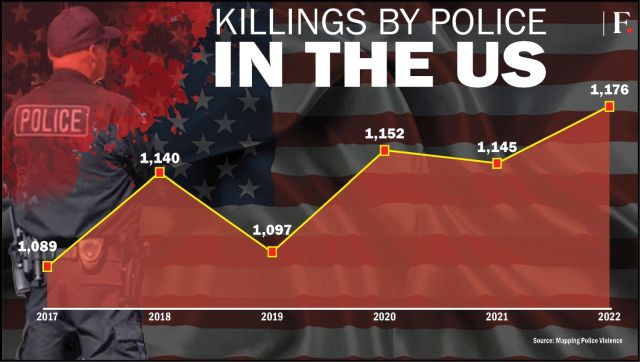
As protests continue to rage in the US with more people joining the fight against US police brutality — data shows that at least 1,176 people were killed by the police in 2022, making it the deadliest year on record since 2013 — let’s take a closer look at what is the George Floyd Justice in Policing Act and how it could help in changing the American law enforcement system.

What is the George Floyd Justice in Policing Act?

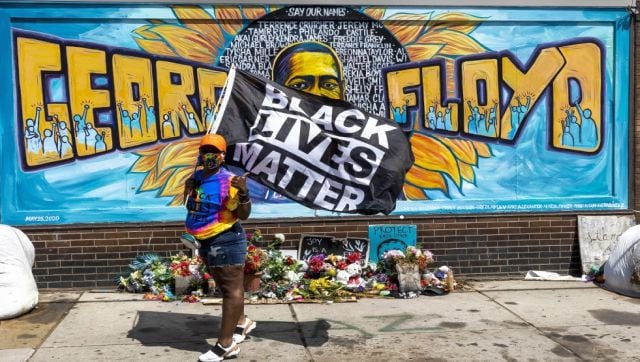
In June 2020, America was on fire; millions of people were out on the streets, angered by the deaths of George Floyd by then-Minnesota police officer Derek Chauvin and the deaths of other Black Americans, such as Breonna Taylor, Daniel Prude, and Rayshard Brooks at the hands of police officers.

Reacting to these killings, the Democrats introduced the George Floyd Justice in Policing Act of 2021 in the US House of Representatives in February 2021. The legislation sought to combat police misconduct, excessive force, and racial bias in policing.

The legislation was primarily drafted by Representative Karen Bass of California and addressed a wide range of policies and issues regarding policing practices and law enforcement accountability.

The legislation was name after George Floyd — who is also believed to be the catalyst behind the #BlackLivesMatter movement that shook America and the world.

What the George Floyd Justice in Policing Act would do?

The George Floyd Justice in Policing Act aims to ban certain police techniques and introduce more accountability. It also seeks to improve police training and invest in community programs designed to improve policing.

To curtail deaths, the legislation bans federal law enforcement from using chokeholds like the one that ended Floyd’s life. It also bans no-knock warrants in federal drug cases. Incidentally, a no-knock warrant led to the fatal shooting of Breonna Taylor by the police in Louisville, Kentucky in 2020.

The legislation also ends ‘qualified immunity’ to law enforcement officers. This ‘qualified immunity protects law enforcement officials from civil lawsuits. The bill also makes it easier to prosecute police officers.

The bill also prohibits racial, religious and discriminatory profiling by law enforcement agencies at the local, state and federal levels and mandate training against such discriminatory profiling. It also mandate that police officials wear body cameras and mandates that all marked federal police vehicles use dashboard cameras.

The George Floyd Justice in Policing Act also allows for the creation of a national police misconduct registry to prevent police officers who are fired or pushed out for bad performance from being hired by other agencies.

Furthermore, it also addresses police militarisation by limiting how much military-grade equipment is awarded to state and local law enforcement agencies.

What is the status of the bill?

The House of Representatives passed The George Floyd Justice in Policing Act in March 2021, but the legislation has stalled in the Senate.

Several Republicans argue that the police think there are better solutions that haven’t been included in the bill. In fact, they came up with their own new legislation — the JUSTICE Act — which focused heavily on data collection about police use of force and more documentation of police misconduct, and was much narrower than Democrats’ proposal.

One of the major sticking points over the George Floyd Justice in Policing Act is the issue of qualified immunity. Democrats are determined to remove such protection, but the Republicans argue that in doing so, police officials would be vulnerable to lawsuits.

Now, with the Tyre Nichols case, the spotlight is back on the legislation with more people demanding that it be passed into law.

Derrick Johnson, the president of National Association for the Advancement of Coloured People (NAACP), has urged lawmakers to pass the bill. “By failing to write a piece of legislation, you’re writing another obituary,” Johnson said in a statement. “We can name all the victims of police violence, but we can’t name a single law you have passed to address it.”

With inputs from agencies

Read all the Latest News, Trending News, Cricket News, Bollywood News,
India News and Entertainment News here. Follow us on Facebook, Twitter and Instagram.


from Firstpost World Latest News https://ift.tt/bTmuUYR

31 January: Historical events that took place on this date

Over the past few decades, the world has witnessed several major events and happenings that left a huge impact on people. While wars and global crises have dominated modern history, there is also a positive aspect to the past. We have also seen massive technological advancements that have completely shaken the world. Speaking of which, some people have also played a significant role in these events and their contribution is still remembered to date. Today is 31 January 2023, and the date also marks several major events in history.

Let’s take a look.

31 January: Historic events
1958 – First US satellite was launched

Following the launch of Sputnik 1 by the Soviet Union in 1957, the United States launched its first artificial space satellite – Explorer 1 on 31 January 1958. Under the direction of Dr Wernher von Braun, the satellite was developed by the Jet Propulsion Laboratory. The satellite flew into place on a Jupiter-C rocket from the US Army Ballistic Missile Agency.

1966 – Luna 9 was launched

As a part of its space programme, the Soviet Union launched the Luna 9 on 31 January 1966. Luna 9 went on to become the first spacecraft to make a soft landing on the Moon. After landing, Luna 9 was successful in communicating some relevant information and images from the moon’s surface.

1981 – Justin Timberlake was born

Famous American singer and actor Justin Timberlake was born on 31 January 1981 in Memphis, Tennessee. From a very young age, Timberlake started building his career in music. Years after becoming a member of the popular boy band ‘NSYNC’ at the age of 14, Timberlake launched a solo career. It was in November 2002 when he released his solo album, ‘Justified’.

2001 – Abdelbaset Ali Mohmed al-Megrahi was convicted

For his role in the 1988 Pan Am flight 103 bombing, Libyan national Abdelbaset Ali Mohmed al-Megrahi was convicted on 31 January 2001. Around 270 fatalities were reported in the bombing, which took place on 21 December 1988. Later in 2009, he was released after being diagnosed with terminal cancer.

2020 – United Kingdom formally left the EU

Bringing an end to 47 years of membership, the United Kingdom finally left the European Union on 31 January 2020. Notably, this came almost after three years of a tumultuous departure process after the country voted for Brexit.

Read all the Latest News, Trending NewsCricket News, Bollywood News,
India News and Entertainment News here. Follow us on Facebook, Twitter and Instagram.


from Firstpost World Latest News https://ift.tt/QTpa1el

Sunday, January 29, 2023

US police probes K-9 charged of stealing colleague's lunch'; dog's photo goes viral

In a hilarious investigation launched by the US Police, a K-9 has been accused of allegedly stealing lunch from one of his colleagues. Sharing the report on Facebook, the Wyandotte Police Department (WPD) of Michigan posted a photo of the dog’s mugshot with details of the charges levied against him.

The police dog named ‘Officer Ice’ allegedly stole the food of his colleague when he was on duty on 12 January 2023. While the department ‘jokingly’ sought suggestions from people on how to proceed with the investigations, it also noted that they have received multiple threats of protests if the matter is taken forward.

In its Facebook post, the police department while sharing the photo of Officer Ice started off with a serious note specifying how a police officer needs to take an oath of protecting people’s property. However, it seems things are not like we thought as the department divulged more details.

They stated that Officer Barwig was having lunch in the breakroom when he had to go attend to some urgent calls, leaving his food half-eaten. After returning from work to his surprise, Barwig found his entire lunch ‘gone, disappeared, and vanished’, while Officer Ice delightedly strolled out of the room. The department further added a hilarious angle stating that Officer Ice has used his fifth amendment right to remain silent and is also not cooperating with the investigation.

They also noted that he has a ‘criminal’ history of rummaging through trash cans and snatchings food right away from other colleagues’ hands.

Check:


As soon as the post was shared, it went viral in no time and people came forward to support Officer Ice. Many also offered to speak in his defense if an investigation is launched. After witnessing such reactions, the department in another post stated the K-9 will not face any internal discipline or criminal charges as the public doesn’t believe he is guilty.

“We have been threatened with massive protests if we move forward with our investigation and/or charges,” it wrote, adding that a supporter has also shared a custom-made sandwich for Ice.

Check:


So far, the interesting and light-hearted police investigation has amassed a lot of attention on social media and grabbed thousands of likes.

Read all the Latest News, Trending NewsCricket News, Bollywood News,
India News and Entertainment News here. Follow us on Facebook, Twitter and Instagram.


from Firstpost World Latest News https://ift.tt/8wxhAKb

Pakistan's deepening politico-economic crisis could fuel instability in region: Experts

Kolkata/New Delhi: Deepening political crisis, depleting forex reserves, nationwide power outages and food crisis have made Pakistan an unstable country that may pose serious consequences for the region, experts said.

Amid this economic crisis, the Shahbaz Sharif government will begin crucial negotiations with the Washington-based IMF (International Monetary Fund) for a bail-out package on Tuesday which may come with “tough and possibly politically risky” pre-conditions of austerity, feeding into a bigger political crisis, they said.

The risk for India would not only be instability in Pakistan with its fall-out of rising extremism in the region but also unpredictable actions which could include bids to divert domestic public attention by focussing on an external enemy.

“The current economic crisis is feeding into the ongoing political crisis (where the Imran Khan-led Pakistan Tehreek-I-Insaf party has dissolved two provincial assemblies to force fresh elections) the conditions that IMF is likely to impose for releasing money will of course cause a great deal of short-term pain which may have a political fall-out,” said Ambassador TCA Raghavan, former Indian envoy to Pakistan.

Disbursements from Pakistan’s $7 billion IMF bail-out (the 23rd since Independence) were stalled last November as the global lender of the last resort felt the country had not taken enough steps on fiscal and economic reforms to right-size the economy whose forex reserves have dwindled to $4.34 billion (from $16.6 billion a year back), barely enough to cover three weeks of imports. While its long-term debt has shot up to $274 billion, with some $8 billion due for re-payment this quarter.

Inflation has surged to 24 per cent with wheat and oil imports, on which the nation depends, becoming dearer and foreign investors including Chinese firms, which had shown interest in setting up factories in a much-touted economic corridor, scurrying away after a spate of terror attacks.

Economists said the IMF is likely to seek an increase in tax to GDP ratio as well as more realistic pricing of certain services including energy to generate more cash for the government to run itself and pay back loans.

“The bail-out is a must for Pakistan as a combination of high energy and food prices, rising unemployment, negative export earnings, flight of investment and shortages have made it the international basket case which Henry Kissinger (former US secretary of state) had thought Bangladesh would become,” pointed out Professor Biswajit Dhar, former director general of Research and Information System for Developing Countries, a Delhi-based think tank, and head, Centre for WTO Studies at IIFT.

Pakistan’s method of dealing with similar crisis in the past has been to “leverage its geo-political position and extract rent from global partners. That is not working as effectively this time that is the real problem for its ruling class,” said Ambassador Raghavan.

“Pakistan had hoped that as in the past the triple As (Army, America and Allah) will somehow come to its aid again. However, times have changed … Army itself is a major cause of Pakistan’s financial problems as it absorbs the bulk of its budget.  America is suffering from aid fatigue. In desperation, Pakistan’s finance minister has now appealed to Allah,” quipped Ambassador Rajiv Dogra, former permanent representative to UN’s Food and Agriculture Organisation and earlier India’s last consul general to Karachi.

Indian analysts including Raghavan and Dhar feel that the Sharif government and the Pakistan Army will delay elections to give time to the civilian government to implement reforms sought by IMF and make them palatable to the middle class who are likely to bear the brunt of austerity measures adopted.

“Under similar circumstances, a rational country will think seriously about the best possible way to get out of it (economic crisis). Here trading with India could be one option. Pakistan remains energy-starved and could benefit greatly by expanding energy relationships with India.

“Pakistan will have the advantage of a huge market in India. Its imports from India will be far cheaper. But going by past record, Pakistan will prefer to cut its nose rather than trade with India,” said Ambassador Dogra.

On the flip side, India too may not agree to such overtures. “The chances of India opening up to trade with Pakistan is slim given the fact that the current government’s political constituency may not favour such a move,” said Professor Dhar.

As a result, experts pointed out that Pakistan’s twin economic and political instability could explode in the neighbourhood in different ways. Said Ambassador Dogra, “The current situation is ideal for terror groups to thrive and Pakistan has a history of diverting its troublemakers to others in the region, especially India.”

Pakistan saw a 28 per cent spike in terror attacks in calendar year 2022 compared to the year before, according to a report published earlier this month by Pakistan Institute of Conflict and Security Studies. Militants carried out 376 terror attacks, killing 533 and injuring another 832 people. December 2022 was the worst month with 49 attacks in which 56 people were killed, including 32 security forces personnel.

Other analysts too believe that while Pakistan is likely to remain “self-absorbed” as it deals with its crisis, other possibilities can never be ruled out. “You can never be sure of what is happening (in Pakistan’s ruling elite’s thought process). Even at a very good time in our relations, Kargil happened. Nobody will ever rule out the possibility that something like that will not happen. You have to remain on your guard,” said Ambassador Raghavan.

Read all the Latest NewsTrending NewsCricket NewsBollywood News,
India News and Entertainment News here. Follow us on FacebookTwitter and Instagram.


from Firstpost World Latest News https://ift.tt/hK46iIG

Why petrol prices have reached an all-time high in cash-strapped Pakistan

All is not well in Pakistan. It’s facing an unprecedented economic crisis. Last week, its currency plummeted to its lowest – Rs 255.43 – against the US dollar and now the nation has announced a steep hike in prices of petrol and diesel.

The Pakistan government increased the price of fuel on Sunday by Rs 35. After the hike, petrol would cost Rs 249.80 per litre (local currency), high-speed diesel Rs 262.80 per litre, kerosene oil Rs 189.83 per litre and light diesel oil Rs 187 per litre. This came as a shocker for its citizens already hit by inflation.


Why did Pakistan increase fuel prices?

“The Pakistani rupee saw devaluation last week... and now we are seeing an 11 per cent increase in the prices of petroleum products in the international market,” Finance Minister Ishaq Dar said in a televised address.

Dar said that despite international prices and the rupee devaluation “on directions of Prime Minister Shehbaz Sharif, we have decided to increase the minimum price of these four products,” according to a report in Dawn. He said that in the last four months, there was no increase in petrol prices. “In fact, the prices of diesel and kerosene oil were decreased,” he told the newspaper.

The finance minister said that prices were hiked on the recommendation of the oil and gas regulatory authority “who said there were reports of artificial shortages and hoarding of fuel in anticipation of price rises”. The step was taken to combat this.

According to Dar, rumours of an increase in the cost of gasoline and diesel by Rs 50 led to an artificial shortage in the market.

Also read: Pakistan rupee plummets to record low. What happens next in the crisis-hit nation?

What about the IMF bailout?

Under the Imran Khan administration, Pakistan was placed into a $6 billion International Monetary Fund (IMF) programme in 2019, which was increased to $7 billion in 2022. The cash-strapped nation needs to complete the ninth review and the government and the IMF are negotiating a release of $1.18 billion.

From 31 January to 9 February, an IMF team will visit Islamabad to consult with government representatives about the implementation of the criteria that are linked to the aid package.

Measures to meet the IMF conditions include increasing fuel and energy prices and raising taxes.

In June last year, Pakistan increased prices of all petroleum products by about Rs 14 to Rs 19 per litre to meet the pre-conditions set by the IMF.

So will taxes be increased?

Yes, most likely. According to media reports, the Pakistan government has prepared two draft ordinances to impose Rs 200 billion in new taxes, days after it accepted IMF demands to resume a stalled loan programme.

The government is also considering discontinuing the power sector subsidy and imposing sales tax on raw materials for the export sector, especially textile industrialists, reports Dawn. It further added that more hikes in electricity and gas tariffs are also on the agenda.

Also read: Pakistan’s crippling economic crisis: Is the country going the Sri Lanka way?

What is the Opposition saying?

Pakistan Tehreek-e-Insaf (PTI) chairperson and former prime minister Imran Khan slammed the petrol price hike, saying that the total mismanagement of the economy by the “imported government crushed the masses and salaried class”.

“Electricity and gas price hike and 35% unprecedented inflation expected with Rs200bn mini-budget,” he wrote on Twitter.

Chaudhary Parvez Elahi, a leader for Pakistan Muslim League (Quaid e Azam), an ally of PTI, said that Dar raised petrol prices by Rs 35 per litre to give a “gift” to Maryam Nawaz on her return from London. “The credit for increasing petrol prices goes to Nawaz Sharif and Maryam Nawaz,” he said, adding that the monster of inflation had gone out of control, while the Pakistan Muslim League (Nawaz) government was busy victimising PTI and PML-Q leaders.

What’s the plight of the common man in Pakistan?

The headline inflation in Pakistan double from 12.3 per cent in December 2021 to 24.5 per cent in December 2022.

This has caused an increase in food prices. The food inflation rate has almost tripled – it was 11.7 per cent in December 2021 and 32.7 per cent in December 2022. Prices of onions, chicken, salt and pulses are skyrocketing.

Last week, large parts of Pakistan witnessed a massive power outage, even as electricity bills have almost doubled over the last year and a half.

According to a report in Dawn, the situation is so dire that many salaried-class people have to take up multiple jobs and have been forced to cut down three meals to two.

“I make Rs 29,000 a month and my monthly grocery costs at least Rs25,000. I need 60 kg flour and 8k g ghee every month, while expenses like education are secondary when basic food needs can’t be fulfilled. In such extreme circumstances my family has had to skip a meal and we only have two meals a day now,” Muhammad Shahzad, a technical employee with a media organisation, told Dawn.

“If I was earning Rs 30,000 a month 10 years ago, I was comfortable, but now even Rs 150,000 a month from two jobs feels less because of the rates of essential items increasing rapidly... My biggest expense is petrol because even if one of the schools I work in is five minutes away from home, I can’t walk to it because of safety concerns… Public transport is also highly costly because of mounting petrol prices,” Sana Ali, a teacher, said, according to the newspaper.

With inputs from agencies

Read all the Latest News, Trending NewsCricket News, Bollywood News,
India News and Entertainment News here. Follow us on Facebook, Twitter and Instagram.


from Firstpost World Latest News https://ift.tt/LKzBuma

Nadhim Zahawi sacked: How Britain's Tory scandals of today are a reminder of those in the 1990s

The 1990s are everywhere right now. From the fashion trends making a comeback in 2023, to the hotly anticipated return of the flashback mystery-box thriller Yellowjackets, it’s starting to feel like the millennium never happened. And where pop culture leads, politics inevitably follows.

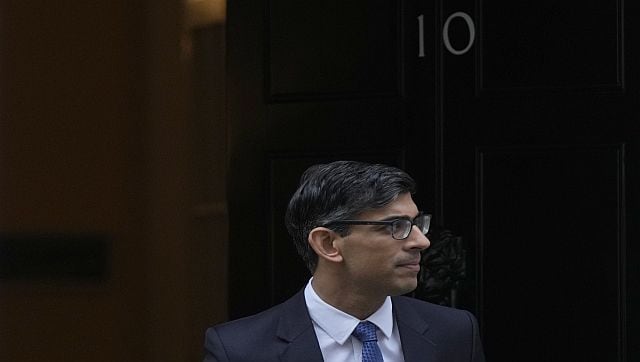
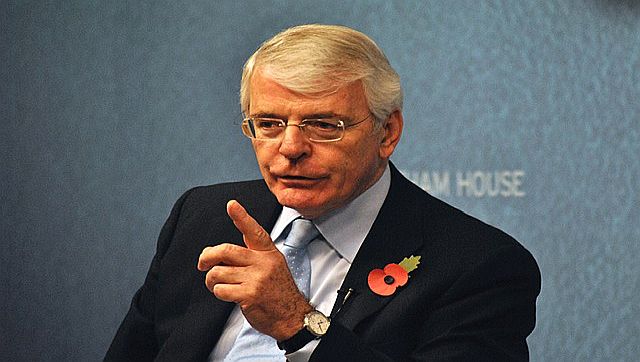
Events swirling around Prime Minister Rishi Sunak are more than a little reminiscent of the sleaze that dogged John Major’s Conservative government for most of his tenure between 1992 and 1997. So much so that I was recently reminded of a passage written by political scientist Tim Bale:

That he won a leadership contest could do nothing to boost the Conservative Party’s popularity. His tendency to try to conciliate all sides of an increasingly factionalised parliamentary party bought him time, during which he hoped — in vain — that economic recovery would bring voters back to the Tory fold. But it also earned him widespread contempt inside the party and a reputation for fudging and weakness outside it.

If you thought Bale was writing about Rishi Sunak here, you’d be forgiven. It is in fact a description of Major. Like Sunak, he took power after a popular leader largely seen as electoral gold dust lost their lustre (we’ll brush over the Liz Truss experiment here).

He was also constantly fighting fires related to standards, made much worse by the way in which he set out his governing agenda.

In 1993, Major announced his intention to lead the UK “back to basics” by focusing on the “traditional values” of “self-discipline and respect for the law, to consideration for others, to accepting responsibility for yourself and your family”.

He had been speaking about the whole country but his words came back to haunt him over and over as revelations about the financial and personal dealings of his MPs came to light.

After days of mounting criticism, Sunak finally sacked Conservative party chairman Nadhim Zahawi’s over his failure to pay what appears to have been a tax bill of millions.

This is the scandal currently plaguing Sunak most insistently. But his predecessor Boris Johnson’s connection with BBC chairman Richard Sharp has caused no small amount of trouble as well. Both matters predate Sunak’s time in office, and are somewhat out of his control but nevertheless show the bind he is in.

There is longstanding research that shows that there are logics of appropriate behaviour in society. And that these logics of what is (and is not) considered alright differ between people, countries and contexts.

So, as I have shown in my research on money in politics, different countries have different understandings of what acceptable levels of donation are.

Other researchers have highlighted that sex scandals are much more likely to be an issue for British people than French people, for example. A snap poll taken almost a full week before Sunak made a decision about Zahawi showed a majority thought the chairman should lose his job.

Another poll taken around the same time saw 75 per cent of respondents say they think members of parliament should publish their tax returns.

Part of Sunak’s pitch on the steps of Downing Street when he first took office was to bring integrity, professionalism and accountability at every level of his government after the wayward Boris Johnson years. The problem for Sunak, is that it makes him all the more at risk from questions of ethics and propriety than his predecessor.

Boris Johnson was the “greased piglet” of UK politics. He was born slippy. So, an amount of misbehaviour was baked in to the cake (until it wasn’t).

Tolerance for Rishi Sunak, when it comes to standards issues, is simply much lower. He is far more at risk from scandal and sleaze than Johnson was, and even more so after tying his premiership to it.

John Major: Back to basics

What is happening in British politics in 2023 is therefore similar to the 1990s in more than just one way. The allegations themselves are deeply resonant of course, but the way Sunak has been compromised is also similar. For Major, his “back to basics” pledge simply became a stick to beat him with during the many sleaze scandals that fell onto his lap.

Sunak will be aware that the same could easily become true for him. Even if the specific issues with Zahawi and Johnson are soon forgotten, future scandals are practically written into Sunak’s schedule over the next few months.

In the coming weeks we will see the release of Johnson’s resignation honours, which is said to be stuffed with people who have done him favours, often of the financial kind, over the years.

A parliamentary inquiry into whether Johnson mislead parliament over partygate is also about to begin, reminding everyone of the behaviour that triggered the beginning of the end for his government — and potentially of Sunak’s own police fine for breaking lockdown rules.

It’s not the ’90s for Labour

A pessimist, then, would say that the next election will mark the end of the road for Sunak, and the Conservative party in power. Much like Major was effectively leading a zombie government to inevitable defeat in 1997, Sunak appears to have no distance left to run.

But, despite the numerous historic parallels, there’s an important difference. The Labour opposition has much more work to do now than it did during the final Major years, and will be electioneering with a leader much less popular than Tony Blair.

Remember, Labour suffered a catastrophic defeat in 2019, which puts them quite significantly on the back foot leading into the next election.

The current political landscape, of course, should take precedence. But history can tell us a lot about the current travails of Rishi Sunak, and how we might expect the next few years to shake out.

And, while there’s certainly more than a whiff of the 1990s about this Conservative government, the key difference is its larger majority. Of all the small things that might decide the next election, that’s one thing we should never forget.The Conversation

This article is republished from The Conversation under a Creative Commons license. Read the original article.

Read all the Latest News, Trending News, Cricket News, Bollywood News,
India News and Entertainment News here. Follow us on Facebook, Twitter and Instagram.


from Firstpost World Latest News https://ift.tt/zhREwSv

China restaurant serves 'liquid detergent' in place of juice; 7 hospitalised

It is quite common for restaurants to get mixed up with customer orders and as a result, they often end up serving the wrong dish to the wrong tables. But how would you feel if you are served ‘liquid soap’ to drink instead of something actually edible? Yes, it’s true. This was indeed the case at a restaurant in China where a group of customers ordered fruit juice but were served liquid detergent to drink, causing them to fall sick.

The incident took place at a restaurant in China’s Zhejiang province on 16 January 2023 where a group of seven was dining together. As reported by South China Morning Post (SCMP), Sister Wukong, who came with her family and friends for dinner, consumed the liquid detergent after mistaking it for juice.

In a now-deleted video, the woman claimed a waiter placed a bottle on their table that they mistook for fruit juice. Her husband took the first sip and informed the group about its ‘bitter and weird’ taste. Others also said the same.

“I took one sip and my throat felt very bad immediately,” Wukong added. Realising the blunder immediately, all of them were rushed to the hospital where they got their stomachs pumped (a medical process in which doctors empty the contents of your stomach in case of emergencies).

Speaking on the same, Wukong as cited by SCMP said, “All of us dined together and are now lying here. We all had to have our stomachs pumped. The waitress also admitted her mistake saying that she was inexperienced and had an eyesight problem. She also said that it is not her daily duty to work at the restaurant and was just helping out for the day.”

Notably, all seven people are in stable condition and might seek compensation from the restaurant for the blunder.

While the woman’s video is not available anymore, it did catch the attention of social media users who shared their shocking reactions to the incident.

Read all the Latest News, Trending NewsCricket News, Bollywood News,
India News and Entertainment News here. Follow us on Facebook, Twitter and Instagram.


from Firstpost World Latest News https://ift.tt/2cRoiXI

Will India, Japan join Australia, US and UK to form NATO-like alliance to counter China in Indo-Pacific?

Amid growing Chinese aggression, the UK has called for the formation of a NATO-like military alliance in the Indo-Pacific.

It has also called for the inclusion of India and Japan in the AUKUS security pact.

“The chair of the UK’s defence select committee has suggested the AUKUS agreement, a trilateral agreement between Australia, the United Kingdom, and the US that would expand to include India and Japan,” Sky News reported.

The AUKUS (Australia, UK, US) pact was announced on 15 September 2021 with a focus on the Indo-Pacific. As part of the deal UK & US will help Australia acquire nuclear-powered submarines.

Notably, India, Japan, US and Australia already have an alliance for the Indo-Pacific to counter Beijing. Dubbed as ‘Asian NATO’, the QUAD holds annual summits apart from a joint military drill called Exercise Malabar.

With inputs from agencies

Read all the Latest News, Trending NewsCricket News, Bollywood News,
India News and Entertainment News here. Follow us on Facebook, Twitter and Instagram.


from Firstpost World Latest News https://ift.tt/GlxHmCe

Turkey issues warning for its citizens against travelling to US, UK fearing 'possible terror attack'

Istanbul: Due to the rise in anti-Turkey protests by anti-Islamic, racist, and terrorist organisation connected groups in European countries, the Turkish Ministry of Foreign Affairs has issued travel warnings to its people.

The Turkish Ministry of Foreign Affairs issued the similar warning to European nations and the United States after its western allies such as United States, Germany, and France warned their people about terrorist activities in Turkey.

“It is noticed that there has been a spike in anti-Islamic, xenophobic, and racist actions in various European nations recently, as well as in propaganda displays against our country by groups associated with the terrorist organisation,” the Ministry of Foreign Affairs stated in a statement.

These changes, which are a reflection of the perilous dimensions of religious intolerance and hatred in Europe, make obvious the worrisome level that racist and discriminatory movements have reached there.

The advisory asks people who reside in or are travelling to nations where such actions occur to exercise caution, avoid areas where protests might become more intense, maintain composure in the face of potential xenophobic and racist harassment and attacks, contact local security forces, and closely follow local media and media outlets.

“Following any new announcements and cautions that our Ministry, Embassies, and Consulates General may make is extremely advantageous for the security forces of the various nations,” the advisory states.

If necessary, our people may submit an application to the Consular Call Center of our Ministry, whose contact information is supplied, if they reside in Europe or are about to visit European nations. The ministry released a statement regarding the USA as well.

In the report, it is stated that “protests are occurring across the USA following the death of Tire Nichols in Memphis, Tennessee, USA, as a result of police violence.

Read all the Latest News, Trending NewsCricket News, Bollywood News,
India News and Entertainment News here. Follow us on Facebook, Twitter and Instagram.


from Firstpost World Latest News https://ift.tt/PjowhOg

Pakistan: Ishaq Dar announces 35-rupee hike in prices of petrol and diesel

Islamabad: In a major blow to the common man who is already reeling under the high inflation, Petrol and diesel prices in Pakistan have jumped up to Rs 249.80 per litre and Rs 262.80 from Sunday after the government announced a steep price hike of Rs 35.

In a media briefing, Finance Minister Ishaq Dar announced an Rs35 increase in the prices of petrol and diesel, which will be applicable from 11 am on Sunday.

“We have received reports of artificial shortages in the market because of rumour spread regarding Rs50 increase in the prices of petrol and diesel. The Pakistani rupee saw devaluation last week and now we are seeing an 11 per cent increase in the prices of petroleum products in the international market,” he said.

Dar further said that the price of petrol was not increased in the last four months but considering international prices and rupee devaluation, the government decided to increase the minimum price of patroleum products.

“We have decided to increase the price of petrol and diesel by Rs35. The price of Kerosene oil and light diesel oil has been increased by Rs18 on the directions of Prime Minister Shehbaz Sharif,” he said.

Ahead of the announcement, a long queue at petrol pumps reported in many parts of the country on Saturday.

Various posts were shared on social media say that the prices of petrol and diesel were expected to go up by anywhere bet­ween Rs45 to Rs80 on Feb 1.

Meanwhile, petrol was available at only 20 per cent of the pum­ps in Gujranwala, while severe shortages were also repo­rted in Rah­im Yar Khan, Bahawalpur, Sialkot and Faisalabad, Geo News reported.

The move is said to be taken to implement the tough preconditions set by the International Monetary Fund (IMF) to revive the stalled $6 billion bailout package for the cash-strapped country.

According to media reports, the country needs about $3.16 billion to pay dollar bonds and loans this year, $1.52 billion next year and $1.71 billion in 2024 to keep its economy afloat and avert a sovereign default.

With the rates of petroleum products revised on Sunday, the fuel prices as of Jan 29, 11 am will be:

Petrol: Rs249.80 per litre

High-speed diesel: Rs262.80 per litre

Kerosene oil: Rs 189.83 per litre

Light diesel oil: Rs187 per litre

Read all the Latest NewsTrending NewsCricket NewsBollywood News,
India News and Entertainment News here. Follow us on FacebookTwitter and Instagram.


from Firstpost World Latest News https://ift.tt/TEXjrV1

'Tiny but Lethal' radioactive capsule mysteriously goes missing in Australia

Perth (Australia): A tiny but possibly lethal radioactive capsule that was being carried 870 miles (1,400 km) from a mine to a storage in the city of Perth has gone missing, and Australian emergency services are frantically searching for it.

The 8mm by 6mm unit, which is tiny than a penny, is thought to have fallen off the back of a truck on a 22-mile (35-kilometer) stretch of road in Western Australia as it was being transported from the Rio Tinto mine in Newman
to the Perth suburb of Malaga.

As per reports, the device was misplaced when a screw in a sizable lead-lined gauge came loose and fell down a hole. Caesium-137, a highly radioactive isotope that experts claim cannot be weaponized, is contained in the tiny silver cylinder.

According to state officials, the device releases the equivalent of 10 X-rays in an hour, thus people should keep at least 16 feet away from it. Skin damage, burns, and radiation sickness, as well as immune system impacts, could ensue from contact. Continual exposure may potentially result in cancer.

In an effort to identify it, the Department of Fire and Emergency Services has sent out teams equipped with metal detectors and portable radiation detectors. However, because to a lack of equipment, state authorities have requested outside help.

Search crews are focusing their efforts on locations around the Great Northern Highway and in populated areas to the north of Perth.

“What we’re not doing,” said superintendent Darryl Ray, “is trying to identify a small little device by eyesight.”

To find the gamma rays, we are utilising radiation detectors, the scientist explained.

To pinpoint the precise path the driver travelled and the locations of the truck’s stops along the way, authorities are examining GPS data from the vehicle. They worry that the capsule may be hundreds of miles distant from the search area and may be stuck in the tyre of another vehicle.

Rio Tinto did not learn the capsule was stolen until 25 January despite having hired a professional radioactive materials handler to package and deliver it “safely” to the depot.

The Western Australian government didn’t let the public know until Friday after waiting two days. Andrew Robertson, the company’s senior health officer, defended the delay, saying the mine and depot had to be checked and excluded, and the route had to be validated.

“We think the truck’s vibration may have compromised the gauge’s structural integrity, causing it to disintegrate and the source to emerge from it, the man stated. A gauge seldom breaks apart the way this one has,” he said.

“We worry that someone would pick it up, not knowing what it is, think it’s something intriguing, and keep it,” he added.

Since stealing at the depot has been ruled out, police have established that the incident was an accident and that no criminal charges are probable.

Read all the Latest News, Trending NewsCricket News, Bollywood News,
India News and Entertainment News here. Follow us on Facebook, Twitter and Instagram.


from Firstpost World Latest News https://ift.tt/dUfoZ5c

Saturday, January 28, 2023

'Tiny but Lethal' radioactive capsule mysteriously goes missing in Australia

Perth (Australia): A tiny but possibly lethal radioactive capsule that was being carried 870 miles (1,400 km) from a mine to a storage in the city of Perth has gone missing, and Australian emergency services are frantically searching for it.

The 8mm by 6mm unit, which is tiny than a penny, is thought to have fallen off the back of a truck on a 22-mile (35-kilometer) stretch of road in Western Australia as it was being transported from the Rio Tinto mine in Newman
to the Perth suburb of Malaga.

As per reports, the device was misplaced when a screw in a sizable lead-lined gauge came loose and fell down a hole. Caesium-137, a highly radioactive isotope that experts claim cannot be weaponized, is contained in the tiny silver cylinder.

According to state officials, the device releases the equivalent of 10 X-rays in an hour, thus people should keep at least 16 feet away from it. Skin damage, burns, and radiation sickness, as well as immune system impacts, could ensue from contact. Continual exposure may potentially result in cancer.

In an effort to identify it, the Department of Fire and Emergency Services has sent out teams equipped with metal detectors and portable radiation detectors. However, because to a lack of equipment, state authorities have requested outside help.

Search crews are focusing their efforts on locations around the Great Northern Highway and in populated areas to the north of Perth.

“What we’re not doing,” said superintendent Darryl Ray, “is trying to identify a small little device by eyesight.”

To find the gamma rays, we are utilising radiation detectors, the scientist explained.

To pinpoint the precise path the driver travelled and the locations of the truck’s stops along the way, authorities are examining GPS data from the vehicle. They worry that the capsule may be hundreds of miles distant from the search area and may be stuck in the tyre of another vehicle.

Rio Tinto did not learn the capsule was stolen until 25 January despite having hired a professional radioactive materials handler to package and deliver it “safely” to the depot.

The Western Australian government didn’t let the public know until Friday after waiting two days. Andrew Robertson, the company’s senior health officer, defended the delay, saying the mine and depot had to be checked and excluded, and the route had to be validated.

“We think the truck’s vibration may have compromised the gauge’s structural integrity, causing it to disintegrate and the source to emerge from it, the man stated. A gauge seldom breaks apart the way this one has,” he said.

“We worry that someone would pick it up, not knowing what it is, think it’s something intriguing, and keep it,” he added.

Since stealing at the depot has been ruled out, police have established that the incident was an accident and that no criminal charges are probable.

Read all the Latest News, Trending NewsCricket News, Bollywood News,
India News and Entertainment News here. Follow us on Facebook, Twitter and Instagram.


from Firstpost World Latest News https://ift.tt/QZgofBN

At least 39 dead as passenger coach plunges into ravine in Balochistan’s Lasbela

New Delhi: At least 39 people were killed and others injured after a passenger coach fell into a ravine in Balochistan’s Lasbela on Sunday.

Officials said that three people, including a child and a woman, have been rescued alive. However, he said that the number of casualties could go up. The coach crashed into the pillar of a bridge due to overspeeding while taking a U-turn near Lasbela.

Lasbela Assistant Commissioner Hamza Anjum confirm the incident, saying that the vehicle, with nearly 48 passengers on board, was travelling from Quetta to Karachi.

“Due to speeding, the coach crashed into the pillar of a bridge while taking a U-turn near Lasbela. The vehicle subsequently careened into a ravine and then caught fire,” he told Dawn.com.

Anjum added that three people, including a child and a woman, have been rescued alive. However, he feared that the number of casualties could increase.

“At least 17 bodies have been recovered from the accident site so far, adding that they have been moved to the hospital,” Dawn.com quoted Saad Edhi of Edhi Foundation as saying.

According to reports, more than 9,000 road accidents are reported every year since 2011 in Pakistan, killing more than 5,000 people on average annually.

Read all the Latest NewsTrending NewsCricket NewsBollywood News,
India News and Entertainment News here. Follow us on FacebookTwitter and Instagram.


from Firstpost World Latest News https://ift.tt/y9PzA3d

On this day: A look at historic events that happened on 29 January

A number of major events that have occurred on the day – 29 January – over the years, have helped it to make a place in the pages of history. On this day in 1919, the US Constitution ratified the Eighteenth Amendment which banned the sale and manufacture of intoxicating liquors. On the same day in 1924, Carl Rutherford, an Ohio native, took the patent of a machine that was used to prepare ice cream cones. Brazilian football legend Romario was born on 29 January 1966. The prolific player later played a pivotal role in Brazil’s fourth World Cup triumph in 1994. On that very day in 2002, former US President George W. Bush characterised the alliance of North Korea, Iran, and Iraq as “an axis of evil.”

29 January – Historic Events:

Prohibition Amendment to the US Constitution; 1919:

On 29 January 1919, the Eighteenth Amendment of the United States Constitution prohibiting the “manufacture, sale, or transportation of intoxicating liquors was ratified. The temperance movement, which believed that prohibiting the sale of alcohol would help ease poverty and other societal issues, worked for decades to establish the Eighteenth Amendment. Although the Eighteenth Amendment did not forbid alcohol consumption itself, it made only the manufacture, distribution, and sale of intoxicating liquors unlawful. It came into effect in the next year.

Patent of ice cream cone-manufacturing machine; 1924:

At the St. Louis World’s Fair in 1904, the Menches brothers – Frank and Robert – were hawking ice cream. They ran out of bowls in which they were serving the ice cream. The Zalabia, a flat pastry, was formed into cones by the Menches brothers and thus, they created ice cream cones for the first time. Ohio citizen Carl Rutherford Taylor attended the World’s Fair in the same year. Ice cream and the ice cream cone grabbed his attention. Returning to his homeland, he worked for the next two decades to develop a machine that could produce ice cream cones far more swiftly and cheaply than the Menches brothers’ method.

Finally on 29 January 1924, Rutherford patented his machine and soon established an Ice Cream Cone Company to produce cones. Later, the company was acquired by Norse Dairy Systems.

Brazil legend Romario was born; 1966:

One of the greatest strikers in football history Romário de Souza Faria, known only by his first name, was born on 29 January 1966 in Rio de Janeiro. He was regarded as a maestro of the narrow penalty area, where his quickness over short distances and low centre of mass helped him escape defenders. He was also well-known for his signature toe-poke finish. He was a part of the Brazilian national team which lifted the 1994 FIFA World Cup trophy and was also named the Player of the tournament, receiving the Golden Ball. Romario is still the fourth-highest goalscorer for Brazil with 55 goals in 70 appearances.

Axis of evil; 2002:

Former US President George W Bush, during his State of the Union address on 29 January 2002, termed the alliance of North Korea, Iran, and Iraq “an axis of evil.” He made the remark in an effort to put more international pressure on rogue nations that might use WMD or transfer them to terrorists. Bush said that his administration will take action to stop “dictatorships that support terror” from harming the United States and its allies with WMD, despite the fact that he gave no fresh information regarding the behaviour of these countries. North Korea, Iran, and Iraq, according to Bush, “posed a severe and growing danger” and might provide terrorists access to WMD and missiles, “offering them the means to match their hatred.”

Read all the Latest News, Trending News, Cricket News, Bollywood News,
India News and Entertainment News here. Follow us on Facebook, Twitter and Instagram.


from Firstpost World Latest News https://ift.tt/G2Zec9K