Friday, September 30, 2022

Rishi remorse as Britain faces economic turmoil?

The Tory membership which rejected Rishi Sunak for the leadership of the party in favour of the current prime minister, Liz Truss, has cause to regret their choice. Within weeks she has brought the British economy virtually to its knees, forcing Britain’s central bank, the Bank of England, to intervene in panic as the private pension industry was on unprecedented verge of collapse owing to Truss’ spendthrift and unfunded mini-budget. This was her budget and the Old Etonian, Chancellor of the Exchequer, Kwasi Kwarrteng’s role was inconsequential. She carried out the unlikely impetuous promises she had made during the leadership hustings for party leadership and the dire negative consequences predicted by Rishi Sunak during their debates have duly come to pass. Now the UK is facing an economic crisis that will also have serious political consequences, potentially leading to public disorder if statesmanlike measures are not taken by the few thoughtful members who remain in the British parliament.

The Tory membership which voted Liz Truss into power were approximately 40,000 pensioners from southeast England. The inherited toxic prejudices of the cohort of this particular age group could not quite stomach the idea of a non-white person becoming prime minister and wielding supreme authority over the country. Rishi Sunak was the preferred candidate of the Tory parliamentary party, but that did not cut ice with this traditional Tory social class membership and karma is now haunting them. It is they who are the overwhelming beneficiaries of the type of private pension threatened by Liz Truss’s senseless budget.
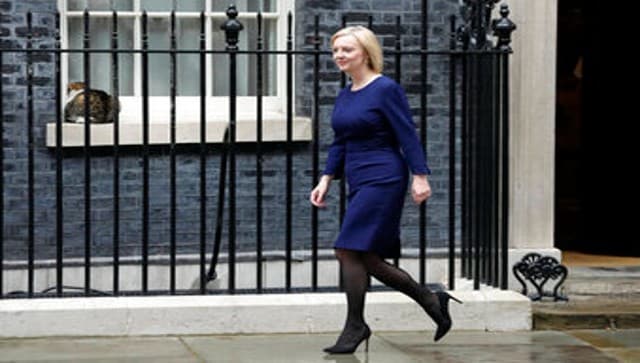
Britain's Prime Minister Liz Truss. AP

Rishi Sunak has been widely praised by political and bureaucratic colleagues in government for discreet competence and unobtrusive personal civility. However, his singular disqualification for becoming Britain’s prime minister, in addition to his racial profile, was the conundrum of placing final authority to launch nuclear weapons with an individual who might have divided loyalties if the target happens, for some unknown reason, to be a country in which his relatives live. Liz Truss, in stark contrast to him, has been described by a former Tory ministerial colleague, the thoughtful MP Rory Stewart, as light-weight, apt to utter trite sound bites, but uninterested in serious engagement on issues. Of course she also displayed shameless ambition during the contest for the Tory leadership and lacked substance, but mediocrity is rarely a barrier for transient political glory.

Liz Truss was also the choice of former prime minister Boris Johnson to succeed him and that also influenced his own oversized populist Tory party constituency. He resented Rishi Sunak and colleague, Health Secretary, Sajid Javid, for being the immediate cause that forced him to resign since they precipitated the tsunami of resignations by other ministerial colleagues. Like the crudely populist Boris Johnson, Liz Truss underscores the degeneration of the British political class, insubstantial and without vision, contrasting with the heights of gravitas once symbolised by statesmen like Lloyd George and Winston Churchill.

The mini-budget announced by the Chancellor of the Exchequer on 23 September provoked a run on the pound sterling and an unheard of rout of British long-term gilts which were sold off on a massive scale. The Bank of England intervened because of the danger posed to Britain’s £1.5 trillion slice of the UK’s pensions sector by gilt yields rising rapidly as their price fell. British pension funds, which dominate the market for long-term government debt, also known as gilts, were threatened with default owing to margin calls that relate to their hedging strategies, designed to match income with liabilities. A huge segment of the British middle class, the heart of the Tory Party’s support, would have faced ruin. Yet, the crisis is far from over since the daily £5 billion purchase of gilts, with an additional £60 billion promised if required, is temporary and demands a change in the government’s economic strategy.

Astonishingly, the prime minister sought to brazen it out four days later in interviews, in a bid to save face, by insisting there would be no change in economic policy. She improbably argued the markets had failed to understand the government’s policy package and its long-term benefits but faltered miserably when interviewers asked her to convince markets with credible explanations. In the aftermath of her shocking performance she seemed to undo some of the stability the Bank of England’s intervention had brought to the gilt market. Liz Truss’ political future must be considered uncertain and the economic policies she has attempted to implement are unlikely to survive.

The mini-budget removed the 45 percent tax rate for anyone earning above £150,0000 annually but did little for families trying to maintain a minimally dignified life on incomes around £60,000 and paying 40 percent tax above an annual income of £50,270. They’re overwhelmingly more numerous than annual £150,000 earners and more electorally significant as a result. In addition, cancelling the national insurance surcharge, a form of taxation, announced by Rishi Sunak when he was the Chancellor of the Exchequer, to fund public provision of care for the old, introduces significant long-term haemorrhage of public finances.

These Liz Truss economic policy measures are the source of the additional £70 billion in debt that her government had incurred in one stroke because of the mini budget last week. The government has also put a cap on the unit price of gas and electricity tariffs charged to consumers, estimated to cost the taxpayer anything between £22 billion and £48 billion, depending on the wholesale price of energy in international markets. The unavoidable public subsidy in response to the dramatic rise in the price of energy, which had more than doubled already and was poised to rise even further, has been poorly designed. It could have been targeted towards the neediest rather than made available universally. Prime Minister Truss also unconvincingly rejected the idea of a one-off extraordinary tax on the super profits made by energy retailers on the grounds that it would be a negative signal to investors.

The renewed post-Covid budgetary profligacy of PM Truss and her Chancellor of the Exchequer, in combination with the pre-existing size of public debt and the rise in gilt yields, prompted a run on sterling as well. Its estimated real purchasing power parity level of $1.40 was reduced to nearly parity within 24 hours. The fall in the value in sterling increased inflationary pressures and only raised the price of energy imports, priced in dollars, even further. Her somewhat hysterical claims about the benefits of major tax cuts, despite the economy being severely stressed and output still at a pre-pandemic level, were simply naïve. The adamant insistence that such tax cuts would spur innovation, growth and productivity are merely feeble ideological fixations with little by way of supportive historical precedent.

The idea that tax cuts for the rich would increase their spending and boost economic activity is oblivious to empirical evidence of their greater propensity to save and the higher import coefficient of the goods they purchase, i.e. in imported goods. The London Times has reaffirmed recently the likelihood that higher income earners would bank their additional savings. The spiralling downward trend the mini budget has provoked in the stock market will also produce a wealth effect, only enhancing their propensity to save. In the prevailing British economic situation of low unemployment, it might have been argued instead that the growing upward pressure of wages was more likely to spur innovation and some productivity growth by encouraging greater investment in labour-saving technology.

The overwrought head girl has apparently not taken on board the lessons of Economics 101, which her ideas thoughtlessly ignored. Yet, there was some method in her madness however unwarranted her enthusiasm. There seems to be an undeclared assumption that the billions spent on the costly energy price cap and tax cuts for the wealthy might be partially offset by the £46 billion additional tax revenues owing to the stealth tax of freezing taxation levels on income over the next four years. It is calculated this will result from the unchanged tax levels until 2025-26 of the tax-free first tranche of income at £12,500 and the next tranche of 20 percent tax after £50,270. With inflation already at 10 percent many more will be dragged into higher tax brackets and that will generate increased tax revenues. Higher inflation is also guaranteeing a sharp rise in the cost of borrowing, alarmingly for homeowners, as the Bank of England increases the base rate to meet its inflation targets. However, its purchase of bonds, in response to the threat posed to pension funds by the recent mini-budget, will only increase inflationary pressures. The Bank of England’s actual plan had been to wind down liquidity by reversing quantitative easing in response to growing inflation.

The admittedly flawed government economic strategy was, at best, highly risky because markets rarely look beyond six months. Most pertinently, its assumptions about the medium-term impact of fiscal expansion and tax cuts have not impressed markets. The long-term growth of the economy will also have to rise dramatically to levels not achieved in recent memory to service the substantial public debt accumulated during the Covid period and augmented by thoroughly misguided current economic policies. It has already exceeded 100 percent of GDP and is likely to rise further significantly. The likelihood that the British economy will achieve growth rates of 4 percent and more to service the higher national debt is optimistic.

Britain’s political class is proving incapable of governing the country, unable to balance nostalgic imperial reflexes with its increasingly modest status as a player off the coast of Europe. The commercial cost of Brexit has turned out to be much larger than Boris Johnson and its advocates had suggested, which was the expectation of most economists. The self-delusion of trying to ignore a fundamentally changed global environment and the multiple constraints it poses on medium-sized economies is an exercise in futility. The well-known helplessness of successive British governments in dealing with commands from Washington is also proving hugely costly for the British public, as its unflagging support for the war in the Ukraine is demonstrating. All this will lead to catastrophe for Britain and the rest of Europe too as the energy crisis deepens in the winter, with, possibly, no heating, no lights and no Internet.

Truss has nevertheless all but declared war on Russia, promising £2 billion of additional weapons to the Ukraine that Britain clearly cannot afford. It is a sight to behold how cerebrally challenged ageing military strategists of a bygone era are being marshalled daily, in conjunction with a barefacedly amenable British media, to disseminate the notion of Russia being defeated very shortly in a war it has already won. But the animus against Russia has primordial roots as the one national power that continually besieged the British empire. The only other constant is deep resentment towards an insufferably thriving India, especially under Prime Minister Narendra Modi. It was the loss of the Indian Jewel in the Crown, which a Viceroy to India, Lord Curzon, had contended would reduce Britain to global insignificance. In this context, the authorities have displayed apparent disinclination to stoutly protect Britain’s largely inoffensive Hindu population from recent assault in British cities. Equally predictable has been the indulgence towards jihadi violence and cynical official endorsement of orchestrated media abuse heaped on the alleged extremism of Hindus, improbably imported from Narendra Modi’s India.

The writer taught international political economy for more than two decades at the London School of Economics and Political Science. Views expressed are personal.


from Firstpost World Latest News https://ift.tt/EKaOrTj

International Day of Older Persons: History, significance and all you need to know

With an aim to raise awareness on the impact of an aging population, every year 1 October is marked as the International Day of Older Persons.

In a bid to ensure the need that people can grow old with dignity, the day aims to elevate consciousness about points that are affecting the aged population, including senescence and elder abuse. There is no denying the fact that older people make a huge contribution to society.

Whether it is through their guidance, transmitting experience and knowledge, or volunteer work, the contribution made by them can’t be paid back, and therefore they surely deserve a day that celebrates them. Hence, the International Day of Older Persons not only honours but also respects the contribution of older people to building society.

History

From helping their families with caring responsibilities to nurturing the young generations, society has benefited from them in many ways. In its resolution 45/106, the United Nations General Assembly on 14 December 1990 designated 1 October as the International Day of Older Persons.

This after the World Assembly on aging adopted the initiatives like the Vienna International Plan of Action on aging by 1982 and later that year was also endorsed by the UN General Assembly.

However in 1991, in its resolution 46/91, the General Assembly adopted the United Nations Principles for Older Persons. As a response to the opportunities and challenges of population aging in the 21st century, the Second World Assembly on Aging in 2002 adopted the Madrid International Plan of Action on aging. This was also done in a bid to promote the development of a society for all ages.

Significance

This special day for older people holds immense importance as it highlights the challenges of aging, including health issues and elder abuse. The International Day of Older Persons also aims to highlight the contributions of the elderly population to our society. Every year the day is celebrated under different themes, which highlights the important aspect of the day. This year, the day is celebrated under the theme of Resilience of Older Persons in a Changing World.

Last year, the day was celebrated under the theme Digital Equity for All Ages, which stressed the need for elder people to be active in the digital world. According to the United Nations, the elderly population in the least developed nations are, for the most part, not getting proper access to the digital world.

Read all the Latest News, Trending NewsCricket News, Bollywood News,
India News and Entertainment News here. Follow us on Facebook, Twitter and Instagram.


from Firstpost World Latest News https://ift.tt/oBEO4DM

Chinese government deletes poet's account over satirical poem ahead of Communist Party congress

New Delhi: A well-known poet in China has been barred from social media after publishing a poem that many people took to be a comment on the upcoming 20th National Congress of the ruling Chinese Communist Party (CCP), at which Chinese President and CCP leader Xi Jinping will run for an unprecedented third term in office.

The Weibo account of Sichuan-based poet Hu Minzhi flashed a brief message reading- “this account does not exist,” before disappearing on Thursday 29 September, reported Radio Free Asia.

Poet Hu has reportedly been banned from both social media platforms- Weibo and Douyin -after she claimed that, in early September, she had been “asked to drink tea,” which is code for being brought in to speak to state security officers.

“She hasn’t been heard from [on social media] for several days now,”  said Ye Bing, Voice of America journalist, via Twitter. “The outlook for her situation, for her liberty, seems bleak.”

Hu was barred after publishing a poem titled “Waiting for the Wind,” which seemed to mock the lack of civic engagement surrounding the party congress, one of the most important political gatherings to take place in China since Xi assumed office.

The poem says “more than a billion people are waiting for the wind…It will come from the direction it comes from.”

It further says “officials are waiting; entrepreneurs; ordinary people too,” “we have no idea if it’ll be an east wind or a west wind, this autumn … a wind that blows forwards, or one that blows backwards.”

The poem was published at a time when many political commentators were raising concerns that Xi was positioned to reverse the economic reforms and political opening that had been started by the late supreme leader Deng Xiaoping in 1979 and return China to a centrally planned economy and political culture, similar to conditions in Mao era.

The poem states “we are just waiting here like puppets … to hear our fate; ours personally, as well as that of the country.”

According to Radio Free Asia, the “apparent silencing comes as Chinese police detained more than a million people in a nationwide security operation ahead of the party congress.”

According to a  Shanghai resident, large numbers of petitioners, meaning the ordinary Chinese pursuing complaints against the government, have been sent out of town to stay at resorts, farmhouses or cheap hotels under police escort, reported Radio Free Asia. 

With inputs from Radio Free Asia

Read all the Latest News, Trending NewsCricket News, Bollywood News,
India News and Entertainment News here. Follow us on Facebook, Twitter and Instagram.


from Firstpost World Latest News https://ift.tt/eXwDB6P

‘Iran has risen, now it’s our turn!’ Afghan women proclaim amid Taliban crackdown

New Delhi: Taking a cue from their counterparts in Iran where protests have been raging for over two weeks now, women in Taliban-ruled Afghanistan have held a rally outside the Iranian embassy in Kabul to express solidarity with Iranian women who have been courageously taking on the autocratic Islamic regime in Iran following the custodial death of Mahsa Amini—a young Kurdish woman.

Holding banners aloft some of them with pictures of Amini, the Afghan women gathered outside the Iranian embassy in Kabul to display solidarity and empathize with Iranian women who have been at the forefront of protests against the Islamic rulers facing a brutal crackdown even when they have been protesting in a non-violent manner.

In a video on microblogging platform Twitter, the Taliban can be seen snatching some of their banners and even targeting some hijab-clad women protesters with the butt of a rifle. The woman can be seen ducking the assault. One of the banners, members of the Taliban can be seen snatching read: “Iran has risen, now it’s our turn!”. Most of the banners had similar messages attempting to give a grim message to the Taliban, indicating that women in other repressive regimes in West Asia and around the world may also rise up in protest against denial of basic rights to women under Islamic law.

The protests in Tehran and other cities have now logged a death toll of nearly 76 Iranian men and women, most of them varsity students. The hijab — a symbol of oppression, and locks of chopped tresses tied to masts and atop poles and flags have become the overpowering symbol of one of the biggest protests that Iran has seen in recent times.

But in what seems different in Afghanistan, it is only a handful of brave women who have held the rally outside the Iranian embassy in Kabul and braved the wrath of the Taliban whereas in Tehran, thousands of women have taken to the streets protesting the killing of the 22-year-old Kurdish woman who was arrested for her choice of attire and harassed by the country’s infamous ‘morality police’, which subsequently led to her death.

In another first in Iran, as well as for most West Asian countries where patriarchy has been the norm for decades, men too have been pouring out on the streets of Iran’s capital city Tehran to join the massive protests which erupted after the death of the 22-year-old. Young men and women, most of them university students have been facing a severe backlash unleashed by the Iran government as they seek answers to what is more important—life or the way they choose to live in dictatorial, ruthless regimes such as those which exist in Iran and nearer home in Afghanistan under the Taliban.

Read all the Latest News, Trending News, Cricket News, Bollywood News,
India News and Entertainment News here. Follow us on Facebook, Twitter and Instagram.


from Firstpost World Latest News https://ift.tt/Yibp7Fz

Iran: Woman arrested for having breakfast without wearing hijab

New Delhi: Even as anti-hijab protests continued in Iran and spread to Afghanistan, an Iranian woman named Donya Rad was arrested for having breakfast without wearing a hijab on Friday.

The information was shared on Twitter by Iranian journalist and activist Masih Alinejad whose post read, “The woman who posted this photo got arrested for the crime of having breakfast without hijab! This is the horrific story of being a woman in Iran in 21st century.”

“Her name is Donya Rad. Women will continue their civil disobedience every day,” her post added.

Protests continued in several cities across Iran against the death of 22-year-old Mahsa Amini in police custody who was arrested earlier this month in Tehran for “unsuitable attire” by the morality police that enforces the Islamic Republic’s strict dress code for women.

At least 83 people have been killed in nearly two weeks of demonstrations, according to a human rights group.

Hailing from the Iranian Kurdish town of Saqez, Amini’s death has sparked the first big show of opposition on Iran’s streets since authorities crushed protests against a rise in gasoline prices in 2019.

Iran’s Islamic Republic requires women to cover up in public, including wearing a “hijab” or headscarf that is supposed to completely hide the hair.

Many Iranian women, especially in major cities, have long played a game of cat-and-mouse with authorities, with younger generations wearing loose scarves and outfits that push the boundaries of conservative dress.

With inputs from agencies

Read all the Latest News, Trending News, Cricket News, Bollywood News,
India News and Entertainment News here. Follow us on Facebook, Twitter and Instagram.


from Firstpost World Latest News https://ift.tt/pZsSy2W

Iran’s Islamic powers begin marking houses of peaceful protesters who chant anti-regime slogans

New Delhi: In continuing crackdown on protestors gathered to condemn the custodial death of 22-year-old Mahsa Amini, the Islamic Republic of Iran has now started marking houses that chant anti-regime slogans every night in an attempt to identify peaceful protesters and then suppress them brutally.

Journalist Masih Alinejad in a recent tweet elaborated how the autocratic Iranian regime was not even sparing those who were protesting peacefully from the confines of their homes. The Islamic regime has begun hounding the protesters even if they are non-violent, local media reports claimed.

“Islamic Republic of Iran started marking the houses that nightly chant anti-regime slogans, mainly: “Woman, life, Liberty” and “Death to dictator” to identify the peaceful protesters. This regime has no boundaries!” read Alinejad’s tweet.

With escalating protests and the increasing death toll of protestors being suppressed brutally by the regime, Iran's President Ebrahim Raisi earlier this week condemned the chaos that has been triggered in Tehran, the Iranian capital and other cities led by a wave of protests over the death of the 22-year-old Kurdish woman who was arrested by the country’s infamous ‘morality police’ and then died in hospital after spending three days in a comatose state.

“Those who took part in the riots must be dealt with decisively, this is the demand of the people,” said Raisi in a televised interview. “People's safety is the red line of the Islamic republic of Iran and no one is allowed to break the law and cause chaos,” he said indicating that the brutal crackdown would continue as the protests grew.

Protests in the West Asian region, as and when they occur have rarely seen men coming out in large numbers to demand free and fair rights for women--- those rights which in most developing and developed countries of the world are a given for modern women. This time round, videos emerging from protest sites in Tehran clearly show the involvement of men and also predict an end to the autocratic regime in the country.

“Woman, Life, Freedom!” has become the clarion call of the protesters as Iran continues grappling with the biggest demonstrations in almost three years, in which women have defiantly burned their headscarves and cut off their hair.

The hijab and chopped locks atop masts have become the enduring symbol of the protests, which have already claimed the lives of 76 innocent protesters fighting for basic rights for the country’s women folk.

Read all the Latest News, Trending News, Cricket News, Bollywood News,
India News and Entertainment News here. Follow us on Facebook, Twitter and Instagram.


from Firstpost World Latest News https://ift.tt/4ijx7R1

Explained: How Putin’s formal annexation of 15% of Ukraine will change the war

In a grand ceremony led by President Vladimir Putin, Russia will annex four regions of Ukraine, after results of the referendums showed overwhelming support in four provinces for joining Russia.

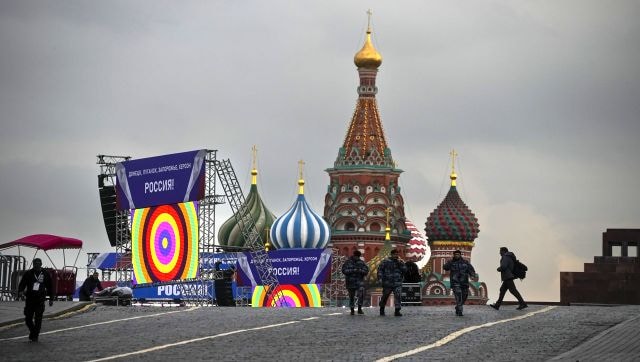
On Moscow’s Red Square, a stage with giant video screens has been set up, with billboards proclaiming “Donetsk, Luhansk, Zaporizhzhia, Kherson – Russia!”

According to Putin’s spokesman Dmitry Peskov, the ceremony will take place at 5.30 pm IST in Kremlin’s St. George’s Hall. Putin will deliver a speech and meet with Russian-backed leaders of the four occupied regions on the sidelines of the ceremony.

What does annexation mean? What does this mean for the Russia-Ukraine war? What happens next? Confused about the whole thing? We dissect the entire matter and provide you with a dummies guide to the events unfolding.

What happens next?

With the formal announcement of the four regions — Kherson, Zaporizhzhia, Donetsk and Luhansk — Russia will now be in control of 15 per cent of Ukraine’s territory.

In addition to occupying more land, Vladimir Putin will also have a larger pool of people to draft into the military. With these regions joining Russia, they will now be eligible to be drafted to fight for Russia against Ukraine.

There are also tactical benefits to annexing Ukrainian territory. After failing to achieve his ambitions of taking over Kyiv and removing the government led by President Volodymyr Zelenskyy, Putin’s move of annexation will help him shore up his power and cement his control over regions.

Roger Moorhouse, a British historian specialising in German and Central European history, told Time magazine, “What we’re seeing is an attempt to freeze the front line at this point.” He explained that by doing this before winter sets in could allow Putin to reorganise and revitalise his war efforts in preparation for spring.

Another benefit that Putin earns through the annexation is that he can now sell the idea of mobilisation and conscription to the masses. Conscripting hundreds of thousands of people into the Russian forces at the time when the country was facing losses on the field to the Ukrainians, was going to be a hard sell for the Russian leader.

But by annexing Ukrainian territory, Putin has given a further justification for the mobilisation. Putin may also hope that the move will boost support for the war both domestically and among Russia’s international allies, such as China.

However, the most significant aspect of Putin’s annexation of the Ukrainian territory is that it may undermine the West’s support for Ukraine. Even though the United States, United Kingdom and others have expressed their continued support — militarily and financially — there are concerns about the escalation of the war. It also forces the West to rethink if they really have the stomach to continue the war and at what cost.

As Moorhouse tells Time, “It’s an exercise in intimidating the Western alliance, to test its mettle.”

How has the West reacted?

The West and Ukraine have decried the referendums as “shams” and said they won’t accept the results.

United Nations Secretary-General Antonio Guterres said the annexation marks ‘dangerous escalation’. Speaking to reporters ahead of today’s ceremony, the UN chief said, “Any decision to proceed with the annexation of Donetsk, Luhansk, Kherson and Zaporizhzhia regions of Ukraine would have no legal value and deserves to be condemned.

“If Russia moves ahead with its plans to annex four Ukrainian regions, it would prolong the dramatic impacts on the global economy, especially in developing countries, and hinder our ability to deliver life-saving aid across Ukraine and beyond.”

Ukraine’s Volodymyr Zelenskyy also slammed the “pseudo-referendums”, saying they were worthless and did not change reality. “The territorial integrity of Ukraine will be restored. And our reaction to recognition of the results by Russia will be very harsh.”

Zelenskyy also accused Russia of attempting to use the same strategy as it did when Moscow annexed Crimea in 2014. A referendum organised there, which officially saw 97 per cent of voters back annexation, was ratified by Russian lawmakers within a week.

The US and EU also criticised Russia for the referendums and the annexation. American’s Joe Biden, as per an AFP report, vowed to “never, never, never” recognise the results of Russian-led referendums in Ukraine, which he called a “flagrant violation” of international principles.

****

The West is wrong: Public vote to annex Ukrainian territory neither undemocratic nor illegal

Ukraine timeline: From 2014 Maidan revolution to imminent annexation of four regions by Russia

Why does Russia want Ukraine so badly? Here’s what a geography book tells us

Vladimir Putin's recognition of Ukraine's breakaway regions isn't the first time: All you need to know about Abkhazia and South Ossetia

****

Biden was quoted as saying, “The so-called referenda was a sham, an absolute sham. The results were manufactured in Moscow. The true will of the Ukrainian people is evident every day as they sacrifice their lives to save their people and maintain the independence of their country.”

Referring to President Vladimir Putin, Biden added, “Russia’s assault on Ukraine in pursuit of Putin’s imperial ambitions is a flagrant violation of the UN Charter and the basic principles of sovereignty and territorial integrity.”

The US has said it will impose sanctions on Russia because of the staged referendums, while EU member states are considering an eighth round of measures, including sanctions on anyone involved in the votes.

German foreign minister Annalena Baerbock said that people in occupied regions of Ukraine had been taken from their homes and workplaces by threat and sometimes at gunpoint. “This is the opposite of free and fair elections. And this is the opposite of peace, it is a dictated peace,” she said.

But, how did we get here?

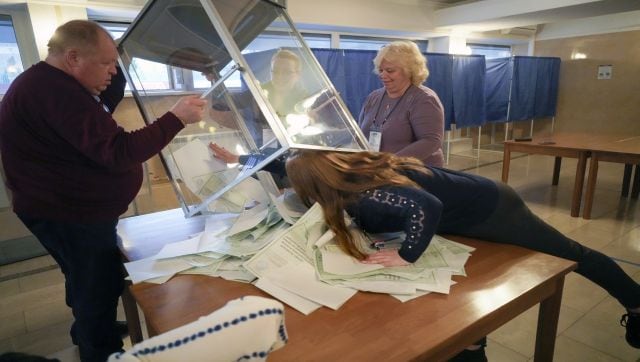
Last Friday, people belonging to the four Ukrainian regions — Kherson, Zaporizhzhia, Donetsk and Luhansk — began casting their votes in a referendum to join Russia. The polls did not abide by international law.

The referendums were called by pro-Russian authorities in Donetsk and Luhansk in the east and in the Russia-occupied parts of Kherson and Zaporizbzhia in south Ukraine.

Reports from the four regions suggested that voting was being done at gunpoint and the pro-Russian authorities were going door to door to collect votes, trailed by armed guards. Russian state media argued that the use of armed guards was for security purposes.

Then, on 27 September, the head of the election commission in these parts of Ukraine declared the poll results. As per their data, 98.54 per cent votes were in favour of joining Russia in Luhansk. In Donetsk, 93.95 per cent were in favour of joining Russia. In Kherson, 87.05 per cent of the votes were in favour of joining and even in Zaporizhzhia, the final tally was reportedly 93.11 per cent in favour of joining Russia.

This marks a new stage in the war that has now gone on for seven months. What happens during the ‘long winter’ is to be seen now.

With inputs from agencies

Read all the Latest News, Trending News, Cricket News, Bollywood News,
India News and Entertainment News here. Follow us on Facebook, Twitter and Instagram.


from Firstpost World Latest News https://ift.tt/KTk7nAF

Cut It Out! Italian artist pays heartfelt tribute to Iranian women's protests

With protests erupting from several parts of Iran following the death of an Iranian woman Mahsa Amini, the brutal reality of Iranian women’s condition in the country has come to light and has drawn the attention of the entire world. Many have come out in support of the protesting women along with artists from several parts of the world who came forward to pay their personal tributes to the cause. Recently, an Italian artist, Marco Melgrati has now created an illustration of the ongoing developments in Iran further entitling it ‘Cut It Out.’

The heart-touching illustration shared by the artist on his Instagram account effectively sums up the entire situation in Iran. The animated graphic shows an Iranian woman freeing herself from the unjustified grip of Iran’s so-called Morality Police as she chops off a part of her hair, further letting go of the control. Furthermore, if we take a closer look at the post, Melgrati has shared multiple closeups of the illustration by zooming into the details of the message delivered through the same. In proper symbolism, the artist has rightly titled the illustration ‘Cut It Out.’

Check the post:


In the meantime, the post has gone viral on the internet for all the right reasons as many could relate to the depiction of women’s reality in Iran. People also took to the comment section and appreciated the artist’s effort and support for Mahsa Amini and the protesting Iranian women. A user commented “Thank you for supporting Iranian people”, while one more said, “Will share this awesome piece tomorrow.” Love emojis along with hashtags of Mahsa Amini were all over the comment section.

The post has so far garnered over 1.4 lakh likes and hundreds of comments.

What is happening in Iran?

It has been several days now since the reported death of a Kurdish woman, Mahsa Amini in police custody after she was taken away by Iran’s Morality Police over her attire. Men and women from all walks of life have been staging massive protests against the ruling government and the stringent norms imposed on women in the country.

In a bid to protest against the police and further demand their freedom, women have been also chopping off their hair and burning their hijabs in demonstrations.

Read all the Latest News, Trending News, Cricket News, Bollywood News,
India News and Entertainment News here. Follow us on Facebook, Twitter and Instagram.


from Firstpost World Latest News https://ift.tt/DmJkxqS

Thursday, September 29, 2022

The West is wrong: Public vote to annex Ukrainian territory neither undemocratic nor illegal

There is little doubt that, at the end of the week or slightly later, Russian territory will grow by four regions, formerly East Ukrainian, with total population of about 8 million. The procedure looks exactly the same as with Crimea, also formerly Ukrainian, in 2014 – first there was a referendum among the local population, then the Russian parliament conducted a vote, and, finally, President Vladimir Putin proclaimed Crimea a new part of the Russian Federation.

As expected, the leaders of the Western group of nations have repeatedly announced that the way to expand your territory through a referendum in another country, after a military operation or without it, is totally illegal and would never be recognized by them.

Worse, the referendum has produced a well-hidden tension between Moscow and Beijing, and the matter has been recently discussed by the leaders of these nations in Samarkand, Uzbekistan, at the summit of the Shanghai Cooperation Organisation. China is naturally unhappy about the voting procedure, keeping in mind a possible similar referendum in Taiwan about proclaiming the island an independent state. All in all, people in Moscow expected China to voice its disagreement at the UN (which it did), but in reality to keep neutral.

But, aside from China being happy or unhappy, there is a very good question of global importance, namely, exactly how illegal is that procedure, when you ask every man and woman in a foreign territory about their ideas of making these territories a part of your state. After all, there is such a thing as international law, based on the United Nations documents. Surely we may find there some illuminating ideas about referendums being right or wrong.

And it’s exactly in these documents where we discover a lot of treasures. You may think about a split of a nation into two sovereign states (that process goes on and on, globally, and seems to be universally accepted). But how about the matter of a clearly stated will of the people on certain territory to join another state, together with the territory they live in? Do they have a say in that matter, or some foreign nation or organization is needed for an endorsement of such transition?

Of course, there is no such arbiter nation, or a group of nations, in the world. But there obviously is a clash of two basic principles of international law. One is sovereignty, which includes respect for the territorial integrity of states, and the other is the right of people to self-determination. Not only India, but dozens of nations in the world would have still been colonies without the second principle applied. Self-determination, simply, means that nationhood and sovereignty span not from the kings, governments and colonial powers, but from the people living in their land and deciding on matters of their statehood and livelihood.

So, after international debates on that clash of ideas grew intolerable at the end of the 1960s, when the contemporary world was shaping itself, a declaration on the basic principles of international law has been passed by the UN General Assembly (the date was 24 October, 1970). That document says that every state has to respect the territorial integrity of… no, not everybody, but those nations, who’s governments respect the principle of self-determination of peoples and represent all the people living in their territories. That’s the law.

According to that law, Ukraine – just like Pakistan in 1972 – has simply killed itself by waging an eight-year-long war against its own population in its East. It wasn’t just verbal disrespect of Easterner’s rights to belong to Russian culture and ethnos, there were bombs and missiles on daily basis, deliberately targeting civilian infrastructure and killing mostly civilians. Hell of a way for a state to represent these people.

The referendums, this week, have been clearly conducted under the barrels of the guns. The guns were Ukrainian since the shelling of civilians went on. And it was a small surprise that the populace of these two regions, Donetsk and Lugansk, came to the polls in a 90 per cent majority, almost 100 per cent of which voted to join Russia. After all, they have been living as separate republics for more than eight years, and only wanted to confirm the existing reality. But a big surprise was an almost similar outcome of the referendum in two other regions, which only six months ago were fully under Ukrainian rule, and at that time nobody shelled and harassed them.

But then, even in these areas the pro-Russian vote was predictable. Here we have to listen to international observers of the referendum, the people watching the procedure, coming from Germany, France, Serbia, Central Africa, Bosnia, Bulgaria, Mozambique and others. Their task was traditional, to ensure that the people were getting to the polling station, receiving a sheet of paper, making a tick there without being supervised, etc. But, when you are there, you cannot help hearing the sound of the guns and missiles and understanding that these missiles were coming from the West, not from the East.

Imagine being a totally unpolitical Ukrainian, living in Zaporozhye in a relative proximity to the huge nuclear power station and witnessing its daily shelling by Ukrainian artillery and missiles, with a prospect of radioactive poisoning of your family and of millions of people around. How would you vote in that case, even if you were supposed to be an ethnic Ukrainian, not Russian, whatever is the difference? Would you wait for some Western nations to accept your vote as legal and fully democratic, or you would have other ideas on your mind?

Speaking about the West and its ideas about democracy, it seems that any time somebody is holding a referendum there, it brings problems to real democrats. That’s Brexit in England in 2016, France’s refusal to endorse a failed EU constitution in 2004, and many similar cases. It seems that the moment a referendum is being held, that thing called democracy suffers losses. So something is wrong either with democracy or with the will of the people.

The author is a columnist for the Russian State agency website ria.ru, as well as for other publications. Views are personal.

Read all the Latest News, Trending NewsCricket News, Bollywood News,
India News and Entertainment News here. Follow us on Facebook, Twitter and Instagram.


from Firstpost World Latest News https://ift.tt/loWxbVu

‘My dad will be king, you better watch out’: When Prince George sounded like a 'Dilli wala brat'

Not even a month since his grandfather became the King after Queen Elizabeth’s death, young Prince George is already throwing his weight around.

The author of The New Royals: Queen Elizabeth’s Legacy and the Future of the Crown, Katie Nicholl, said in her book that the eldest son of Prince William and Kate Middleton told his peers that they “better watch out”, for his father will be the king one day. While the book will release on 4 October, the extract, which has been made available to the media, is going viral.

Let’s take a closer look.

What does the book reveal about William’s children?

Based on what George told his peers at school, Katie Nicholl said that the young prince is very much aware that he will one day be the king.

She wrote, “They are raising their children, particularly Prince George, with an awareness of who he is and the role he will inherit, but they are keen not to weigh them down with a sense of duty.”

The book also talks about how his younger siblings, Princess Charlotte and brother Prince Louis are being raised with an understanding of their royal duties under the British Crown.

Has George been told about his royal destiny?

Although it’s clear that Prince George will someday take over the throne, the royal biographer Robert Lacey said, “Sometime around the boy’s seventh birthday in the summer of 2020 it is thought that his parents went into more detail about what the little prince’s life of future royal ‘service and duty’ would particularly involve,” according to his book Battle of Brothers.

Lacey further claims that Prince William and Princess Kate had planned to break the news to their eldest son so that he wouldn’t find out accidentally and be all confused, according to a report in The Mirror.

The author added that the details of this chat with the young prince are not confirmed. Lacey said, “William has not revealed to the world how and when he broke the big news to his son. Maybe one day George will tell us the story himself.”

As per Woman&Home, the author also revealed that Prince George’s parents stalled the decision of telling their son until he turned seven as the news of becoming a king had a negative impact on his father.

What are the recent other revelations about the royals?

Apart from what Prince George said, Katie Nicholl also wrote in her book that a personal friend of Queen Elizabeth spoke to the royal author about the late Queen’s thoughts on Prince Harry and Meghan Markle. The excerpt from her book, according to a report by South China Morning Post, said that the Queen was “exhausted” by the repercussions of Harry and Meghan’s step back from the royal family.

Another upcoming book, called Courtiers: The Hidden Powers Behind the Crown written by Valentine Low has revealed that Meghan Markle had once complained about not being paid for her first royal tour where she travelled to Australia, Fiji, Tonga and New Zealand with her husband in 2018. The author wrote that Markle was overheard saying, “I can’t believe I am not getting paid for this.”

What is the British line of succession?

After the Queen’s death, the British line of succession changed.

After King Charles succeeded Queen Elizabeth, Prince William is now the heir apparent. Following him, Prince George is second in line to become the next British monarch.

According to a report by The Guardian, after the death of her great-grandmother, Princess Charlotte has become the senior-most female royal in terms of succession.

After his elder brother George, the four-year-old Prince Louis is in line to become the king.

How has Twitter reacted?

Prince George’s “brag” about his family to his pals has led some users to equate the young prince with “Dilli wala” or someone who’s from Delhi.

With inputs from agencies

Read all the Latest NewsTrending NewsCricket NewsBollywood News,
India News and Entertainment News here. Follow us on FacebookTwitter and Instagram.


from Firstpost World Latest News https://ift.tt/dXtpZ3J

Wednesday, September 28, 2022

Hurricane Ian brings a long-lasting power outage, how long can solar batteries power your home?

Hurricane Ian’s catastrophic winds and flooding are likely to bring long-lasting power outages to large parts of Florida. The storm is the latest in a line of hurricanes and extreme heat and cold events that have knocked out power to millions of Americans in recent years for days at a time.

In many disaster- and outage-prone areas, people are starting to ask whether investing in rooftop solar and battery storage systems can keep the lights on and the air conditioner running when the power grid can’t.

When the grid goes down, most solar systems that lack a battery will also shut down. But with batteries, a home can disconnect from the grid. Each day, the sun powers the home and charges up the batteries, which provide power through the night.

Here’s what it would take for homes and commercial buildings to ride out long power outages, of three days or more, with solar and batteries.

How much can solar + storage do?

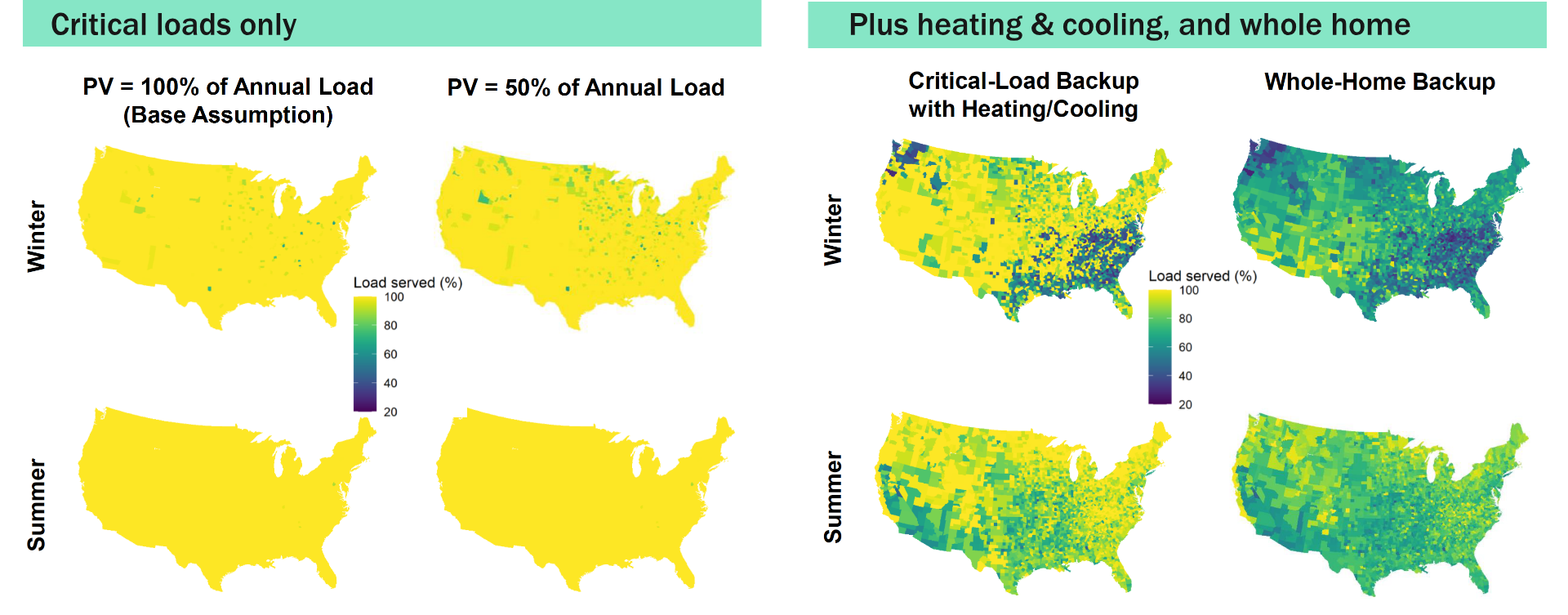
For a new report, we modelled a generic power outage for every county in the US, testing whether a rooftop solar system combined with a 10- or 30-kilowatt-hour battery could power critical loads, like refrigeration, lighting, internet service and well pumps; if it could go further and also power heating and air conditioning; or if it could even power a whole home.

To put that into perspective, the most popular battery on the market, the Tesla Powerwall, has just over 13 kWh of storage.

In general, we found that even a modest system of solar plus one battery can power critical loads in a home for days at a time, practically anywhere in the country.

But our maps show that providing backup for cooling and heat can be a challenge, though not an insurmountable one. Homes in the Southeast and Pacific Northwest often have power-hogging electric resistance heaters, exceeding the capability of solar and storage during winter outages. Homes with efficient heat pumps performed better. Summer air conditioning load can be heavy in the Southwest, making it harder to meet all cooling needs with solar and storage in a summer blackout.

Larger solar and battery systems can help, but meeting demand during outages still depends on the weather, how energy efficient the home is and other factors. For example, simple thermostat adjustments during power outages reduce heating and cooling needs and allow solar with storage to maintain backup power over longer periods.

The ability to power commercial buildings varies widely, depending on the building type. Schools and big-box retail stores, with sufficient roof space for solar relative to building power demand, fare much better than multistory, energy-intensive buildings like hospitals.

How solar would have handled past 10 disasters

We also looked at 10 real-world outage events from 2017 to 2020, including hurricanes, wildfires and storms, and modelled building performance for specific locations and real weather patterns during and after the outages.

We found that in seven of the outages, most homes would have been able to maintain critical loads plus heating and cooling using solar with 30 kWh of storage, or just over two Powerwalls.

But the weather around the outage can have a big impact, especially for hurricanes. After Hurricane Florence knocked out power in North Carolina in 2018, cloudy skies hung around for three days, dimming or even stopping solar panels’ output.

Hurricane Harvey, on the other hand, slammed the Texas coast in August 2017 but moved on to cause widespread damage elsewhere in Texas. The skies over Corpus Christi cleared even as it took a week or more to get power restored. Solar and storage would have been a big help in that case, providing virtually all power needs for a typical single-family home, once the skies cleared.

Similarly, we found solar can do well in less cloudy events, like wildfire prevention shutoffs in California, or after the 2020 derecho windstorm in Iowa.

The heat source in a home is also a key factor. In a five-to-10-day outage following an ice storm in Oklahoma in 2020, we found that solar plus a 30-kWh battery could have supplied nearly all the critical power and heat needed for homes with natural gas heaters or heat pumps. But homes with electric resistance heating would have fallen short.

In Texas, over half of the homes are heated with electricity, primarily resistance heaters. Energy Star-rated heat pumps — which provide both heating and cooling — use half as much electricity per unit of heat output as electric resistance heaters and are also more efficient at cooling than the average new air conditioner. Converting older resistance heaters to new heat pumps can not only save money and reduce peak demand but also increase resilience during outages.

New forms of backup

Setting up solar and storage to provide backup power in a home or building takes extra work and it costs more — just one Powerwall can run from $12,000 to $16,500 for a full system installation, before incentives and taxes. That’s as much as a fair-sized solar system. Nevertheless, a growing number of homeowners are installing both.

Over 90 per cent of new solar installations in Hawaii in 2021 were paired with batteries after a regulation change. Now these distributed power plants are helping power the grid as coal plants are retired.

California has over 1.5 million rooftop solar systems. A growing number of customers are retrofitting batteries on their systems, or adding new solar plus storage, in part because utilities have resorted to “public safety power shutoffs” to lower the risk of wildfires sparked by power lines during dry, windy days.

And new forms of backup power are emerging, especially from electric cars. Ford is partnering with SunRun to combine its new F150 Lightning electric pickup truck with solar and a two-way charger that can use the truck’s battery to power a house. The standard version of the truck comes with a 98-kWh battery, the equivalent of more than seven Tesla Powerwall stationary batteries.

Critical power for critical services

A fire station in Puerto Rico offers a glimpse of what solar and storage can do. After Hurricane Maria cut power for months in 2017, over 40,000 solar systems were installed on the island, often paired with battery storage. One of those is at the fire station in the town of Guánica, which had been unable to receive emergency calls in previous outages.

When Hurricane Fiona’s wind and flooding again knocked out power to most of Puerto Rico in September 2022, the fire station was still operating.

“The solar system is working beautifully!” Sgt Luis Saez told Canary Media the day after Fiona knocked out power. “We did not lose power all throughout the hurricane.”The Conversation

This article is republished from The Conversation under a Creative Commons license. Read the original article.

Read all the Latest News, Trending News, Cricket News, Bollywood News,
India News and Entertainment News here. Follow us on Facebook, Twitter and Instagram.


from Firstpost World Latest News https://ift.tt/EVTg3HN

World Maritime Day 2022: Know history, significance and theme

Every year on the final Thursday in September, which falls on 29th this year, people around the world commemorate World Maritime Day to recognise the hard work of those who work in the maritime industry. The English team ‘maritime’ originates from the Latin word ‘maritimus,’ which means ‘of the sea.’ The day sheds light on the role seafarers, service agents, and marine officials play in our personal life. Sea life is undoubtedly challenging given the strain of working long hours for uncertain compensation and being away from home.

Theme

The theme for this year is ‘New technologies for greener shipping’. The need to promote a green transition of the maritime industry into a sustainable future while leaving no one behind is reflected in this year’s theme for the day. It offers a chance to concentrate on the significance of a sustainable maritime industry and the necessity to rebuild better and more sustainably in a post-pandemic world.

The 2022 theme will also enable a variety of initiatives to focus on particular issues relating to the promotion of inclusive innovation and the adoption of new technology to aid in the marine industry’s need for a greener transition.

History 

A strategy for future sustainable green economic growth in a sustainable manner must include the development of a safe, secure, and effective international shipping industry. More than 80 per cent of world trade is delivered to people and communities via maritime trade.

In 1948, the International Maritime Organization (IMO) was founded to oversee the shipping sector. The IMO upholds a thorough structure that covers technological collaboration, environmental regulation, legal recourse, and safety for every member of its workforce. The first World Maritime Day was observed on 17 March, 1978 to commemorate the day on which the IMO Convention came into effect.

Significance 

One of the IMO’s top priorities for the upcoming years is the promotion of sustainable shipping and marine development. Therefore, the development and implementation of international standards covering several issues will support IMO’s commitment to providing the institutional framework required for a green and sustainable global maritime transportation system. These issues include energy efficiency, new technology and innovation, maritime education and training, maritime security, maritime traffic management, and the development of maritime infrastructure.

Read all the Latest News, Trending News, Cricket News, Bollywood News,India News and Entertainment News here. Follow us on Facebook, Twitter and Instagram.


from Firstpost World Latest News https://ift.tt/xUkfuHj

Explained: Iran's gender apartheid and its continued discrimination against women

Unrest continues to erupt across Iran following the death of a 22-year-old Kurdish Iranian woman, who died after being arrested and reportedly beaten by Iran’s morality police.

The Iranian force took Mahsa (Zhina) Amini into detention on 16 September 2022, for not wearing her hijab according to the rules.

As of 26 September, at least 41 people have been confirmed killed and hundreds have been arrested and wounded in protests that erupted after Amini’s death.

With the exception of bland condemnations, the discrimination against women in Iran is often overlooked while the world focuses on limiting the country’s nuclear capabilities.

Some scholars and activists have criticised international law for its lack of initiative and public action in recognising Iran’s systematic discrimination against women as gender apartheid and acting to prevent it.

But many discriminatory laws, including those forcing women to cover their head and face with a hijab, honour neither tradition nor religion and are applied to women of all ethnicities and faiths.

After all, Amini was not a Shiite woman by ethnicity or religion.

Iran’s gender apartheid

The 1979 Islamic Revolution established a republic that implements similar inhumane policies and practices of racial segregation and discrimination as practised in South Africa under the government’s former brutal apartheid regime.

The laws and policies in Iran establish and maintain domination by men and the state over women and their right to choose their own clothing or obtain a divorce. Systematic gender inequalities are prescribed legally and enforced by the regime to deny the women the “right to life and liberty” and “basic human rights and freedoms,” which according to Article II of the United Nations’ Apartheid Convention in 1973, are considered “the crime of apartheid.”

For example, according to Article 18 of Iran’s Passport Law, a married woman still needs written permission from her male guardian to travel abroad.

Women in Iran are unable to hold any positions within the judicial, religious and military systems, nor are they able to serve as members of the Assembly of Experts, the Expediency Discernment Council or the Guardian Council, the three highest councils in the Islamic Republic.

Women under law cannot be president or supreme leader of Iran. According to Article 115, the president of the Islamic Republic must be elected from among the “religious and political men.”

In addition, the Iranian state has added discriminatory features to the criminal code – one such feature is the principle that the value of a woman is one-half of the value of a man.

That principle applies in matters involving compensation for a killing and in what a son or daughter receives from a family inheritance. They also apply to the weight given to legal testimony or in obtaining a divorce.

Such laws, policies and practices continue to mark women as lesser citizens, legally and socially unequal.

Segregation in daily life

The state also has imposed systematic segregation in schools, hospitals, universities, transportation, sports and other major areas of day-to-day life.

For many decades, Iran’s gender apartheid had relegated women to the back of the bus with a metal bar segregating them from men.

Under the government’s direction, universities have set limits on women’s options and have banned them from many fields of study.

Iran has generally barred female spectators from soccer and other sports stadiums since the 1979 revolution.

Clerics play a major role in decision-making and have argued that women must be shielded from the masculine atmosphere and sight of semi-clad men during sporting events.

Under such discriminatory policies, the Persian terms such as za’ifeh, meaning weak and incapable, has found its way into Persian dictionaries as synonyms for “woman” and “wife.”

‘Women, life, freedom’

Iran’s notorious extrajudicial morality police have terrorised women for decades.

Like the articles of the Constitution of the Islamic Republic of Iran, principles of the morality police are founded on an interpretation of canonical Shiite texts and are implemented through modern tools of control and prosecution.

In international criminal law, specific unlawful acts that are committed within a system of oppression and domination are considered crimes against humanity.

As set out in the UN‘s Apartheid Convention, these crimes include denial of basic rights that prevent a racial group or groups from participating in the political, social, economic and cultural life of the country.

Most known for the brutal regime in South Africa, apartheid comes from the Afrikaans word meaning “apartness.” It was the ideology that was introduced in South Africa in 1948 and supported by the National Party government.

The compulsory hijab is at the centre of what I call Iran’s extreme gender apartheid, where a misplaced headscarf can result in up to 15 years in prison, lashing, fines and inhumane and unlawful arrest and death.

Several anti-compulsory hijab movements emerge every few years in Iran, such as in the case of Zhina Amini.

In the Kurdish language, her name originates from “jin,” the word for woman and shares a root with the word for life, “jiyan.”

Those Kurdish words are at the heart of the most used slogan by the Kurdish Female Fighters against the Islamic State in Iraq and Syria, and by women across Iran today against the Islamic Republic of Iran.

Add in “azadi” — the Kurdish word for freedom — and the slogan “Jin, Jiyan, Azadi” means “Women, Life, Freedom” and is resounding among protesters in streets throughout Iran and the world to dismantle the state’s gender apartheid.The Conversation

This article is republished from The Conversation under a Creative Commons license. Read the original article.

Read all the Latest News, Trending News, Cricket News, Bollywood News,
India News and Entertainment News here. Follow us on Facebook, Twitter and Instagram.


from Firstpost World Latest News https://ift.tt/MPZWzB1

Artist expresses solidarity with protesting Iranian women, creates 'unique' animation on Azadi Tower

The death of a 22-year-old Kurdish woman, Mahsa Amini has sparked a national outrage across the country as a result of which Iranian men and women have come out in large numbers to protest against the incident and further stage their agitation against the unjustified laws by the government for women citizens. In a bid to mark their protests, women across the country have been publicly chopping off their hair and burning their hijabs to display their protest against the government’s draconian laws. They have also been demanding the end of the three-decade rule of Ayatollah Ali Khamenei, the Supreme Leader.

As a part of this, as massive protests continue to take over the country, women have also received support from various corners of the world. Many came out speaking in support of the women and over the unjustified rules imposed on them.

In one such attempt, a local artist expressed his solidarity with the brave Iranian women through a piece of art created on the iconic Azadi Tower in Tehran.

Artist creates ‘hair’ animation on Azadi Tower.

In his latest creation, the Iranian artist Bahadur Hadizadeh has released an animation showing the Azadi Tower covered by dark long hair blowing in the wind which aims to symbolise the freedom of Iranian women.

Watch the video:


The video has also gone viral on social media and has been shared widely by users who also expressed their support for the women of Iran.

Check some reactions:


It is pertinent to note that the historic architectural landmarks which stand in the capital city of Iran seem to be an ideal choice for this concept. The tower which was built in 1971 symbolises an era of modernity for the country and further its name also translates to the ‘Tower of Freedom’.

The wave of protests came in the wake of the sudden death of the young Mahsa Amini after she was arrested by the Guidance Patrols, or the Gasht-e-Ershad, known as Iran’s ‘morality police’ as her clothes reportedly did not comply with Iranian law. Reports suggest that while remaining in custody, she was subjected to violence which led to her death.

Read all the Latest News, Trending News, Cricket News, Bollywood News,
India News and Entertainment News here. Follow us on Facebook, Twitter and Instagram.


from Firstpost World Latest News https://ift.tt/nQeTvLW

Watch: Shocking satellite footage shows lightning bolts near Hurricane Ian's eye

Already having caused widespread damage and flooding across western Cuba, Hurricane Ian has been moving strongly towards Florida as the state prepares for a ‘life-threatening’ storm to pass over before it makes landfall later in the day. As the cyclonic storm is expected to strengthen into a catastrophic Category 4 storm after approaching Florida, shocking images and visuals have also been surfacing on the internet showing the devastating nature of the cyclone. In a video recently shared by the National Oceanic and Atmospheric Administration (NOAA), the satellite visuals show striking footage of the hurricane as it tears over the Gulf of Mexico.

In the shocking satellite footage which was picked up by both NASA as well as NOAA’s GOES-16 satellite on Tuesday, it shows Hurricane Ian swirling over the southeastern Gulf of Mexico and further picking up numerous lightning bolts around the hurricane’s eye.

Check the video here:


“As Hurricane Ian churns near Cuba, GOES East can see its distinct eye as well as lightning flashing around the storm. Ian is a major Category 3 hurricane that is continuing to strengthen in the southeastern Gulf of Mexico”, the caption read.

Hurricane Ian moves toward Florida after wreaking havoc in parts of western Cuba

Earlier on Tuesday, after growing in strength from a tropical storm to a Category 3 hurricane within a single day, Hurricane Ian tore into parts of western Cuba with storm-force winds and rains. Wreaking havoc on the Pinar del Rio province after making landfall, the hurricane also knocked out power to the entire country, leaving the people in a state of distress.

However, it didn’t stop here and is presently moving strongly toward Florida over Gulf waters where it is expected to strengthen into a catastrophic Category 4 storm.

Keeping in view a prediction that the eye will make landfall in the southern peninsula, the administration has asked the people around the southwest coast of Florida to evacuate and move to safer places.


In its advisory issued late Tuesday night, the National Hurricane Centre said, “On the forecast track, the center of Ian is expected to pass west of the Florida Keys within the next few hours, and approach the west coast of Florida within the hurricane warning area on Wednesday.”

Read all the Latest News, Trending News, Cricket News, Bollywood News,
India News and Entertainment News here. Follow us on Facebook, Twitter and Instagram.


from Firstpost World Latest News https://ift.tt/lAFfBI7