Monday, October 31, 2022

Explained: What is the grain deal Russia has suspended? What does this mean for the world?

Russia has suspended its part of a United Nations-brokered deal allowing Ukraine to export grain safely from its Black Sea ports during a monthslong war, saying it was not going to allow ships to travel.

Ukraine said a dozen ships had sailed Monday after initially reporting that more than 200 vessels, many loaded and ready to travel, were stuck after Russia’s weekend announcement. Later in the day, Russia’s Defence Ministry said ship traffic was suspended, calling the movement “unacceptable” after Moscow alleged a Ukrainian drone attack against its Black Sea fleet.

Such exports are crucial: Ukraine and Russia are key global suppliers of wheat, barley, sunflower oil and other food to countries in Africa, the Middle East and parts of Asia where many are already struggling with hunger.

Let’s take a closer look at what the deal is and what its suspension could mean for the world.

What is the Black Sea Grain Initiative?

Ukraine is one of the world’s largest grain exporters and normally contributes around 45 million tonnes of grain to the global market every year. However, since Russia invaded Ukraine, exports of grain, food and fertilizers from both countries have been significantly hit. The disruption in supplies resulted in soaring prices and added to the burden of an already existing food crisis in some countries.

In a bid to address this crisis and ensure the smooth movement of supplies amidst the ongoing war, the United Nations and Turkey brokered the Black Sea Grain Initiative on 22 July this year. The UN, the Russian Federation, Turkey and Ukraine shook hands on the deal at a signing ceremony held in Istanbul.

The Black Sea Grain Initiative allowed Ukraine to export its grain, food and fertilizer including ammonia to the world via a safe maritime corridor that has three key ports in the country: Chornomorsk, Odesa, and Yuzhny/Pivdennyi.

The deal was implemented after a Joint Coordination Centre (JCC) was established at the signing ceremony. The committee comprises senior representatives from the Russian Federation, Turkey, Ukraine as well as the UN.

The JCC issued procedures to be a part of the initiative and according to these, ships and vessels that wish to participate will have to undergo an inspection in Istanbul to ensure that they are empty of cargo. Following the inspection, they can sail through the corridor and reach Ukraine ports to load goods. To ensure the safe passage of vessels, the monitor is monitored by the JCC round the clock. On their return journey, the vessels have to go through another round of inspection in Istanbul.

 What has the deal achieved?

The grain initiative has been a rare example of cooperation between Ukraine and Russia since Russia’s invasion in February. It has allowed more than 9 million tons of grain in 397 ships to safely leave Ukrainian ports.

The grain agreement has brought down global food prices by about 15 per cent from their peak in March, according to the UN, and the UN secretary-general had urged Russia and Ukraine to renew the deal when it expires on 19 November.

Following Russia’s announcement, wheat futures prices jumped 5 per cent on Monday in Chicago. With global markets tight, poorer countries will have to pay more to import grain, said Joseph Glauber, a senior research fellow at the International Food Policy Research Institute in Washington.

Before the grain deal was brokered, the US and Europe accused Russia of starving vulnerable parts of the world by denying exports. Since the deal, Russian President Vladimir Putin has alleged that most of the exported grain was going to Europe instead of the world’s hungriest nations.

UN humanitarian chief Martin Griffiths said 23 per cent of the total cargo exported from Ukraine under the grain deal has gone to lower- or lower-middle-income countries and 49 per cent of all wheat shipments have gone to such nations.

Ukraine has said more than 5 million tons have been exported to African and Asian nations, with 190,000 tons of wheat sent to countries that are getting relief from the UN World Food Program.

What about the ships that recently left Ukraine?

A ship carrying 30,000 tons of wheat for Ethiopia under that program sailed Monday, Ukraine said, one of a dozen ships with more than 354,000 tons of agricultural products that Ukraine said left port after the UN and Turkey agreed on the traffic of ships through the humanitarian corridor. Ethiopia, along with neighbouring Somalia and Kenya, is badly affected by the region’s worst drought in decades.

Russia’s UN ambassador, Vassily Nebenzia, said at an emergency meeting of the UN Security Council called Monday by Moscow that “the Black Sea remains an area of hostilities” and “we cannot allow an unimpeded passage of vessels without our inspection.”

Nebenzia said Russia opposed the decision by the UN, Ukraine and Turkey to allow ships to pass without Russian inspection. Moscow would soon reveal measures to control what was allowed “without our consent,” he added.

William Osnato, a senior research analyst with agriculture data and analytics company Gro Intelligence, said ship tracking maps don’t show any vessels heading toward Odesa.

What has Vladimir Putin said?

On Monday, Russian President Vladimir Putin said that the suspension of the Black Sea Grain Initiative and attacks on Ukrainian infrastructure were carried out in retaliation to a drone attack on the Russian fleet which he blamed on Ukraine.

“That’s not all we could have done,” he said at the press conference, indicating that more severe actions could follow.

Meanwhile, Ukraine has not claimed responsibility for the said attack and has denied using the maritime corridor for military purposes. The UN has in turn claimed that no ships were passing through the Black Sea passage on Saturday, the day Russia claims its fleet was attacked in Crimea, according to Reuters.

What happens now?

Russia has offered to supply up to 500,000 tons of grain “to the poorest countries free of charge in the next four months.” The Russian Defence Ministry stressed that Russia is not withdrawing but suspending the grain agreement.

While sanctions on Russia don’t affect its grain exports and a parallel wartime deal was meant to clear the way for Moscow’s food and fertilizer shipments, some businesses have been wary.

Developing nations will have to find new grain suppliers and pay more from countries such as the US, Argentina and Australia, where dry conditions or rain are posing problems, said Glauber, a former chief economist at the US Department of Agriculture. But high prices mean producers will plant more, and those that are not typically big wheat exporters, like Brazil and India, have increased shipments.

“What the world needs are some really big crops,” he said, and with Ukraine having accounted for 10 per cent of world wheat exports, “that’s a big hole” to fill.

What else affects food supply?

Peter Meyer, head of grain and oilseed analytics at S&P Global Platts, said he doubts that Russia’s decision will have a lasting impact on the price and supply of corn and grain. Commodity traders were sceptical that the deal would last, he said, one reason that corn prices have gone up, not down, since the arrangement was reached in July.

Grain markets also are focused on other issues, Meyer said, including low water levels in the Mississippi River that slow the export of US farm products, a disappointing corn crop in the American West and the threat of a US rail strike.

But in parts of the African continent, where prices have remained high, concerns are rising again.

“This will send another mini shockwave through the markets, and I think it will lift prices for a while,” said Shaun Ferris, a Kenya-based adviser on agriculture and markets for Catholic Relief Services, a partner in World Food Program distributions. “This will mean that prices in East Africa, at record highs, are not going to come down anytime soon.”

After four failed rainy seasons in the Horn of Africa, millions of people are hungry and millions of livestock that are a critical source of food and wealth are dying. Ferris said he’s spoken with companies that are sending hundreds of tons of processed feeds to northern Kenya to keep animals alive.

The latest setback in Ukrainian exports is another layer of stress, he said.

In poorer North African and Middle Eastern countries where bread is a critical part of people’s diets, there may not be alternative staples like rice in Asia or sorghum elsewhere in Africa, Glauber said. That raises the specter of turmoil in places where bread prices fueled the Arab Spring uprisings.

In Egypt, the world’s largest wheat importer, President Abdel Fattah el-Sissi personally visited wheat farms when the harvest started this spring. But an economic crunch has made it more difficult to buy imported wheat, as Egypt’s currency has reached an all-time low against the US dollar.

“The wheat’s out there, but it’s just going to come at a high price,” Glauber said.

With inputs from agencies

Read all the Latest NewsTrending NewsCricket NewsBollywood News,
India News and Entertainment News here. Follow us on FacebookTwitter and Instagram.


from Firstpost World Latest News https://ift.tt/oWpyFPr

Pakistan’s Khashoggi moment? Why was Pakistani journalist Arshad Sharif killed in Nairobi on 23 October

Mossad, the renowned Israeli Secret Service organisation, is well known for eliminating enemies of the Jewish State and its people in audacious and imaginative covert operations abroad. Usually, the targets for retribution are blood-soaked individuals, responsible for the murder of a large number of Jews themselves. It’s not always bullets. Poisoned toothpaste, honey-traps, robot-operated machine guns which are remote-controlled, old-fashioned infiltration, have all been used. What is always evident is deep research, intelligence gathering, flawless execution, with rare exceptions to the contrary.

However, Mossad has never been known to assassinate a Jew abroad, whatever be the provocation.

Mossad quite often claims responsibility after the fact, even though such action violates sovereignty laws in other countries, but not always, particularly when ongoing strategic security interests are involved. The repeated elimination of Iranian nuclear scientists and mysterious explosions that retard Iran’s nuclear weapons programme are cases in point. When it does own up, working in concert with other secret agencies of the Government of Israel, it is to issue a warning to others engaged in action against Jewish interests, and that of the Jewish State.

In Pakistan, going against the military establishment is considered anathema. Any civilian government or institution that takes a critical position against the military is censured at a minimum. Usually personnel have to resign, and if the provocation is serious enough, the government in power will generally fall, as in the case of Imran Khan’s PTI government most recently. For journalists to do anything of the sort is asking for brutal retaliation.

In this case, apart from supporting the Imran Khan government and suggesting the army had caused its dismissal, journalist Arshad Sharif was in the midst of creating an expose on corruption in the former Nawaz Sharif government, the corruption of army chief General Qamar Bajwa and others, called ‘Behind the doors’, when he was killed with a shot to the back of the head on a dark dirt road near Nairobi at 10 at night. General Bajwa is about to retire and be replaced by a new Army chief sometime in November 2022. Rumours include a possible relocation by him to the United States.

That Arshad’s body was taken to Chiromo mortuary, 78 km away from the alleged site of the killing, is just one of many strange facts and circumstances concerning this shooting.

The alleged shooting of the Pakistani TV journalist in Nairobi by the Kenyan police is officially trotted out as a case of ‘mistaken identity’. But did the Kenyan police actually do it? Does it have the hand of Pakistan’s ISI behind it, as is widely alleged?

There is a wealth of confusing and contradictory reportage on the killing. One report says the Toyota Land Cruiser Arshad was travelling in was being shadowed by a car full of Pakistani operatives, a ‘killer squad’ for several days prior, according to former governor of Nairobi, Mike Sonko. This gang of assassins were out to kill the journalist because he was preparing yet another Kenya-based expose on people in the present Pakistani government and its deep state, involving a money-laundering syndicate that also owns car showrooms in Nairobi and Mombasa. The Pakistan military and ISI are reported to have intensive connections with Islamic jihadi groups and warlords in Africa, including Kenya.

Allegations of the Kenya Police acting frequently as death squads for hire have also been rife. Al Jazeera has produced a documentary on the subject called ‘Inside Kenya’s Death Squads’, describing its cold-blooded murders on government orders, or for money.

Another report says gunshots were fired at the police at a police checkpoint from inside the car Sharif was travelling in, presumably by his host Ahmed, injuring a policeman on the hand, prompting it to return fire.

It is ironic to note that only Arshad was killed with a clean shot to the back of the head, while all others in his car were unharmed. This despite nine shots being fired, four towards the back left of the car, and five towards the back right of the car including one that punctured the right rear tyre. The Land Cruiser was allegedly trying to flee, but from whom? Was it the Kenyan police check post/hit squad for hire, or the Pakistani assassins stalking it?

The ostensible reason for the police asking Arshad’s car to stop was a reported carjacking, involving also the abduction of a child. But the reported missing car was a Mercedes, and not a Toyota.

Yet another report suggests the fatal gunshot was fired from within Arshad’s car. Hmm.

Sharif was being hosted by a family of Pakistani nationals at a farmhouse near Nairobi, at a place called Westlands. He had come to Kenya from the UAE where he had gone in August with an in-between possible visit to Britain.

This farm at Westlands is allegedly owned by a three-star ISI general from Pakistan. Arshad and Kurram Ahmed, from the host family, had spent that final Sunday afternoon at Ammodump@Kwenia, an entertainment complex with a shooting range, popular with Pakistani gun enthusiasts. It is located on a feeder road in Kamukuru, 85 km south of Nairobi. The duo left the entertainment complex for Nairobi at about 8 pm local time, presumably for Westlands, where they were staying.

On Twitter, Kenyan investigative journalist Brian Obuya said the fatal shot that killed Sharif was ‘fired with precision through the rear mirror of the car’.

Whatever be the truth of Arshad’s actual killing, let us look at the back-story. First, his recent anti-establishment stance. Arshad was known to be close to Imran Khan and his ousted Pakistan Tehrik-e-Insaf Party (PTI), which is trying hard to make a come-back to power via mass movements and marches. Arshad also gave himself the proverbial ‘kiss of death’ by being critical of the Pakistan military at the same time. Fearing an attack on his life, Arshad fled abroad to Dubai and then to Kenya recently, presumably after losing his job in August, only to meet his fate there on Sunday, 23 October 2022.

Prime Minister Shehbaz Sharif of Pakistan, who was attending a conference in Saudi Arabia, expressed grief, shock, and horror in a tweet on 24 October requested Kenyan president William Ruto over the telephone to expedite the repatriation of the body to Pakistan, and a thorough investigation into the killing. The funeral took place on Thursday the 27th and attracted huge crowds in Pakistan.

Imran Khan, who said he had advised Arshad to leave the country after he was accused of sedition in May, called the shooting a ‘targeted killing’ for his criticism of the power establishment. Khan also called him a ‘martyr’, but perhaps as some critics have said, as an investigative journalist, Arshad should not have drawn so close to a particular political party, out-of-power and in vigorous Opposition.

Arshad, who was 49, was an anchor on Pakistan’s ARY TV network. Though he was earlier close to the Pakistan military, he had been vocally critical of late. So much so, that ARY was forced off-air for a spell because it had allowed him to use its platform to spread anti-military sentiment.

Arshad had been briefly arrested by the Pakistan Police for sedition after an interview with an Imran Khan aide from PTI called Dr Shahbaz Gill. He was eventually fired by ARY in August 2022, after serving as host and anchor for eight years at the channel. The Pakistan Electronic Media Regulatory Authority (PEMRA), meanwhile, had termed some of the comments in the Shahbaz Gill interview as incitement for the ‘armed forces to revolt’.

The Dawn newspaper of Pakistan reported that Inter-Services Intelligence (ISI) chief Lt Gen Nadeem Ahmed Anjum joined Inter-Services Public Relations (ISPR) DG Lt Gen Babar Iftikhar making a rare public appearance at a press conference in Rawalpindi, said the Pakistani military has requested the civilian government to conduct a ‘high level investigation ‘ into the ‘accidental’ killing of Arshad.

Prime Minister Shehbaz Sharif has since announced a thorough judicial investigation and review into the matter.

There is a strenuous effort towards plausible deniability amongst all the authorities in Pakistan. They are keen that America does not see the Arshad murder or mishap as another Jamal Khashoggi moment.

However, this kind of thing is not new in Pakistan. In recent times, Saleem Shehzad was killed on 30 May 2011. Hamid Mir was shot six times and wounded by gunmen on 19 April 2014. Matiullah Jan was kidnapped from a busy street in Islamabad on 20 April 2021. Asad Toor, his ribs broken, was brutally tortured by unidentified persons on 25 May 2021. Absar Alam was shot but not killed. Judicial commissions investigating these attacks on journalists have nor handed in any report known to the public.

Both the US and the UN want this death thoroughly investigated, though neither are generating any heat over it. It is, as if, coming from Pakistan, run by its all-powerful military, and known internationally as terrorist central, no one is truly surprised.

The writer is a political, economic and strategic affairs writer. Views expressed are personal.

Read all the Latest News, Trending NewsCricket News, Bollywood News,
India News and Entertainment News here. Follow us on Facebook, Twitter and Instagram.


from Firstpost World Latest News https://ift.tt/vsP128a

1 November: Remembering historic events that took place on this day

On 1 November 1952, the United States conducted the first thermonuclear bomb test, codenamed Mike, at Enewetak atoll in the Marshall Islands. The energy of an initial fission explosion is used to start a hydrogen fusion reaction in thermonuclear weapons, often known as hydrogen bombs. A blast produced by fusion was many times more powerful than one produced by a simple fission weapon since it released considerably more energy.

The explosion produced a fireball that was one-fourth the size of Manhattan in the first fraction of a second. After the explosion, the cloud rose to a height of 12.2 kilometres (40,000 feet) in just two minutes. The cloud’s maximum width across the stratosphere was 160 kilometres or 100 miles, and it shot a blast column 40 kilometres, or 25 miles, above the detonation spot.

The first screening of ‘Titanic’:

On that very day in 1997, the first public premiere of James Cameron’s Titanic, a movie about the sinking of the popular ocean liner, took place at the Tokyo International Film Festival. Leonardo DiCaprio and Kate Winslet became world-renowned actors as a reward for the movie, which went on to become one of the highest-grossing movies of all time. His obsession with shipwrecks served as Cameron’s source of inspiration for the picture. He believed that in order to adequately convey the emotional impact of the calamity, a love tale interlaced with human loss was required. The Akademik Mstislav Keldysh, which Cameron had utilised as a base when filming the wreck, served as the location for the contemporary sequences. The sinking was reenacted using scale models, computer-generated images, and a Titanic replica made at Baja Studios.

Here are some other events that made 1 November a historic day:

In 1922, Kemal Ataturk urged the Grand National Assembly to vote in favour of overturning the Turkish sultanate which was followed by Sultan Mehmed VI’s departure for exile on 17 November. The Ankara government was then invited by the Allies to participate in negotiations that led to the Treaty of Lausanne being ratified on 24 July 1923.
In 1950, an attempt to assassinate American President Harry S. Truman was carried out by Oscar Collazo and Griselio Torresola, two adamant Puerto Rican independence advocates and members of the Armed Forces of National Liberation (FALN) while President Truman was living at Blair House during the White House’s renovation.
In 1994, the Wind spacecraft was launched with a Delta II rocket by the National Aeronautics and Space Administration (NASA) on a mission that included a “halo orbit” between the Sun and Earth to study unperturbed solar wind that can impact the magnetosphere of Earth. Initially, in 2004, it was placed in a Lissajous orbit more than 200 Re upstream of Earth, around the L1 Lagrange point and later in 2020, it was inserted into a halo orbit.

Read all the Latest News, Trending NewsCricket News, Bollywood News,
India News and Entertainment News here. Follow us on Facebook, Twitter and Instagram.


from Firstpost World Latest News https://ift.tt/XlLKmBh

Pakistan: 1 killed, several injured as gunmen attack security forces in Khyber Pakhtunkhwa

Peshawar: Two people, including a policeman, were killed and four others were injured on Sunday when unidentified gunmen opened fire on a police post in the Khyber Pakhtunkhwa province of Pakistan.

The troubled Khyber Pakhtunkhwa province of Pakistan borders Afghanistan. According to the police, gunmen targeted the Darban police post in Dera Ismail Khan district bordering South Waziristan with small arms fire on Sunday.

“A policeman and a civilian were killed in the firing, in which four policemen were also injured,” a police official told the media.

Khyber Pakhtunkhwa Chief Minister Mahmood Khan condemned the attack on the police post and resolved to arrest the accused at the earliest. The bodies and the injured were taken to Dera Hospital. The police immediately sealed the area and launched a massive search operation to nab the perpetrators of the attack. No group has claimed responsibility for the attack yet.

The attack comes just a day after two soldiers were killed during an encounter in Dera Ismail Khan’s Darajinda district on Saturday.

Earlier, seven people, including four policemen, were injured when another police station was atttacked in Pakistan’s Khyber Pakhtunkhwa province. The incident had taken place in Kohat district. Militants had hurled grenades at Bilatung police station injuring the people present in the premises.

Read all the Latest News, Trending NewsCricket News, Bollywood News,
India News and Entertainment News here. Follow us on Facebook, Twitter and Instagram.


from Firstpost World Latest News https://ift.tt/eInvfAY

Viral: After stealing laptop, thief apologises to victim via email and sends important files

From pickpocketing to CCTV footage of robberies, time and again, the internet has brought forth such acts of thievery to the limelight. Often we have witnessed that either the victims have to seek help from the cops to get their stolen items back or the robber in a good gesture leaves back the stolen item, just like we saw in Amazon Prime Video’s series Panchayat. However, rarely we have witnessed the thief informing the victim about the theft via text message. Yes, you read that right. In a bizarre turn of events, a Twitter user shared the screenshot of an email that he received from a person who stole his laptop, from his own email account. Not only this, but in a considerate gesture, the thief also sent the man his important research proposal and offered to email any other important files that he needed.

Moreover, the thief took the opportunity to even reveal the reason behind the act and claimed they only did so as they were “struggling to make ends meet.” The incident was shared by a Twitter user named God Guluva, who while sharing the screenshot wrote in the caption, “They stole my laptop last night and they sent me an email using my email, I have mixed emotions now,” and ended with a distressing emoticon. In the mail, whose subject line reads, “Sorry for the laptop,” the thief wrote, “Bro Howzit, I know I stole your laptop yesterday. I needed the money as I have been struggling to make ends meet. I see that you were busy with a research proposal, I have attached it, and if (there) are any other files that you need please alert me before Monday 12.00 since I have found a customer. Once again ngiyacolisa bro.”


As soon as the screenshot was shared on Twitter, it started buzzing over the internet. While several internet users were seen sympathising with the user, many even suggested the victim place the same offer in front of the thief. A few revealed that the same incident has also happened to them.


Some users laughed out loud as they pointed out that they can see the picture of the thief attached to the mail’s DP.


One person commented, “Why not make him the same offer as the supposed buyer he found.”


While revealing an incident, another user wrote, “A similar event happened to me. He broke into my car and took my laptop bag which had my ID inside, driving license, wallet, etc. He took valuables like a laptop, iPad, and R70 in the wallet then went and drop the bag at the parcel counter at the spar. On the back of one of my business cards I had my cousin’s number written on a pen, he dropped the bag with the note “This laptop bag is stolen, please trace its owner using this number as he may be desperate for his documents inside”. I was touched, I couldn’t believe it.”


So far the post has garnered more than 269,000 likes, has been retweeted over 32,000 times, and sparked a massive meme fest in the comments section.

Read all the Latest News, Trending NewsCricket News, Bollywood News,
India News and Entertainment News here. Follow us on Facebook, Twitter and Instagram.


from Firstpost World Latest News https://ift.tt/xud7tDL

Woman creates spectacular 'Invisible Man'-inspired Halloween costume for son, internet baffled

It is just that time of the year when things go a bit spooky. With that said, Halloween is already here and people are quite excited about it. The festival which is all about pumpkins, pranks, trick or treats, and scary costumes, a very unique Halloween costume has now grabbed the internet’s attention and it can be rightfully called the best costume so far. A picture of the costume inspired by the popular character of ‘Invisible Man’ has been also circulated widely online. Notably, it was the idea of a talented make-up artist, Kim Gardiner who spent weeks creating the amazing outfit for her 11-year-old son, Cole.

If we take a look at the costume, it shows The Invisible Man standing upright with a hat and a pair of glasses hanging in the air while no parts of his physical body was visible. Apart from that, the trousers of the outfit also seem hollow and invisible while the suspenders and waistline remain intact in the structure.

As amusing as it may sound, the outfit has won the hearts of many and further left people baffled over how it was created so perfectly. A Twitter user who goes by the username of TeezySooSkep also shared the picture on his handle and captioned it with, “This the hardest Halloween costume. I’m high as hell looking at it.”

Take a look:

Notably, her Halloween inspiration has also caught people to share their reactions on the internet. While one wrote, "Holy crap. This is amazing", another person commented, "that ain’t no costume. I’m running." Some also went on to decode the idea of the costume by themselves.

"If you want this debunked: All of the clothing items making the illusion are on the person's back. There's a coat hanger holding everything up, and the hook has been bent straight and attached to an antenna making the hat and glasses float. Zoom in on the first image," one wrote.

Check more reactions:

According to The Sun, the mother of three lovely boys, Kim got inspired by a picture she saw on Pinterest and wanted to create a completely invisible look. Notably, this is not the first time that she experimented with her two sons' Halloween costumes. Last year, she did an excellent job by dressing up her sons as toy soldiers.

Read all the Latest News, Trending NewsCricket News, Bollywood News,
India News and Entertainment News here. Follow us on Facebook, Twitter and Instagram.


from Firstpost World Latest News https://ift.tt/T8oaNJk

Watch: Workers flee COVID-19 lockdown at China's biggest iPhone factory

Beijing: A large number of migrant workers have been fleeing back to their hometowns from Apple’s largest iPhone assembly factory in China’s Zhengzhou, amidst a lockdown triggered by the COVID-19 outbreak.

In videos going viral on social media, several people can be seen jumping a fence outside the plant, owned by manufacturer Foxconn, in Zhengzhou. Meanwhile, it is still not clear how many cases of COVID-19 have been identified at the factory.

While sharing few videos on Twitter, Stephen McDonell, BBC’s correspondent in China wrote, “Workers have broken out of Apple’s largest assembly site, escaping the Zero Covid lockdown at Foxconn in Zhengzhou. After sneaking out, they’re walking to hometowns more than 100 kilometers away to beat the Covid app measures designed to control people and stop this. China”.

In another post, McDonell shared how some of the employees were forced to “walk to hometowns some more than 100 kilometres away.”

“So they may think Zero #Covid is going great but here are more of the Foxconn workers who’ve broken out of Apple’s largest assembly site in #Zhengzhou to escape a Zero #Covid lockdown and walk to hometowns some more than 100 kilometres away to beat #China’s phone app restrictions,” he wrote.

Interestingly, the truck drivers, who gave Foxconn workers a ride, were also put in compulsory quarantine, McDonell stated.

Why workers broke out of factory?

“Two big factors which led to the mass exodus of workers from #Foxconn: rumours going crazy about how they were going to be treated under #Covid management and incredible widespread ignorance about the #Coronavirus as a disease,” the BBC correspondent wrote in a series of posts on Twitter.

Another rumour which he highlighted was that the workers thought that the Chinese Army was going to impose a giant “living with Covid” experiment in that part of Zhengzhou.

(With inputs from agencies)

Read all the Latest News, Trending NewsCricket News, Bollywood News,
India News and Entertainment News here. Follow us on Facebook, Twitter and Instagram.


from Firstpost World Latest News https://ift.tt/mVioFQO

Sunday, October 30, 2022

Halloween 2022: History and significance; all you need to know

Halloween is considered to be the scariest festival of the year and is celebrated in Europe and America on 31 October. Over the centuries, Halloween has developed into a significant occasion even in India. People light bonfires, offer chocolates and candies to kids who come trick-or-treating, and dress up in costumes; the spookier, the better. But did you know about the origins of this festival? Halloween originated from an ancient Celtic celebration that took place on the final day of harvest. On this day, ghosts, spirits, and the dead were believed to roam the earth. Here is all you need to know about how your favourite spookiest festival came into existence:

History of Halloween

All Hallows’ Eve, which translates to “hallowed evening,” is the origin of the word “Halloween,” and dates back to the mediaeval era. The predecessor to the Christian festival we now recognise as All Saints’ Day, the day was also known as All Hallows’ Eve. Eventually, the three-word moniker was abbreviated to Halloween.

The earliest known source of the Halloween customs is said to be the ancient Gaelic celebration of Samhain, which used to be held on 1 November of each year. but actually started the night before. The day signalled a significant period of the year due to the change in season. People used to believe the barrier between this world and the afterlife grew thin on this day, allowing ghosts from other dimensions to communicate with humans. Thus, Halloween earned its reputation as the spookiest night of the year.

Significance of Halloween

It has been more than 2,000 years since this celebration first started. Halloween is mostly observed in Western nations as a day to memorialise martyrs, saints, and devoted believers who have passed away. People praise the saints and offer prayers for those who have not yet attained heaven. The ideas of trick-or-treating, spooky decorations and special candy came later.

Due to the fact that the harvest and the celebration fell on the same day of the year, the custom of carving pumpkins on Halloween was born. Immigrants to North America began carving pumpkins for Halloween because it was softer and larger than the traditional turnip. Lighting pumpkins for Halloween has grown in popularity throughout the years. Other decorations that individuals employ in their homes include scarecrows and corn husks.

Read all the Latest News, Trending News, Cricket News, Bollywood News,
India News and Entertainment News here. Follow us on Facebook, Twitter and Instagram.


from Firstpost World Latest News https://ift.tt/UzwZRga

31 October: Significant historical events that took place in past

With the passing decades, the world has transformed rapidly. People have witnessed some major events that not only changed the world but also made a significant contribution to our history. Starting from the completion of the Mount Rushmore National Memorial to the assassination of former Indian Prime Minister Indira Gandhi, today’s date i.e., 31 October also marks several historic events. Thereafter, to chronologically understand the sequence of the events, let’s take an insight into the past and know in detail.

Historic events that fall on 31 October every year

Halloween

While this date is no historic event, Halloween is observed as a festival in several countries on 31 October. It is basically celebrated on the eve of the Western Christian feast of All Hallows’ Day.

1922 – Benito Mussolini became Italian Prime Minister
Following the March on Rome between October 28 and 30, Benito Mussolini was appointed as the Prime Minister of Italy by King Victor Emmanuel III. He not only became the youngest individual to hold the office up to that time but was also the first of Europe’s fascist dictators in the 20th century.

1941 – Completion of Mount Rushmore sculpture

After undergoing work for nearly 15 years, the construction of the famous Mount Rushmore National Memorial was completed. Located in the Black Hills of South Dakota, the colossal sculpture features the head of former US Presidents including George Washington, Thomas Jefferson, Theodore Roosevelt, and Abraham Lincoln.

1984 – Assassination of former Indian PM Indira Gandhi

It was on the morning of 31 October 1984, when Indira Gandhi, the former Prime Minister of India was assassinated by her Sikh bodyguards. She was outside her home when the two extremists shot her to death. Gandhi’s death also sparked four days of riots where over 8,000 Indian Sikhs were killed in revenge attacks.

1956 – Egypt Suez Canal Crisis

It was after Egypt decided to nationalise the Suez Canal, forces from Britain and France started bombing Egypt to force the reopening of the Suez Canal.

Read all the Latest News, Trending News, Cricket News, Bollywood News,
India News and Entertainment News here. Follow us on Facebook, Twitter and Instagram.


from Firstpost World Latest News https://ift.tt/S8TRPdC

Saturday, October 29, 2022

South Korea: Over 150 killed, hundreds injured in stampede at Halloween party

South Korea Stampede: Hundreds of people were crushed to death during a stampede at a Halloween ceremony in Seoul, the capital of South Korea. According to reports, at least 151 people have died so far and more than 150 have been injured.

All the injured have been admitted to the hospital. The bodies have been sent for post-mortem. According to the news agency AFP, local officials said that thousands of people had gathered in the Itaewon area of Seoul to celebrate Halloween. There was a crowd of thousands of people in the narrow streets here.

The crowd became excited and people started climbing over each other. Meanwhile, some people started falling in the rush. There was total confusion for some time.

There was an atmosphere of chaos. People complained of nervousness and restlessness. Dozens of people suffered heart attacks. According to the rescue team, people were given treatment, CPR. Some people have also been rushed to a nearby hospital.

Many global leaders including US President Joe Biden have mourned the incident. Since the accident, officials engaged in relief work have said that most of the people killed are between 20 and 30 years of age.

The incident of stampede in South Korea is painful, a large number of people have died. But this is not the first incident of stampede during a program. Such accidents have happened earlier in different countries of the world. Here we are telling you about some of the most frightening stampede incidents during the last three decades.

Read all the Latest News, Trending NewsCricket News, Bollywood News,
India News and Entertainment News here. Follow us on Facebook, Twitter and Instagram.


from Firstpost World Latest News https://ift.tt/wIjcOtX

30 October: A look at historic events that took place on this day

On 30 October 1938, in New York, the Columbia Broadcasting System (CBS) broadcast a vivid depiction of a Martian army invading Earth, interrupted by news bulletins, without disclosing to viewers that it was a fictional radio drama by Orson Welles. “War of the Worlds” (adapted from a novel by HG Wells) sparked panic across the country. The country experienced mass hysteria as some listeners fled their homes under the false impression that a Martian invasion was actually happening.

Massive panic was brought on by several confused viewers who turned into the play broadcast too late and missed the introduction, which established the context for the show. Since the radio broadcast of the War of the Worlds, many news organisations and news reports have taken it as truth that the programme frightened many Americans and gave the impression that .

Rumble in the Jungle:

On the same day in 1974, Muhammad Ali defeated George Foreman to win back the heavyweight boxing title. The bout took place in Kinshasa, Zaire (now the Democratic Republic of the Congo), and Ali termed it the “Rumble in the Jungle.” Ali, from Louisville, Kentucky, and Foreman, from Houston, Texas, were both natives of the southern part of the United States, despite the fact that the battle took place in Africa. Foreman, who is younger than Ali and had never lost in his professional career, came into the fight as the favourite. However, Ali eventually won the fight by adopting the ‘rope-a-dope’ strategy to avoid ineffective punches and exhaust Foreman.

Both of them had earned gold medals while competing for the United States at the Olympics—Ali in the light heavyweight division at the 1960 Rome Olympics, and Foreman in the same category at the 1968 Olympics in Mexico City.

Here are some other note-worthy events that took place on 30 October:

  • In 1905, the October Manifesto, which was proclaimed by Emperor Nicholas II, marked the end of unrestricted autocracy in Russia and the beginning of the constitutional monarchy.
  • In 1961, Tsar Bomba, the largest nuclear bomb ever exploded and the most potent explosion ever recorded by mankind was set off by the Soviets over the island of Novaya Zemlya in the Arctic Ocean.
  • In 2018, Whitey Bulger, a prominent figure in American criminal organisations from the late 1960s to the mid-1990s as the leader of the Boston-area Winter Hill Gang, was murdered in prison by other convicts.

Read all the Latest News, Trending NewsCricket News, Bollywood News,
India News and Entertainment News here. Follow us on Facebook, Twitter and Instagram.


from Firstpost World Latest News https://ift.tt/KcP4TJ6

'Can't believe people are falling for this': Internet reacts after two men pretend to be laid-off Twitter employees

On Thursday, business magnate and Tesla CEO Elon Musk took total ownership of Twitter. It is very much true that after taking over the social network company, the first thing the tech mogul did was fire CEO Parag Aggarwal and other three top officials including Twitter’s legal executive Vijaya Gadde. But since Musk’s takeover, innumerable rumours regarding the layoffs of old employees have been buzzing over the internet. Several media reports also claimed that apparently, the SpaceX chief is running a cleaning drive at the San Francisco-based company. Moreover, some people also claimed that Musk may fire up to 75 percent of the Twitter workforce. However, it seems that observing these reports, a couple of pranksters believed it to be the right opportunity to cash in on the incident. When the media was closely watching the developments at the Twitter headquarter, two men carrying boxes stood outside the Twitter office pretending to have been just fired by Musk.

Several videos and pictures of the incident are making rounds on the internet. The incident grabbed all the attention when a Twitter user shared a video of the incident and wrote, “Software engineer and his buddy got fired from Twitter”. After legions of internet users claimed it to be fake, taking to the comments section of his own post, the user shared The Independent’s YouTube footage claiming it to be the original source of his video. The video revealed that while the media were standing outside the Twitter headquarters to report any major development in the organisation, two men holding boxes came out of the entrance and simply stood there. Both claimed to be ex-Twitter employees and identified themselves as software engineers Rahul Ligma and Daniel Johnson. While speaking to the media outlets they reportedly claimed that the entire team of data engineers was laid off by Musk. While speaking to the media, Rahul Ligma reportedly mentioned Michelle Obama’s memoir Becoming and added, “Michelle Obama wouldn’t have happened if Elon Musk owned Twitter, Obama in 2008 wouldn’t have happened.”

Despite many new outlets reporting that the two men were ex-Twitter employees, the strange statements by the duo led to suspicion. Later a report in The Verge confirmed that “Rahul Ligma” “doesn’t exist in Twitter’s Slack or email system.” In fact, “Ligma” is an internet hoax designed to prank people. Acknowledging the reports, Musk took to his Twitter account and shared a screenshot of the news, with the caption, “Ligma Johnson had it coming.”

Several social media users were quick to take it to the comments section of the post. One user commented, “I can’t believe people are falling for this hoax. This is another reason why you should never trust the media just because.”

Another commented, “He said his last name was Ligma”

A third user wrote, “This guy is trolling everyone. Epic”

A fourth commented, “Lol yup, it was almost kinda believable until he said his last name was ‘Ligma’”

So far the video has been viewed more than 66,000 times and has garnered over a hundred likes.

Read all the Latest News, Trending NewsCricket News, Bollywood News,
India News and Entertainment News here. Follow us on Facebook, Twitter and Instagram.


from Firstpost World Latest News https://ift.tt/XLzMpIb

As Musk takes charge, and India brings new IT Rules, will Twitter be a 'Free Bird', or will its wings be clipped?

Elon Musk has completed his $44 billion takeover of microblogging giant Twitter, after months of delay, criticism, verbal battles, and legal dramas. Though the billionaire tweeted “the bird is freed” which could mean the completion of his takeover, questions related to the freedom of such social media platforms are still cropping up.

According to media reports, Musk arrived at Twitter’s headquarters in San Francisco and met with engineers, as well as ad executives. It was also reported that several top executives, including the CEO, Parag Agrawal, have been fired.

Musk who once called himself a “free speech absolutist,” earlier stated that he wants to make Twitter more open to all types of commentary.

So, many users are now curious to know when former US President Donald Trump would return to Twitter as his account was permanently suspended after the deadly riot took place in the US Capitol on 6 January, 2021.

But the completion of the deal and Musk’s takeover has prompted questions over the platform’s future direction—especially in India.

Government vs Twitter

It is no secret that Twitter had been facing some hard times in India. In one incident last year, Indian officials had a virtual meeting with the microblogging giant.

Twitter was then told that though it can do business in the country it has to follow the country’s laws irrespective of the company’s own rules and guidelines.

The social media behemoth also had to face courtroom dramas regarding the appointment of the chief compliance officer, nodal contact person, and resident grievance officer in India.

However, now the Indian government reportedly intends to proceed with the creation of committees that will have the final say on what social media content remains or is removed, with an amendment to the IT Rules, 2021, putting this into effect.

A proposal was first presented in June as a draft notification seeking public feedback. At that time some critics said that the Centre’s proposed grievance redressal committee would give the government the final say on online speech.

But now, it was reported that a new version will keep the base concept but will add multiple grievance committees instead of one. It would also allow intermediaries to make “reasonable efforts” to ensure users do not post unlawful content.

Among other things, the new amendments apparently proposed the formation of multiple grievance appellate committees led by government-appointed functionaries to hear appeals from people against decisions made by social media companies, which includes Twitter.

The need or importance of multiple grievance redressal bodies is still unclear.

But such moves trigger questions about Twitter India’s future under Musk’s “free speech” stance amid pressure from the Indian government on social media companies.

Blue Bird’s Future

Rajarshi Bhattacharyya, chairman and managing director of ProcessIT Global, spoke to News18 to explain what Musk’s takeover means in terms of the future of the platform in the country.

“Better streamlining of content on the platform is expected now as Musk had earlier agreed that Twitter should follow the local law in India,” he said.

Bhattacharyya said that the government’s policies and rules for such intermediaries will not change and it will expect all platforms, irrespective of who owns them, to comply with Indian laws and social media rules.

Additionally, he noted that the platform should ensure provocative content that could lead to social unrest and a threat to national security is brought down.

The expert said, “I expect to see an improvement in the ongoing situation with this new development at Twitter.”

Bhattacharyya further suggested that Twitter should ensure the published content does not adversely impact the functioning of the government, social fabric, and individual sentiments, as well as that it strictly follows the government regulations on this.

“The platform should act responsibly and ensure that posts that disrupt the sovereignty, integrity, and security of India and its relations with foreign countries be blocked,” he added.

Niraj Bora, founder of Surmount Business Advisors Pvt Ltd, stated that he believes Musk probably wants to have a more democratic environment, without much moderation, while the Indian government might have different ideas with respect to the expression of thoughts.

But he said, “Since India is among the top 3 markets for Twitter, I think Twitter will align itself to the local regulations eventually.”

He also believes that Twitter would focus on monetising its users in India rather than involve in conflicts with local governments worldwide.

According to Bora, this is because Twitter has ripple effects; so if Indian users or celebrities are out of the platform, global followers would follow them elsewhere and spend time in other social media places.

In terms of monitoring the content by the government, Bora noted that it would be limited to a few accounts.

He said: “Twitter or the government won’t want millions of users impacted because of conflicts due to a few accounts. Worst-case scenario, courts would decide how content is censored. Beyond that, banning Twitter won’t be a scenario since it’s not helpful to the govt and the company.”

Mithun Vijay Kumar, a content management professional, author, and political analyst, told News18 that considering what Musk stated earlier regarding compliance with local laws, Twitter in all likelihood will align with the social media regulations of the Indian government in the future also.

However, he said, “Musk is known for making hit-and-miss business decisions and also for solving high-complexity problems with his companies exhibiting consistent performance. Given the unpredictable and abrupt nature of his business strategies, the possibility of a disagreement underscoring policy matters cannot be ruled out completely.”

Read all the Latest News, Trending NewsCricket News, Bollywood News,
India News and Entertainment News here. Follow us on Facebook, Twitter and Instagram.


from Firstpost World Latest News https://ift.tt/5hqECcf

Friday, October 28, 2022

Not just Putin, PM Narendra Modi's India First policy and leadership has been praised by several world leaders

This note attempts to briefly highlight the global praise that has been heaped on India due to Prime Minister Narendra Modi’s comprehensive and multi-faceted foreign policy at the centre of which are the interests of India and her people.

Prime Minister Modi’s policy of putting ‘India First’ has ensured that in the interests of Indian citizens, be it at home or abroad, every step is taken, every partner is engaged and no stone is left unturned.

His personal and dynamic relations with many global leaders have ensured that India has robust relations with foreign nations even when they may not be on friendly terms with each other.

Foreign leaders praising Prime Minister Modi and his policies

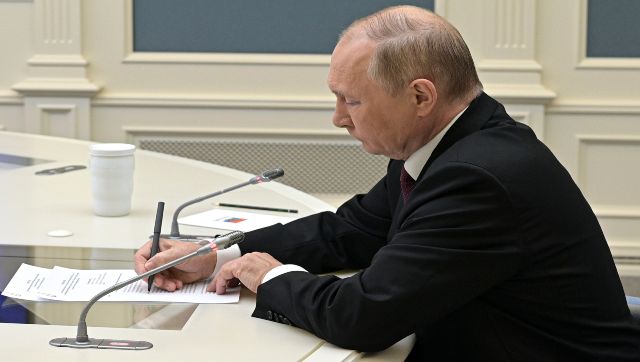
Vladimir Putin, President of Russia

A lot has been done under the leadership of PM Modi. He is a true patriot of his country.

Russian president Vladimir Putin. AP

Prime Minister Modi is one of those people in the world who is capable of conducting independent foreign policy in the interest of his nation despite any attempts to do some detente or limit something.

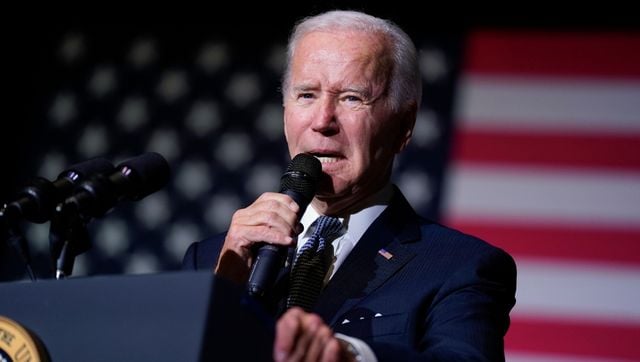
2. Joe Biden, President of the USA

US president Joe Biden. AP

In a QUAD meeting closed to the Public, US President Joe Biden praised Modi and his handling of the COVID-19 pandemic by saying that PM Modi’s success has shown the world that democracies can deliver.

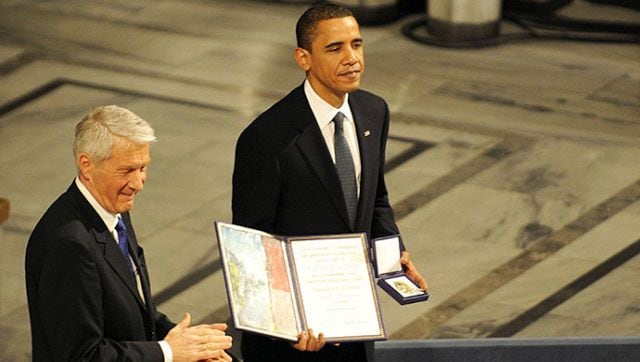
3. Barack Obama, President of the USA (Former)

In a brief 166-word plaudit that Barack Obama wrote in the TIME magazine profiling PM Modi he said, as a boy, Narendra Modi helped his father sell tea to support their family. Today, he’s the leader of the world’s largest democracy, and his life story – from Poverty to Prime Minister reflects the dynamism and potential of India’s rise.

Former US president Barack Obama. AFP

“to help more Indians follow in his path, he’s laid out an ambitious vision to reduce extreme poverty, improve education, empower women and girls and unleash India’s true economic potential while confronting climate change,”

He continued, “like India, he transcends the ancient and the modern – a devotee of yoga who connects with Indian citizens on Twitter and imagines a digital India.”

He also added, “Prime Minister Modi recognizes that more than 1 billion Indians living and succeeding together can be an inspiring  model for the world.”

4. Shinzo Abe, Prime Minister of Japan (Former)

Date 12 December 2015

Prime Minister Abe commended Prime Minister Modi’s strong initiatives such as “Make in India,” “Digital India,” “Skill India,” “Clean India” and “Smart City”. Prime Minister Abe also expressed his intention to support India’s efforts by sharing its advanced skills and technologies and through active mobilisation of the Japanese public and private sector involvement, including Official Development Assistance (ODA).

Prime Minister Abe briefed Prime Minister Modi on his efforts to create a “society where all women shine,” including by hosting “WAW!”. Prime Minister Modi expressed that the target regarding the quantitative share of generic medicines in Japan would be an excellent opportunity for collaboration between Japanese and Indian pharmaceutical companies.

Abe committed $12 billion to Modi’s ‘Make in India’ initiative that aims to transform India into a global design, manufacturing, and export hub.

You’ve also had a long association with Mr Modi in particular and you’ve known him since the time that he was the Chief Minister of Gujarat, can you tell us about your engagements and interactions with him and I ask this because when two leaders meet there’s a lot of talk about personal chemistry how much does personal chemistry how big a role does it play in international diplomacy.

We’ve spent quite a bit of time talking to each other and attending to other matters around our diplomatic activities so the relationship goes deep and so does our understanding towards national security. The world issues that we need to all collaborate solve together are very much what brings us together, keeps us united and I respect Prime Minister Modi for the fact that he’s a quick decision maker he has the power to make things happen.

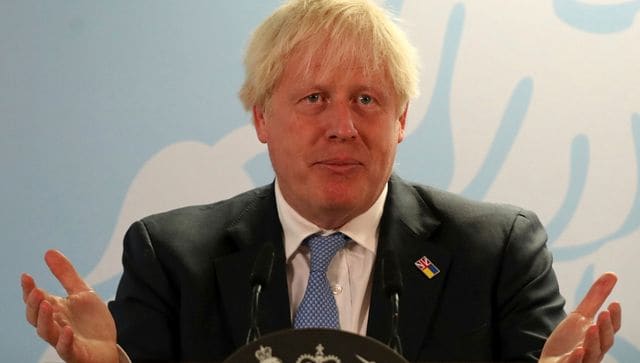
5. Boris Johnson, Prime Minister of the UK (Former)

3 November, 2021 – COP 26 Summit

File image of Boris Johnson. AP

We should unite across the planet to tackle climate change and there is one guy who particularly knows how to do that, who shares that agenda and who understands that a single hour of sunshine provides enough energy to power the whole human activity on earth for a year – the one man who understands that so well and has achieved absolutely extraordinary things in his own country of India, is the Prime Minister of India – there is One Sun, One World, One Grid and One Narendra Modi….

6. Emmanuel Macron, President of France

French president Emmanuel Macron at the United Nations General Assembly praised PM Modi’s approach and his ‘Not an era of war’ message to Russian President Putin. He called it the right approach.

7. Goh Chok Tong, Prime Minister of Singapore (Former)

The former Singapore prime minister in 2018 publicly recognized Narendra Modi’s ability to engage multiple centres of the world and articulate a common vision.

8. Naftali Bennett, former Israeli Prime Minister

You are the most popular man in Israel. Come and join my party.

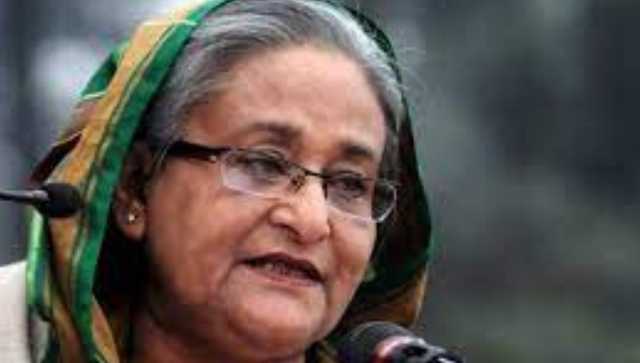
9. Bangladesh prime minister Sheikh Hasina

Date: September 4, 2022

“I really would like to express my thanks to Prime Minister that during this war between Russia and Ukraine, many of our students were just stuck and they came to Poland to shelter. But when you evacuate your students, Indian students, they also brought our students back home. So it is really… You have shown a clearly friendly gesture. I thank Prime Minister for this initiative.”

Bangladesh Prime Minister Sheikh Hasina. PTI

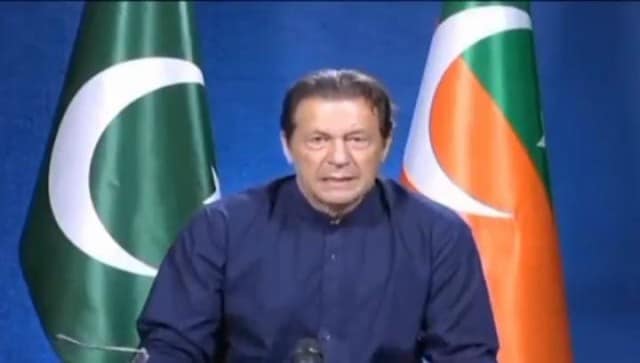
10. Imran Khan, Prime Minister of Pakistan (Former)

August, 2022

Imran Khan played a video of India’s Foreign Minister in a mega-rally at Lahore and said that when India was asked to not procure oil from Russia, India did not accept since procuring oil at lower rates is in the best interest of Indian citizens. He added, “This is what an Independent Nation is.”

Imran Khan observed that India and Pakistan became independent simultaneously and yet India has travelled far ahead. He noted that India is a self-respecting nation that cannot be dictated terms by a foreign nation if it is a super power.

Speaking on corruption and the fact that the corrupt keep their properties outside Pakistan, Former Pakistani prime minister gave the contrasting example of Prime Minister Modi’s regime standing against corruption when he said “Even in our neighbouring country, how many properties does PM Modi have outside India?”

In a tweet, Imran Khan said, “Despite being part of the Quad, India sustained pressure from the US and bought discounted Russian oil to provide relief to the masses. This is what our govt was working to achieve with the help of an independent foreign policy.”

The former Pakistani PM Imran Khan Twitter/ @nailainayat

11. Hugh Hilton Todd, Foreign Minister of Guyana

The Guyana foreign minister heaped praise on India’s foreign policy and said that on many occasions India has outstripped multilateral institutions when it comes to a global rules-based order and the welfare of the people.

12. Scott Morrison, Ex-Prime Minister, Australia

Event: India administers 1 billion COVID-19 vaccines

Quote: “Congratulations to my friend and his government for administering 1 billion doses of the COVID-19 vaccine. A huge achievement. India and Australia are working side by side in the Quad to expand vaccine access across the Indo-Pacific.”

13. Abdulla Shahid, UNGA President

Event: India administers 1 billion COVID-19 vaccines

Quote: 281 days to get 1 billion vaccinated. This is indeed spectacular. Congratulations to the people of India and Prime Minister for this outstanding achievement. This only gives hope that we can get the world vaccinated.[2]

14. Roosevelt Skerrit, Prime Minister of Dominica

Event: India administers 1 billion COVID-19 vaccines (on Twitter)

Quote: I Congratulate @narendramodi for leading India into a massive vaccination campaign and successfully administering over 1 billion doses of the COVID-19 vaccines. Together, we must work closely in our fight against the global pandemic.

What is Prime Minister Modi’s ‘India First’ Policy?

With Prime Minister Modi at the helm, India’s foreign policy has involved an interlinking of international relations and strong internal growth.

Under his leadership, India’s foreign policy evolved into a more dynamic and creative idea where the first priority was that of furthering India’s interest and second, of enhancing the idea of cooperative development.

Today, India has a policy of multi-alignment.

At the core is Prime Minister Modi the statesman and the positive results achieved from events as diverse as the ‘Howdy Modi’ gathering in the US, the Mamallapuram summit with Chinese president Xi Jinping or a summit like the one in Vladivostok with Vladimir Putin, the Russian president.

In West Asia, Prime Minister Modi encourages cooperation with Iran while simultaneously engaging Saudi Arabia, Israel and also, Palestine.

Almost everywhere the result is invariably the same – the issues pertaining to mutual benefits are furthered while those that may lead partnerships astray are addressed adequately to reach an understanding that ensures a commitment to finding the solution.

Similarly, it was a result of this ‘India First’ Policy that Prime Minister Modi pushed for setting up hotlines with the presidents of Russia and Ukraine even while conflict raged between the two nations since he wanted to ensure the safety of Indians stranded in Ukraine. As a next step, Prime Minister Modi was able to successfully get both leaders to agree on establishing safe corridors and zones for the swift evacuation of Indian students.

One common thread in his approach was ‘India First’, which allowed him to engage with partners who may have their own rivalries or differences – like in the case of Russia-Ukraine, Israel-Palestine, Iraq-Iran, Qatar-Saudi Arabia; all of him may have or have had their differences but engage with India with complete enthusiasm.

During the COVID-19 lockdown, it was Prime Minister Modi’s dynamic relations with world leaders that led to the establishment of safety bubbles between India and other nations and enabled the Modi Government to bring back Indians stranded abroad under the Vande Bharat Mission.

Prime Minister Modi has taken more active and understanding stands on international issues that concern India and/or its vicinity which has resulted in a bold and outcome-driven foreign policy.

Early in his tenure, he visited all Central Asian countries and engaged proactively with West Asian nations including Saudi Arabia, the United Arab Emirates, Israel and Oman. It may very well be the result of this new push that The Organisation of Islamic Cooperation (OIC) invited India’s Foreign Minister to address it for the first time.

Theb impact of the ‘Modi way’ on our international relations

Today, India is being recognised and appreciated around the world for the massive strides it is taking for making the lives of Indian citizens more prosperous.

India is engaging with a plethora of nations, either as part of a larger grouping such as QUAD, BRICS, BIMSTEC or G20 – or as individual parties in a strategic partnership.

Prime Minister Modi believes that a secure India that is confident of its place in the world will be able to deal with peers and competitors from a position of strength.

One common thread in his approach was ‘India First’, which allowed him to engage with partners who may have inter se rivalries or differences. His counterparts also showed sensitivity towards his approach. Besides his inimitable persuasion power, they were convinced about his strong beliefs and sincere intentions.

The Sabka Saath approach has been catapulted into a ‘One World’ approach governed by the idea of Vasudhaiva Kutumbhakam and the catalyst has been none other than the Indian prime minister. In this scenario where India is emerging as a leader – be it vaccines or renewable energy – and nations around the world – big or small – are eager to establish long-lasting and mutually beneficial foreign relations with India.

In Ukraine, students and citizens of many other nations were reported to have used the Indian Tricolour to ensure that they too received safe conduct out of conflict areas.

Read all the Latest News, Trending NewsCricket News, Bollywood News,
India News and Entertainment News here. Follow us on Facebook, Twitter and Instagram.


from Firstpost World Latest News https://ift.tt/2WvlIbf

Will Elon Musk kick out Twitter's many fake accounts?

Elon Musk: Twitter’s unending fight against spam accounts is now a problem for new owner Elon Musk, who pledged in April to defeat the bot scourge or “die trying!”

Elon Musk later cited bots as a reason to back out of buying the social media platform. Now that the billionaire has completed the deal, he’s faced with the task of delivering on his promise to clean up the fake profiles that have preoccupied him and bedeviled Twitter since long before he expressed interest in acquiring it.

The challenge carries high stakes. The bot count matters because advertisers — Twitter’s chief revenue source — want to know roughly how many real humans they are reaching when they buy ads. It’s also important in the effort to stop bad actors from amassing an army of accounts to amplify misinformation or harass political adversaries.

“The bigger picture in my mind is: How do we make Twitter a better place for everybody,” said bot-counting expert Emilio Ferrara, who worked over the summer to investigate the problem for Musk. He cited the “value of the platform as a societal experience, as a collective place to have civilized discourse and talk freely without interference from nefarious accounts,” or scams, spam, pornography and harassment.

To find out just how bad the bots are, Musk hired Ferrara and other data scientists to investigate. At the time, he sought to prove that Twitter was misleading the public when it said fewer than 5% of its daily active users are fake or spam accounts. If Twitter lied or withheld crucial information about the bot count, Musk could argue that he was justified in terminating the $44 billion agreement.

Ferrara, an associate professor of computer science and communications at the University of Southern California, said he had no real interest in whether Musk ultimately ended up owning the platform.

Instead, he hoped that “any findings would be able to help improve the platform,” Ferrara told The Associated Press, speaking for the first time about his planned role as Musk’s expert trial witness.

The question now is what Musk will do with that information. Ferrara’s presentation — some 350 pages of analysis and supporting documents — is locked up in confidential court filings, and he said he can’t disclose his conclusions.

Twitter’s former leaders and its lawyers said Musk wildly exaggerated the problem because he had buyer’s remorse. Precise counts are “almost impossible” because any bot estimate is based on assumptions that can lead to bias, said Filippo Menczer, a researcher who was not working for either side in the dispute.

“Nobody knows exactly how bad the problem is,” said Menczer, director of Indiana University’s Observatory on Social Media. “I would guess it’s not as bad as Musk said and not as good as Twitter claimed.”

Many experts also doubt Musk’s ability to easily make improvements, which he’s suggested would rely on using algorithms to track and remove fake accounts and implementing new measures to “authenticate” real people.

Earlier this month, Ferrara was preparing to travel to the East Coast to testify in Delaware, where Musk was defending against Twitter’s lawsuit asking a court to force him to close the deal. But two weeks before the scheduled Oct. 17 trial, Musk changed his mind and said he would go ahead with the $44 billion acquisition. It closed Thursday.

Most legal experts didn’t think Musk had much of a case. The court’s head judge seemed likely to side with Twitter based on the specific terms and conditions of the April purchase agreement.

But that’s not to say Musk didn’t have a point about the bots, according to Ferrara and other researchers hired by Musk’s legal team.

The analysis firm CounterAction, which worked with Ferrara, said it concluded in a July 18 report submitted to the court that Twitter’s spam rate for monetizable accounts — those of value to advertisers — was at least 10% and could be as high as 14.2%, depending on how the rate is measured.

Trevor Davis, the firm’s founder and CEO, said that analysis was based on a “firehose” of internal data that Twitter gave to Musk, but the company declined to provide additional data sought by Musk’s team.

“We expect that access to the withheld data would reveal an even higher true spam rate,” Davis said in a prepared statement.

Musk has long been preoccupied with Twitter spambots promoting cryptocurrency schemes, in part because as a celebrity user with more than 110 million followers, he sees a lot of them. Some scammers have opened accounts mimicking Musk’s name and likeness to try to get people to think he’s endorsing something.

Not all bots are bad. Twitter encourages the use of automated accounts that report the weather, earthquakes or post humor or lines from literary classics. Twitter also allows for anonymity, which protects free speech and privacy — especially in authoritarian regions. But that practice can make it harder to root out malicious fake accounts.

Ferrara first caught Twitter’s attention in the aftermath of revelations that Russia used social media to meddle in the U.S. presidential election in 2016, when he led a research group that estimated that 9% to 15% of Twitter’s active English-language accounts were bots.

In a blog post soon after, Twitter complained that such outside research “is often inaccurate and methodologically flawed.” The company has repeatedly reported the under-5% number in its quarterly filings to the Securities and Exchange Commission, though it also cautions that it could be higher.

Before Musk’s takeover, Twitter said it removed 1 million spam accounts each day. To calculate how many accounts are malicious spam, Twitter reviews thousands of accounts sampled at random, using both public and private data such as IP addresses, phone numbers, geolocation and how the account behaves when it is active.

But over the past months, Musk and Twitter have tussled over the methodology. Twitter uses a metric it calls mDAU, for monetizable daily active usage.

That “is literally a metric they invented,” Ferrara said. “You cannot contrast and compare that metric with any other service.”

When Musk first started publicly raising questions about the bot numbers after agreeing to buy the company, another firm, Israel-based Cyabra, said it had the answer.

“That elusive number you are looking for … we have it. It’s 13.7%,” the firm tweeted on May 17, flagging Musk’s Twitter handle to get his attention.

Cyabra’s machine-learning technology works by scanning a large number of social media profiles to track behavioral patterns, trying to pick out which are behaving like humans. Such guesswork can misfire — but the tweet caught the attention of people close to Musk, if not the billionaire himself.

Cyabra CEO Dan Brahmy said the company started working with the Musk camp by the end of May. Regardless of what the true count is, he said it’s not going to be an easy problem to solve.

“Some bots are definitely nefarious,” Brahmy said. “The trade-offs are between being extremely high on sign-up standards and information security versus being extremely open minded in a way” that fosters freedom of speech and creativity.

Read all the Latest News, Trending NewsCricket News, Bollywood News,
India News and Entertainment News here. Follow us on Facebook, Twitter and Instagram.


from Firstpost World Latest News https://ift.tt/kImue9z